
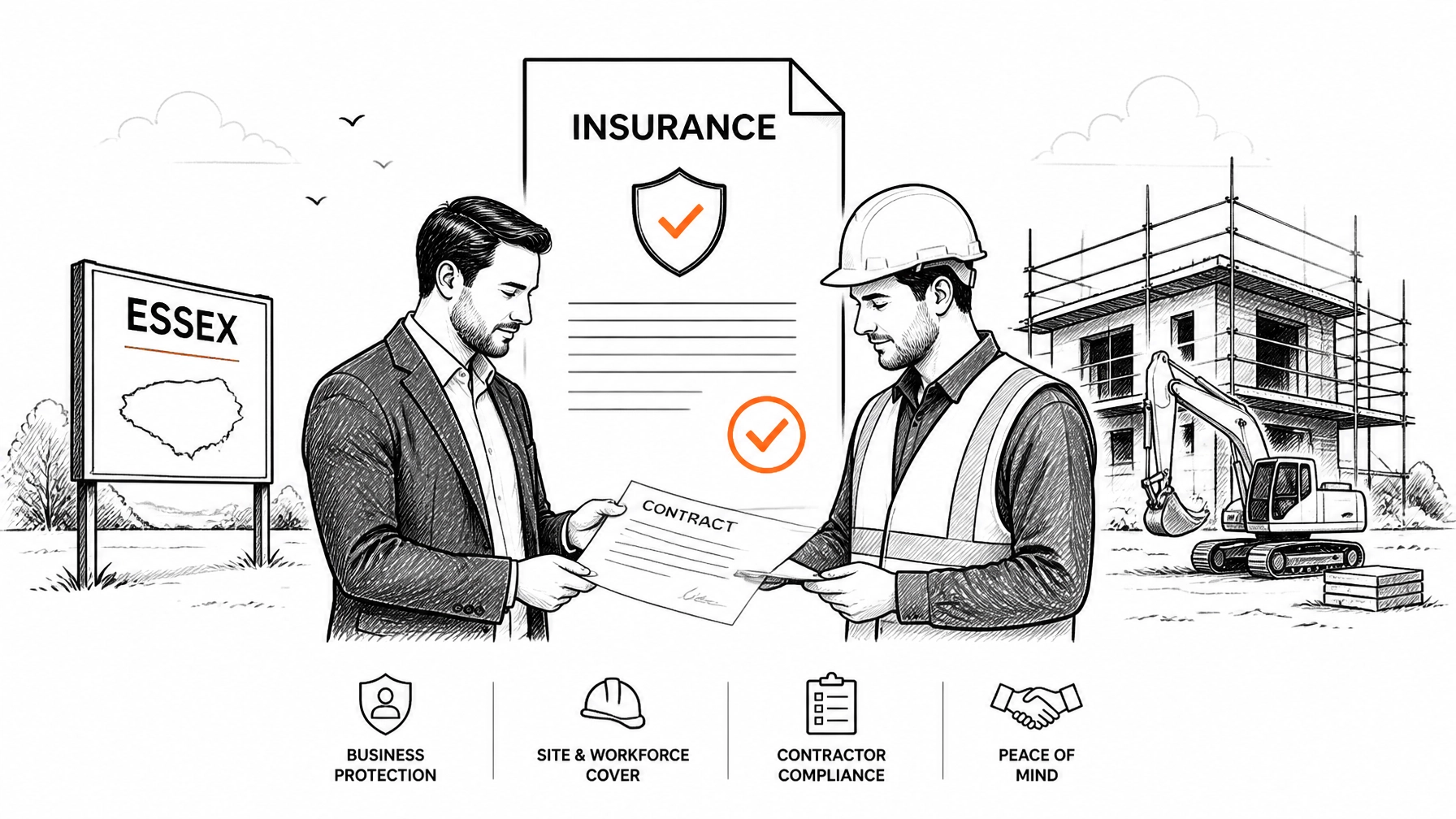
If you have been running a trade or construction business in Essex for a while, you know that the landscape has shifted significantly over the last couple of years. As we move through 2026, the complexity of managing a team, especially one that relies heavily on subcontractors, has never been higher. I’ve seen it happen dozens of times: a project is going perfectly, the client is happy, and then an incident occurs. Suddenly, what looked like a solid business arrangement turns into an insurance nightmare because of a single overlooked clause or a misunderstood relationship.
In my years working within the insurance brokerage industry, particularly here in the South East, I can see that the “she’ll be right” attitude toward subcontractor vetting is starting to catch up with people. Insurers are tightening their belts, and they are looking for any reason to push back on claims that aren’t perfectly documented. If you are hiring subs for projects in Chelmsford, Southend, or across into London, you need to be aware that your standard policy might not be the safety net you think it is.
At Moyak Insurance Services, we take an individual approach to every client. We don’t believe in “off-the-shelf” solutions because your business isn’t off-the-shelf. But even with the best broker behind you, there are common pitfalls that can trip you up.
Here are the five most common business insurance mistakes I see Essex firms making when hiring subcontractors in 2026.
1. The Confusion Between “Labour-Only” and “Bona-Fide” Subcontractors
This is arguably the biggest mistake in the book, and it’s the one that causes the most grief during a claim. In the eyes of an insurer, not all subcontractors are created equal.
A Labour-Only Subcontractor (LOSC) is effectively treated as an employee. They work under your direction, usually use your tools and materials, and don’t provide their own insurance. You are responsible for their health and safety as if they were on your payroll. Consequently, they must be covered under your Employers’ Liability (EL) insurance.
A Bona-Fide Subcontractor (BFSC), on the other hand, is an independent contractor. They usually provide their own materials, work under their own supervision, and, crucially, carry their own Public Liability (PL) insurance.
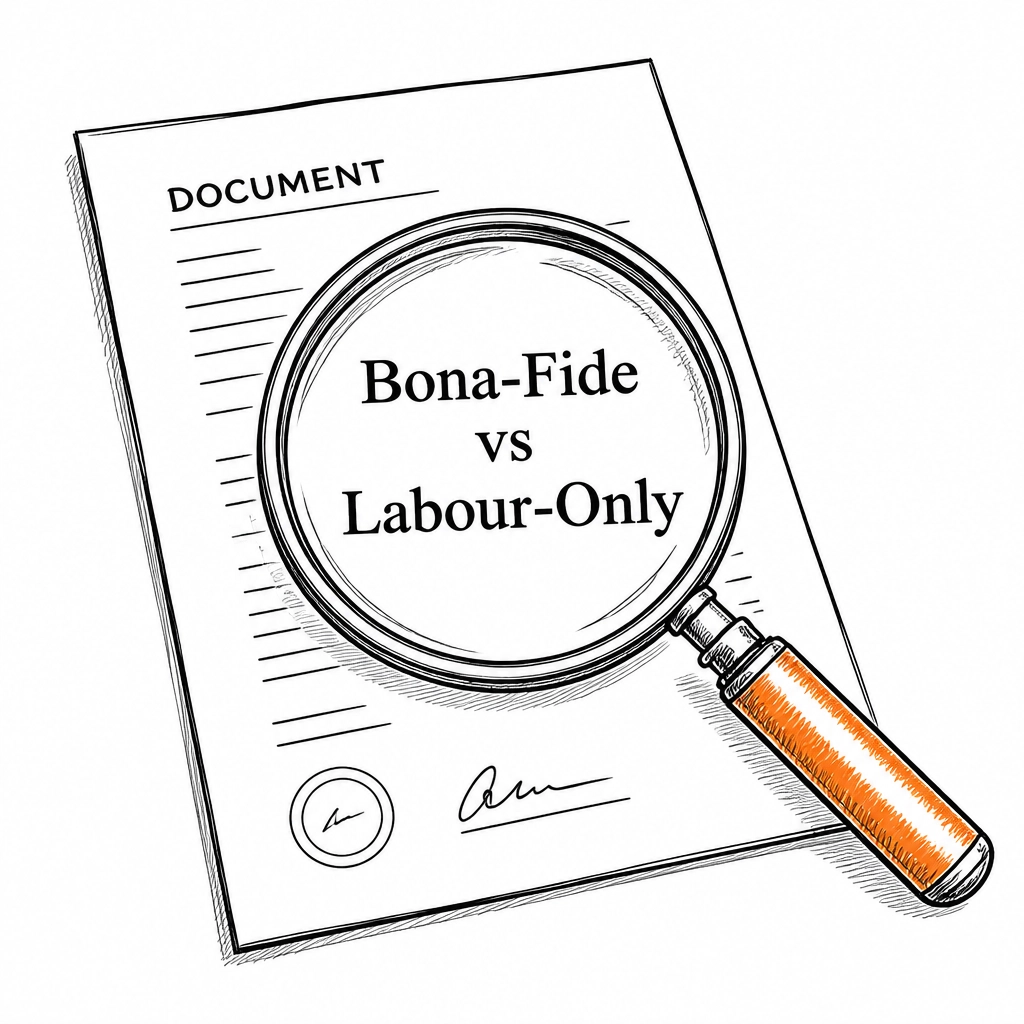
I often speak to business owners who classify everyone as a “bona-fide” sub to keep their own premiums down, but then they treat them like “labour-only” staff on-site. If a “bona-fide” sub gets injured or causes damage, and the insurer discovers they were actually working under your direct control without their own valid insurance, they may refuse the claim. In 2026, insurers are much more forensic about these distinctions. If you aren’t sure which is which, you are leaving a massive gap in your general contractor liability insurance.
2. Relying on a “Verbal Handshake” Instead of Verifying COIs
Essex is built on relationships. We like to do business with people we know and trust. While that’s a great way to build a reputation, it’s a terrible way to manage risk.
I’ve seen many contractors hire a sub they’ve known for ten years and simply ask, “You’re still insured, right?” The sub says “Yes,” and that’s the end of it. But what if their policy lapsed last month because of a missed payment? What if their limit of indemnity is only £1 million, but your contract with the local council requires £5 million?
In the current 2026 market, “taking their word for it” isn’t enough. You must obtain a physical (or digital) Certificate of Insurance (COI) and, more importantly, you need to check the expiry dates and the limits. I recommend setting a diary reminder for your regular subs’ renewal dates. It sounds like a chore, but it’s a lot less work than defending a £100,000 claim out of your own pocket.
Our team at Moyak often helps clients set up these vetting processes because we know that construction contractor insurance secrets usually boil down to good old-fashioned paperwork.
3. Ignoring the “Indemnity to Principals” Clause
This is a bit of technical jargon, but it’s vital for anyone working on larger projects or for public bodies in Essex. An “Indemnity to Principals” clause essentially extends the subcontractor’s liability insurance to cover you (the principal) if a claim is made against you for something the sub did.
If your subcontractor has a basic policy without this clause, and they cause a fire on a job site, the property owner might sue you as the main contractor. If your sub’s insurance doesn’t explicitly indemnify you, you might find yourself stuck in a legal battle between two insurance companies while your own premiums skyrocket.
Going forward, you should make it a standard requirement in your subcontracting agreements that their PL policy includes an Indemnity to Principals clause. It’s a standard feature in most commercial combined business insurance policies we arrange, but you’d be surprised how many “cheap” policies leave it out.
4. Underinsurance of Shared Tools and Plant
In 2026, the cost of specialized machinery and high-end tools has surged. We are seeing a lot of Essex firms sharing plant and equipment with their subcontractors to save on hire costs.
The mistake happens when you assume your “Tools and Plant” cover extends to anyone using the gear. Often, these policies have strict “care, custody, and control” exclusions. If a subcontractor breaks an expensive piece of kit, or if it’s stolen while they were responsible for it, your insurer might argue that it wasn’t in your control at the time of the loss.
Furthermore, with inflation still a factor in 2026, many businesses are simply underinsured. If you haven’t updated the “Sums Insured” on your policy in the last 12 months, you are likely only covered for about 80% of what it would actually cost to replace your equipment today. This is why we advocate for that individual approach, we sit down and look at the actual replacement values, not just what you paid for the kit three years ago.
5. Failing to Update Cover as the Business Grows
Success brings its own risks. I’ve noticed a trend where a small Essex-based firm wins a big contract, perhaps a new residential development in Basildon or a commercial fit-out in London, and they suddenly double their use of subcontractors to meet the deadline.
If you told your insurer at the start of the year that you only use £50,000 worth of subcontractors, but you end up spending £200,000, you have fundamentally changed the risk profile of your business. If a claim occurs, the insurer could argue that you misrepresented the business and may reduce the payout or void the policy entirely.
I think people are often afraid that telling their broker about growth will lead to a massive premium hike. While there might be an adjustment, it is nothing compared to the cost of a rejected claim. A quick call to your broker to say, “Hey, we’ve picked up a big new job and we’re bringing on three more crews,” is all it takes to stay protected.
The Moyak Difference: Why Local Expertise Matters
You could go online and find a generic policy in ten minutes, but will that policy understand the specific risks of working in the Essex and London corridor in 2026? Probably not.
At Moyak Insurance Services, we act as a bridge between you and the UK’s leading master insurance brokers. We know that as a business owner, you don’t want to spend your evenings reading the fine print of a 50-page policy document. That’s our job.
We pride ourselves on our Individual Approach. We take the time to understand whether your subs are truly bona-fide or labour-only. We check that your limits of indemnity actually match your contract requirements. And we make sure that if you are growing, your insurance is growing with you.
If you are worried that your current setup might have one of these gaps, don’t wait for a claim to find out. I can see the market getting tougher, and the best defense is a well-structured policy and a broker who actually knows your name.
Next Steps for Essex Business Owners
If you’re hiring subcontractors this year, here is a quick checklist to keep you on the right side of your insurer:
- Classify correctly: Are they Labour-Only or Bona-Fide? If you provide the tools, they are likely Labour-Only.
- Collect the COIs: Never let a sub set foot on-site without seeing their current Public Liability certificate.
- Check the Limits: Ensure their insurance matches the requirements of your main contract.
- Review your Sums Insured: Make sure your tools and plant are insured for 2026 replacement values, not 2022 prices.
- Talk to Moyak: Let us do a quick health check on your current policy. We often find that we can provide better cover: and sometimes even save you money: just by getting the details right.
Protecting your business isn’t just about paying a premium; it’s about making sure that premium actually works when you need it. Let’s make sure your Essex business is built on a solid foundation.