
![[HERO] 7 Mistakes You’re Making with Construction Contractor Insurance](https://moyakinsurance.co.uk/wp-content/uploads/joomla-import/PW5atJ7_0r7.webp)
Alias: 7-mistakes-construction-contractor-insurance-essex-london
Category: Blog
Schedule: Tuesday, March 31st, 2026, 6:00 PM
Running a construction business in the South East isn’t for the faint of heart. Whether you’re managing a residential build in Essex, a commercial renovation in Kent, or a high-stakes project in the heart of London, the pressure is constant. Between managing subbies, sourcing materials with fluctuating prices, and keeping the client happy, insurance often feels like just another bill to pay, a grudge purchase that stays at the bottom of the “to-do” list until a site manager asks for your certificate.
In my time at Moyak Insurance Services, I’ve spoken to hundreds of contractors. I’ve seen the good, the bad, and the truly messy. I can tell you from experience that most contractors aren’t actually “covered” as well as they think they are. They have a policy, sure, but they’ve fallen into common traps that only become visible when a claim is filed and the insurer says “no.”
As we look toward the week of April 6th, keep an eye on Sonny’s social media campaigns where we’ll be breaking these down further. For now, let’s look at the seven most common mistakes I see construction businesses making with their insurance.
1. Falling into the ‘Tick-Box’ Trap
This is arguably the most common mistake in the industry. A contractor gets a big contract in Romford or Canary Wharf, and the main contractor says, “We need to see £5 million Public Liability (PL).” The contractor goes online, finds the cheapest policy that ticks that box, and buys it.
The problem? That “cheap” policy is often cheap for a reason. It might contain “heat exclusions” that mean you aren’t covered if you use a blowtorch. It might have a height limit that makes your work on a three-story house in Essex completely uninsured. Buying the cheapest policy just to get on site is like buying the cheapest boots you can find: they might look the part for five minutes, but they’ll fail you exactly when you need them to hold up. I think it’s vital to remember that a certificate of insurance is not the same thing as actual protection.
2. Underinsuring Your Tools and Plant Equipment
If you’ve spent any time on sites in London or Kent lately, you know that tool theft is an epidemic. I’ve seen guys lose ten years’ worth of specialized gear in a single night.
A standard tradesman policy often has a default tool limit: sometimes as low as £500 or £1,000. For a professional contractor, that wouldn’t even cover the contents of one decent Hilti box. Furthermore, many policies have strict “overnight in vehicle” requirements. If you aren’t parking in a locked garage or haven’t installed specific types of alarms, your claim for stolen tools might be dead on arrival.
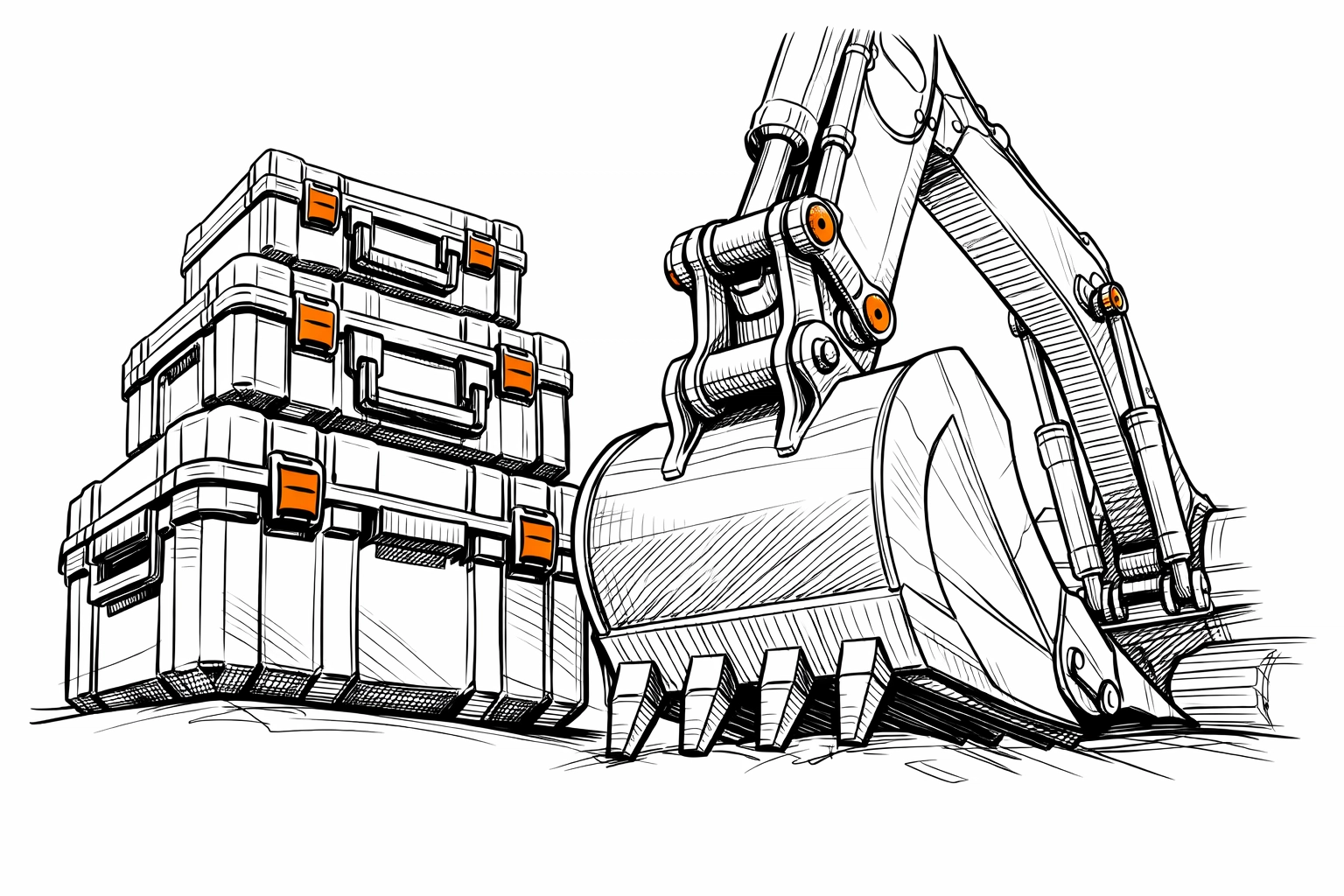
And then there’s the plant. If you’re hiring in diggers or scaffolding, are you insured for “hired-in plant”? If that kit gets damaged or stolen from your site in Chelmsford, the hire company is going to come after you for the full replacement cost, plus the “loss of hire” fees while they wait for a new one. That can easily run into the tens of thousands.
3. Neglecting Contract Works Insurance
Many contractors assume that if they have General Contractor Liability Insurance, they are covered for everything on site. This is a massive misconception.
Public Liability covers you if you drop a brick on a passerby or flood a neighbour’s basement. It does not cover the work you are actually doing. If you are halfway through a £200,000 extension in Maidstone and a fire burns the whole thing down, PL won’t pay to rebuild it. That’s what Contract Works insurance is for. It covers the “work in progress,” the materials on-site, and the labour required to start over. Without it, one major incident can bankrupt a growing firm.
4. The Professional Indemnity Gap
There’s a growing trend in the London and Essex construction scene where contractors are taking on more “design and build” responsibility. Even if you aren’t a qualified architect, if you provide advice, suggest a change to a drawing, or specify a particular material that later fails, you are technically performing a design function.
Standard liability policies specifically exclude professional errors. If your “advice” leads to a structural issue or a financial loss for the client, you need Professional Indemnity (PI) insurance. I’ve seen cases where a contractor suggested a different cladding material to save the client money; when that material failed to meet fire regs, the contractor was held liable. PI isn’t just for office workers; it’s essential for modern contractors.
5. Misclassifying Employees and Subcontractors
This is a technical area where I see a lot of confusion. In the UK, the distinction between a “Labour Only Sub-Contractor” (LOSC) and a “Bona-Fide Sub-Contractor” (BFSC) is huge for insurance purposes.
- LOSC: They work under your direction, use your tools, and are essentially employees for the duration of the job. You must cover them under your Employers’ Liability insurance.
- BFSC: They have their own insurance, provide their own tools, and work on a fixed price for a specific scope.
If you tell your insurer you have no employees, but you’re actually using three LOSCs on a site in Dartford, your Employers’ Liability coverage (which is a legal requirement) might be invalid. Even worse, if a BFSC doesn’t actually have their own valid insurance, the liability often rolls back up to you. I always tell my clients: check your subbies’ certificates every single year. Don’t just take their word for it.

6. Ignoring the “Additional Insured” Requirements
If you are working as a sub-contractor for a major firm in London, their legal department will often send over a list of requirements for your Certificate of Insurance (COI). This often includes things like “Waiver of Subrogation” or “Primary and Non-Contributory” language.
I’ve seen contractors ignore these details, thinking it’s just legal jargon. However, research suggests that incorrect language on a COI costs an average of £8,500 per incident in legal wrangling. If you don’t have the right endorsements on your policy, you could be in breach of your contract before you even lay the first brick. We can help you navigate these general tradesmen liability insurance requirements to ensure your paperwork matches the contract.
7. Failing to Update the Broker as the Business Grows
I’ve had conversations with directors who started as a one-man band in Southend and, three years later, have a crew of ten and are taking on six-figure contracts. But they are still running on the same basic policy they bought when they started.
Insurance is based on “disclosure.” If your turnover has tripled, or you’ve moved from residential painting into commercial roofing, your risk profile has changed completely. If you don’t tell your broker, you’re giving the insurer a “get out of jail free” card. I think it’s vital to have a catch-up at least once a year: not just at renewal: to make sure the policy actually reflects the business you are running today, not the one you were running three years ago.
How to Get It Right
The construction industry in our corner of the world is moving fast. The regulations are getting tighter, and the legal environment is getting more litigious. Going forward, “winging it” with your insurance is a strategy that will eventually fail.
Here is my practical advice for any contractor in Essex, Kent, or London:
- Read your exclusions. Don’t just look at the limit. Look at what they won’t pay for.
- Audit your subbies. Make sure their insurance is actually live and covers the work they are doing for you.
- Value your kit properly. Walk through your van or stores and actually add up the replacement cost of your tools. You’ll be surprised.
- Talk to a specialist. At Moyak Insurance Services, we aren’t just selling a policy; we’re helping you build a safety net that actually holds.
It’s about pragmatic realism. You want to be on-site doing the work, not sitting in a lawyer’s office debating an exclusion clause. Let’s make sure your insurance is as solid as the structures you build.
If you’re worried about gaps in your current coverage or you’ve got a big project coming up in the South East, get in touch. We know the local landscape, and we know exactly what the main contractors are looking for.