
![[HERO] 7 Mistakes You’re Making with Cleaning Contractors Insurance (and How to Fix Them)](https://moyakinsurance.co.uk/wp-content/uploads/joomla-import/u11trVeImuK.webp)
If you are running a cleaning business in London, Essex, or Kent, you already know that the competition is fierce. Whether you’re securing contracts for high-end office blocks in Canary Wharf or managing a domestic cleaning circuit in the suburbs of Maidstone, your reputation is everything. But I have seen time and again how a single insurance oversight can dismantle years of hard work.
Many business owners view cleaning business insurance as a “grudge purchase”: something they only buy because a contract requires it. This mindset often leads to costly mistakes. At Moyak Insurance Services, we speak to cleaning contractors every day who are shocked to find out that their “comprehensive” policy actually leaves them exposed to massive risks.
In this guide, I want to walk you through the seven most common mistakes I see cleaning contractors making and, more importantly, how you can fix them to protect your livelihood.
1. Choosing a Policy Based on Price Alone
I understand the temptation. When you’re trying to keep your overheads low to win a competitive tender, the cheapest insurance quote looks very attractive. However, in the world of cleaning contractors insurance, you truly get what you pay for.
The “cheap” policies often come with high excesses, restrictive “inner limits,” or broad exclusions that render the cover useless when you actually need it. For instance, a budget policy might exclude damage to property being worked upon: which is exactly what a cleaner needs coverage for. If you accidentally damage an expensive computer screen while cleaning a desk, a cheap policy might leave you footing the bill.
How to fix it: Instead of looking for the lowest premium, look for the best value. I think it is much safer to work with a specialist broker who understands the specific risks of the cleaning industry. At Moyak, we take an individual approach, scouring our network of master brokers to find a policy that balances cost with actual, usable protection.
2. Underinsuring Your Equipment and Tools
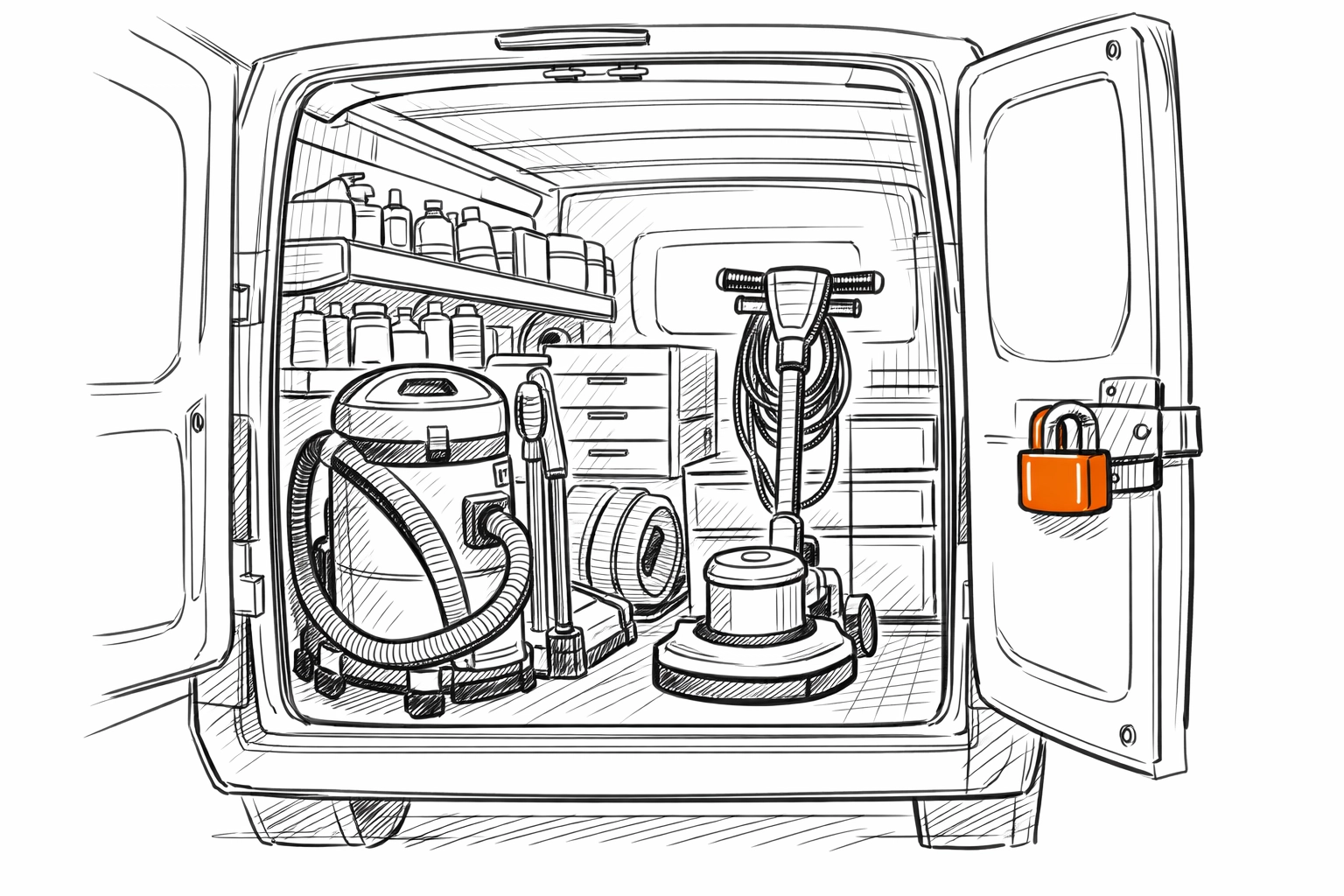
Many cleaning contractors in the South East are mobile, moving expensive industrial vacuum cleaners, floor polishers, and pressure washers between sites in Essex and London. A common mistake I see is assuming that these tools are covered under a standard liability policy or even a commercial vehicle policy.
In reality, if your van is broken into or your equipment is damaged while in transit, a basic policy likely won’t pay out. Standard Public Liability covers the damage you cause to others, not the loss of your own assets.
How to fix it: You need to ensure your policy includes “Goods in Transit” or specific “All Risks” cover for your tools and equipment. Given the rising rates of tool theft in urban areas like London and Kent, this isn’t just a “nice to have”: it’s essential for business continuity.
3. Neglecting Proper Public Liability Limits
Most cleaning businesses start with a standard £1 million or £2 million Public Liability limit. While this might be fine for small domestic jobs, it is often woefully inadequate for commercial contracts.
If you are working in an office building in Central London, a single incident: like a leak caused by a left-on tap or a trip-and-fall on a wet floor: could lead to a claim that far exceeds £1 million. Many property management companies now insist on a minimum of £5 million or even £10 million in General Contractor Liability Insurance before they will even let you on-site.
How to fix it: Review your contracts carefully. Don’t wait until you’ve won a big job to realize your insurance isn’t up to scratch. I recommend discussing your growth plans with us so we can scale your limits appropriately, often for a much smaller increase in premium than you might expect.
4. Forgetting the “Treatment Risk” Clause
This is perhaps the most specific mistake in the cleaning industry. Most general liability policies exclude “damage to property being worked upon.” In the context of a cleaner, this means if you are cleaning a carpet and use the wrong chemical, ruining the fibers, a standard policy might not cover it because you were “working on” that specific item.
This is known as “Treatment Risk.” Without this specific extension, your cleaning business insurance has a massive hole in it.
How to fix it: Check your policy schedule for Treatment Risk cover. If it isn’t there, you are taking a massive gamble every time you apply a cleaning product to a client’s property. We make sure this is a priority for our clients because we know how easily a simple mistake can happen.
5. Not Covering Sub-contractors
As your cleaning business grows across Essex and Kent, you might start using “Bona-Fide” sub-contractors or “Labour-Only” sub-contractors to handle the workload. I often see business owners assume that these individuals bring their own insurance and therefore the main contractor isn’t liable.
This is a dangerous assumption. If a sub-contractor causes damage or gets injured, the client will look to you: the primary contractor: for compensation. If your policy isn’t set up to include sub-contractors, your insurer may refuse the claim.
How to fix it: You must disclose the use of sub-contractors to your broker. You also need to verify that your sub-contractors have their own insurance (for Bona-Fide subs) or ensure they are covered under your Employers’ Liability (for Labour-Only subs). Our team at Moyak can help you set up a robust system for checking these details.

6. Ignoring Employers’ Liability (It’s Law!)
If you have anyone working for you: even if they are part-time, casual, or “cash-in-hand”: you are legally required to have Employers’ Liability insurance in the UK. I still see small cleaning firms in London trying to bypass this to save money.
The fines for not having this cover are eye-watering (up to £2,500 per day), but the real risk is a workplace injury. Cleaning is physical work involving chemicals, wet floors, and heavy lifting. If an employee suffers a back injury or a chemical burn, you are liable for their medical costs and lost wages.
How to fix it: Never skip Employers’ Liability. It is usually bundled into a Commercial Combined Business Insurance package. It protects your staff and, by extension, protects your personal assets from being seized to pay for a legal claim.
7. The “Set and Forget” Mentality
Your business on Monday, 16 of March 2026, probably looks very different from how it looked two years ago. Perhaps you’ve moved from domestic cleaning to specialized biohazard or end-of-tenancy cleans. Maybe you’ve hired three new staff members or bought a new van.
Many contractors simply renew their existing policy every year without checking if it still fits. This leads to “underinsurance,” where your policy reflects an older, smaller version of your business, leaving your current operations unprotected.
How to fix it: Schedule an annual review. I think the best way to do this is to have a quick conversation with your broker a month before renewal. We don’t just send out a renewal notice; we want to hear what’s changed so we can adjust your cleaning contractors insurance to match your current reality.
The Moyak Individual Approach
At Moyak Insurance Services, we don’t believe in “one size fits all” insurance. We know that a window cleaner in Southend has different needs than a commercial office cleaning firm in the City of London.
Because we are an independent brokerage, we aren’t tied to one single insurer. We use our relationships with master brokers to find the niche policies that other brokers might miss. Our goal is simple: to provide professional, comprehensive cover that actually saves you money by eliminating the bits you don’t need and reinforcing the bits you do.
Whether you are looking for small office surgery insurance or complex commercial cover, we treat every client with the same level of care.
Next Steps for Your Business
If you haven’t reviewed your policy in the last 12 months, or if you are worried that you might be making one of the mistakes listed above, now is the time to act. Don’t wait for a claim to happen to find out your insurance is insufficient.
- Audit your current policy: Look specifically for “Treatment Risk” and “Goods in Transit.”
- Check your limits: Ensure they match your current contract requirements.
- Contact a specialist: Speak to us at Moyak Insurance Services. We can provide a no-obligation review of your current cover and see if we can get you a better deal.
Protecting your cleaning business shouldn’t be a headache. With the right advice and a tailored policy, you can get back to what you do best: providing a top-tier service to your clients across London and the South East.
For more information on how we can help your specific industry, feel free to explore our useful information resources or get in touch with our team today.