
![[HERO] 7 Mistakes You're Making with General Contractor Liability Insurance (and How to Fix Them)](https://moyakinsurance.co.uk/wp-content/uploads/joomla-import/uddnb--TL0H.webp)
Walking onto a construction site in 2026 feels a lot different than it did even five years ago. The regulations are tighter, the materials are more expensive, and the legal landscape: especially after the recent updates to the Building Safety Act: is significantly more complex. In my time working with contractors across London and Essex, I’ve noticed a recurring theme: insurance is often treated like a tax or an annoying box that needs ticking before you can get through the site gates.
But here is the reality I see every day: General Contractor Liability Insurance isn’t just a piece of paper for the site manager. It is your ultimate strategic defense. If you get it wrong, you aren’t just risking a fine; you are risking the entire future of the company you’ve worked years to build. I often talk to directors who are shocked when a claim is denied, but usually, the seeds of that denial were sown months or years earlier when the policy was first set up.
In this guide, I want to walk through the seven most common mistakes I see contractors making and, more importantly, how you can fix them before they turn into a crisis.
Mistake 1: Treating Insurance as a Box-Ticking Exercise
The most common mistake is the “compliance mindset.” A contractor gets a contract, sees they need Public Liability, calls a broker, and asks for “the cheapest thing that meets the minimum requirement.”
I understand the impulse to save on overheads, but this approach ignores the fact that your business is unique. A contractor doing high-end residential refits in Chelsea has a completely different risk profile than someone doing groundworks in Basildon. When you buy insurance just to tick a box, you often end up with a policy full of exclusions that make it effectively useless when a real accident happens.
The Fix: Start seeing your insurance as a bespoke suit rather than a “one size fits all” hi-vis vest. Sit down and actually look at the specific risks of your upcoming projects. Are you working at height? Are you using heat? If your policy doesn’t specifically reflect your actual work activities, the “box” you ticked might actually be empty.
Mistake 2: Forgetting about ‘Completed Operations’
I’ve seen this happen too many times: a project is handed over, the client is happy, and the contractor moves on to the next job. Six months later, a pipe bursts or a structural element fails, causing massive property damage. The contractor thinks, “It’s fine, I have General Contractor Liability Insurance.”
But here is the catch: if your policy doesn’t properly include “Products and Completed Operations” coverage, you might only be covered for things that happen while you are on-site. Once you pack up your tools and hand over the keys, your liability doesn’t vanish. In fact, many of the most expensive claims in the industry happen post-handover.
The Fix: Check your policy for “Completed Operations” wording. Ensure that the coverage extends well beyond the practical completion date. In the construction world, the “long tail” of liability is where the real danger lies.
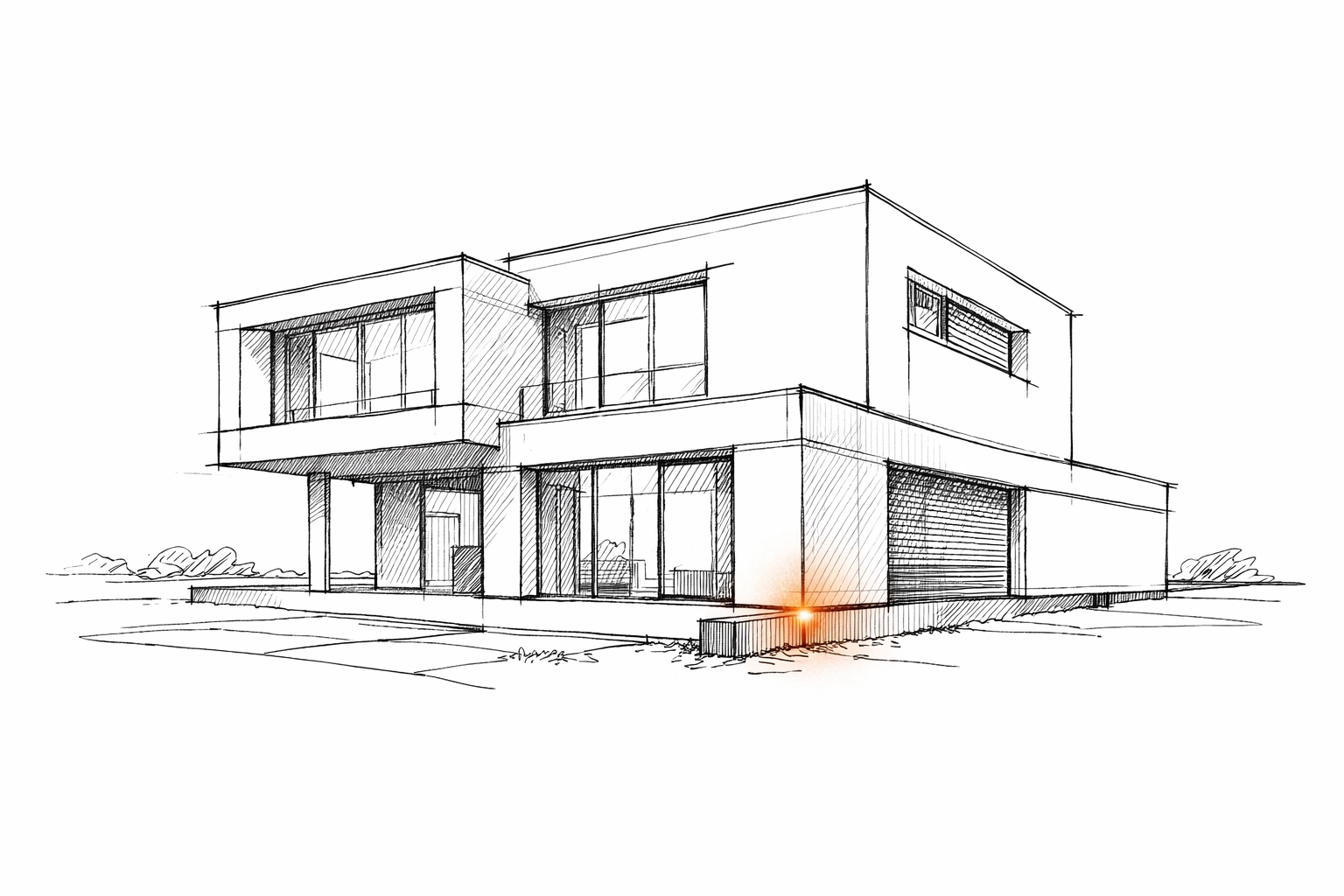
Visual: A B&W sketch of a finished building with a small orange highlight on a structural joint, representing hidden post-handover risks.
Mistake 3: Sticking with Outdated Indemnity Limits
Ten years ago, a £1 million Public Liability limit was the standard. Today, I think that is dangerously low for almost any general contractor. With the rising cost of materials, legal fees, and the sheer value of property in areas like London, a single major fire or structural collapse can easily blow past a £1 million or even a £2 million limit.
In fact, many local authorities and Tier 1 contractors now won’t even let you on-site without a £5 million or £10 million limit. Keeping an outdated limit because “that’s what we’ve always had” is a recipe for bankruptcy if a catastrophic event occurs.
The Fix: Review your limits annually. If you are growing, your insurance needs to grow with you. For many firms, moving toward a commercial combined insurance policy can provide a more robust umbrella of protection that scales with your contract values.
Mistake 4: Falling into the ‘Subcontractor Trap’
This is perhaps the biggest gap I see in the UK market right now. As a general contractor, you are ultimately responsible for the site. Many directors assume that because their subcontractors have their own insurance, the main firm is protected.
But what happens if a subcontractor’s policy has lapsed? Or if their limit is too low? Or if their insurance company goes bust? If something goes wrong, the claimant is going to sue the person with the deepest pockets: and that is usually you. Without the right “contingent liability” or “Vicarious Liability” clauses, you could be left holding the bill for someone else’s mistake.
The Fix: You must have a rigid process for collecting and verifying Certificates of Insurance (COIs) from every single subbie before they set foot on site. Furthermore, you should ensure your own policy accounts for the use of bona-fide subcontractors. Whether you’re hiring a specialist team for cleaning company insurance related tasks or heavy structural engineers, their risk is your risk.
Mistake 5: Occurrence vs. Claims-Made Policies
This is a technical point, but it’s one where I see a lot of confusion. Construction risks are best handled by “Occurrence” based policies. This means that as long as the policy was active when the incident happened, you are covered: even if the claim is made years later.
Some cheaper policies are written on a “Claims-Made” basis, meaning the policy must be active both when the event happened and when the claim is filed. If you retire or change insurers and don’t buy a “tail,” you could find yourself completely uninsured for past work.
The Fix: Always aim for an “Occurrence” form for your General Contractor Liability Insurance. It provides much better long-term peace of mind in an industry where defects might not appear for years.
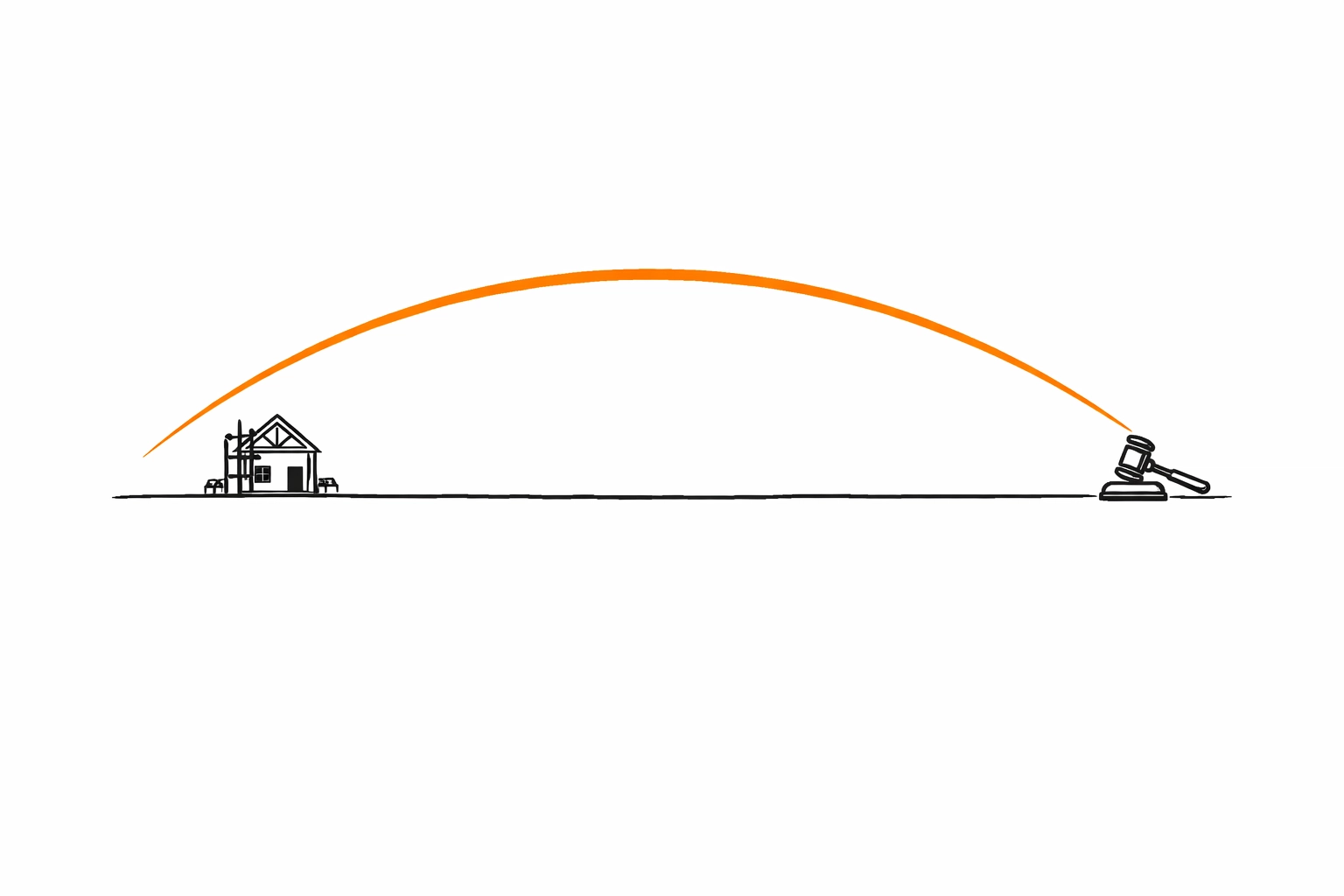
Visual: A B&W sketch of a timeline showing a “work completed” point and a “claim filed” point, with orange accents highlighting the gap between them.
Mistake 6: Assuming Coverage for Tools, Workmanship, and Advice
There is a common misconception that “Liability Insurance” covers everything that goes wrong. It doesn’t. Standard liability insurance covers damage to third-party property or injury to people. It generally does not cover:
- The cost of fixing your own faulty workmanship.
- Your own tools and equipment if they are stolen or damaged.
- Professional advice or design errors (which requires Professional Indemnity).
I’ve had contractors call me heart-broken because their expensive plant was stolen from a site, only to find they never added tools and equipment cover to their schedule.
The Fix: Realize that General Liability is just one piece of the puzzle. If you provide design input or “design and build” services, you need Professional Indemnity. If you have £50k worth of kit in the van, you need specific plant and tool cover. Don’t assume; ask.
Mistake 7: Neglecting the Documentation Trail
Insurance is a contract of “utmost good faith,” but when a claim hits the fan, it becomes a contract of “utmost evidence.” I’ve seen perfectly valid claims get bogged down or rejected because the contractor couldn’t prove they followed safety protocols or couldn’t provide site photos from the day of the incident.
In the modern era, “he said, she said” doesn’t stand up in court. If you can’t prove you weren’t negligent, the insurer’s job of defending you becomes ten times harder.
The Fix: Digitalize your site logs. Take photos of every stage of the build, especially the bits that get covered up (like wiring and plumbing). Maintain a clear record of safety briefings and risk assessments. For more tips on managing your business records, you can check out some useful info on our resources page.
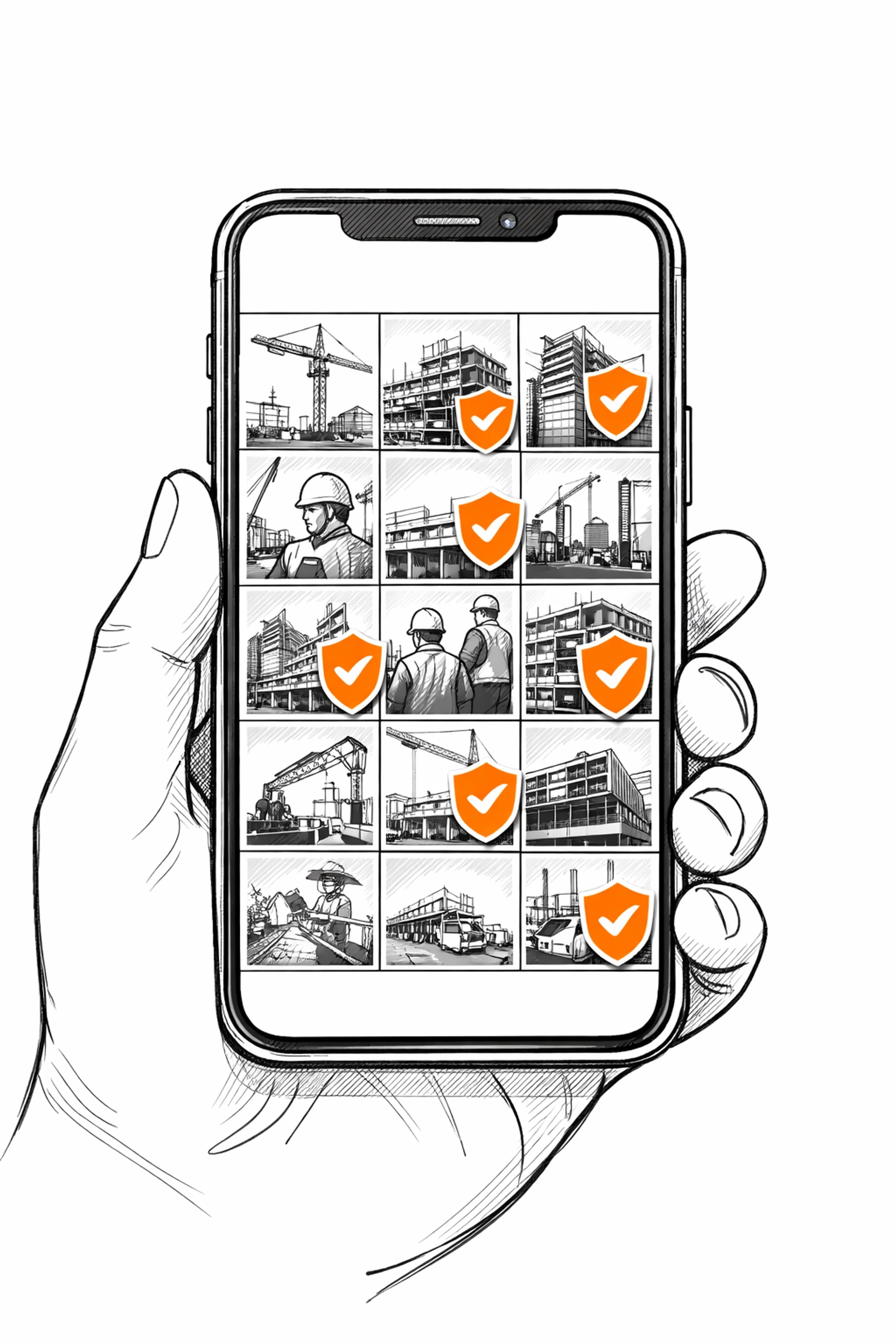
Visual: A B&W sketch of a smartphone displaying a site photo gallery, with orange icons representing “saved” or “verified” status.
Conclusion: Securing Your Future
Going forward, the contractors who thrive will be the ones who treat risk management as a core part of their business strategy, not just an administrative burden. Mistakes in insurance aren’t just expensive; they are often avoidable with a bit of foresight and the right partnership.
If you are unsure about your current coverage or if you’ve realized your limits might be a bit “2015,” now is the time to act. Don’t wait for a letter from a solicitor to find out your policy has a hole in it.
At Moyak Insurance Services, we specialize in helping contractors navigate these exact pitfalls. Whether you’re looking for a comprehensive General Contractor Liability Insurance review or need to bundle your covers into a more efficient package, we’re here to help you build on solid ground.
Next Steps:
- Pull out your current policy schedule.
- Check your indemnity limits against your largest contract.
- Verify your “Completed Operations” and subcontractor clauses.
- Reach out if something doesn’t look right.
Your business is too important to leave to chance. Let’s make sure it’s protected properly.