
![[HERO] Are You Making These Common Underinsurance Mistakes? Why Accuracy Matters for General Contractor Liability Insurance](https://moyakinsurance.co.uk/wp-content/uploads/joomla-import/N6UH_A5I83N.webp)
In the world of construction, precision is everything. You wouldn’t dream of guestimating the load-bearing capacity of a steel beam or “eye-balling” the depth of a foundation. So, why is it that when it comes to General Contractor Liability Insurance, so many businesses are operating on guesswork?
I’ve spent years working within the insurance brokerage space, and I can tell you that one of the most persistent and dangerous trends we see is underinsurance. It’s an easy trap to fall into. You’re looking at your overheads, trying to keep your bids competitive, and you think, “I’ll just stick with the same coverage limits I had last year.” Or perhaps you figure that because you’ve never had a major claim, the minimum legal requirement is enough.
But here is the reality: the gap between what you think you are covered for and what you actually need is growing wider every day. Whether it’s the hidden sting of the ‘average clause’ or the relentless march of inflation affecting material costs, being underinsured is a gamble where the house usually wins.
The Invisible Trap: Understanding the ‘Average Clause’
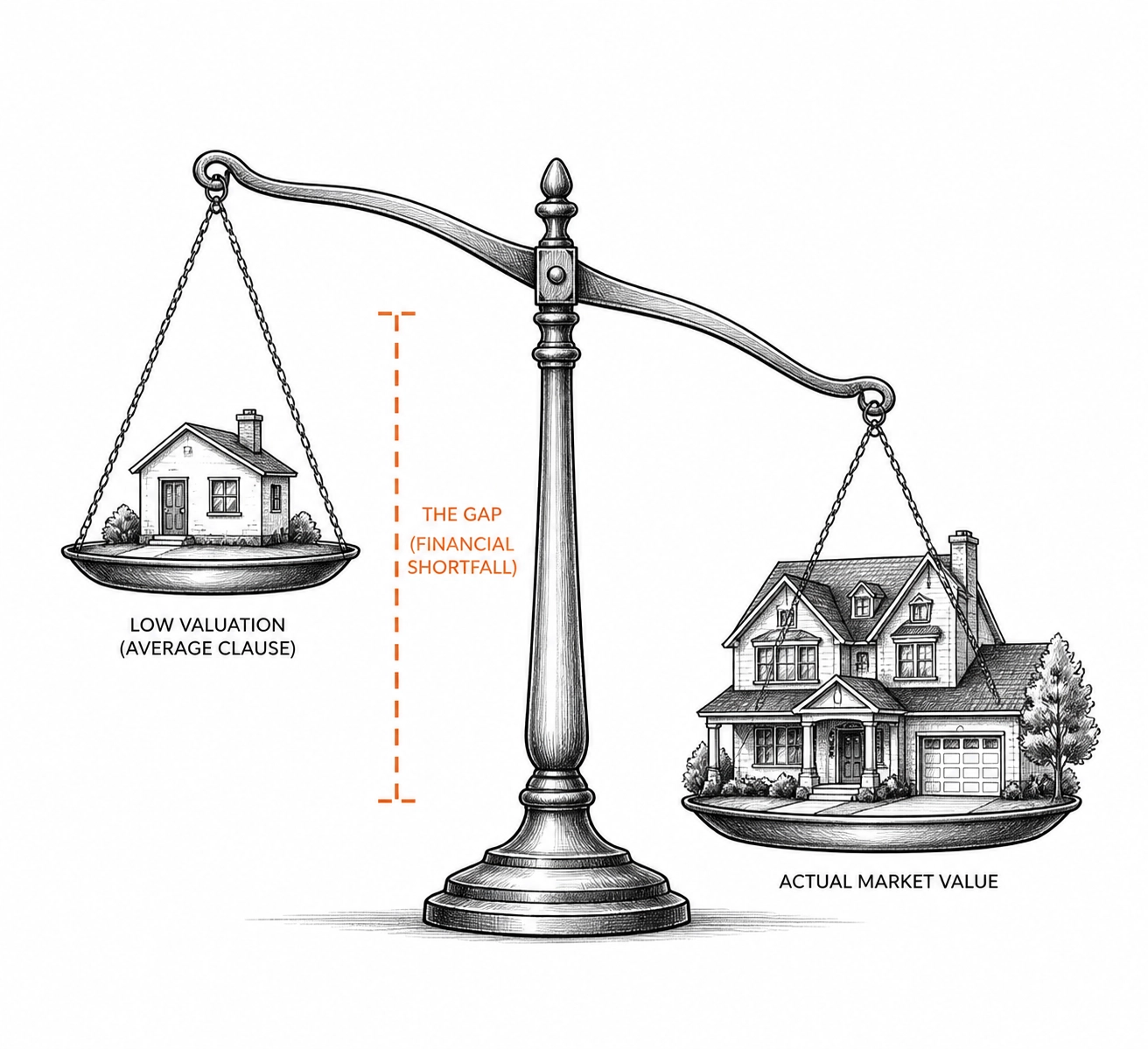
One of the most misunderstood aspects of any commercial policy: and specifically General Contractor Liability Insurance: is the ‘Average Clause’. I often talk to contractors who believe that if they have a £500,000 policy and suffer a £100,000 loss, they are fully covered. Unfortunately, that isn’t always how the math works in the eyes of an insurer.
The Average Clause states that if you have underinsured your assets or your liability exposure, the insurer can reduce your payout by the same percentage that you are underinsured.
Let’s look at a practical example. Imagine you have equipment and plant valued at £200,000, but you only insured it for £100,000 to save on premiums. If you suffer a partial loss: say, a fire in a storage unit that causes £50,000 worth of damage: the insurer will point out that you are only 50% insured. Consequently, they may only pay out 50% of your claim. You expected £50,000; you receive £25,000.
For a general contractor, this can be catastrophic. It turns a manageable setback into a financial crisis, all because the valuation at the start of the policy was inaccurate.
The Inflation Factor: Why 2024 Valuations Don’t Work in 2026
If you haven’t updated your valuations in the last eighteen to twenty-four months, I can almost guarantee you are underinsured. As we sit here in May 2026, we are looking back at several years of unprecedented volatility in the supply chain.
When we talk about General Contractor Liability Insurance, we aren’t just talking about the “slip and trip” on a job site. We are talking about the cost of making things right when something goes wrong.
- Rebuild Costs: The cost of timber, steel, and concrete has fluctuated wildly. If a project you are responsible for is damaged, the cost to rebuild it today is significantly higher than it was when the project was first quoted.
- Specialist Labour: It’s not just materials. The cost of skilled trades has risen. If you need to bring in emergency contractors to fix a structural error, those day rates will eat through a low-limit policy faster than you might think.
- Equipment Replacement: High-end machinery and specialized tools are more expensive to replace and harder to source.
I think many contractors treat insurance as a “set and forget” task. But a valuation from two years ago is effectively a relic. To remain protected, your policy must reflect the current market reality, not the market of the past.
Common Underinsurance Mistakes Contractors Make
In my experience at Moyak Insurance Services, I see the same patterns emerging when contractors review their coverage. Here are the most common pitfalls that lead to a dangerous state of underinsurance:
1. Choosing Minimum Limits to Save on Premiums
It is tempting to opt for the lowest possible limit to keep your monthly outgoings down. You might save £300 a year by taking a lower limit, but you could be losing out on millions in potential contracts. Most major commercial developers or local authorities now require a minimum of £5 million or even £10 million in Public Liability. If your policy is stuck at £1 million, you are essentially locked out of the most profitable work in the industry. We’ve actually written about common mistakes in business insurance before, and this is always near the top of the list.
2. Ignoring “Inland Marine” and Equipment Gaps
General Liability is the foundation, but it doesn’t cover everything. Many contractors forget to accurately value their tools and equipment that move from site to site. If your excavator is stolen or your specialized diagnostic gear is crushed, a standard liability policy won’t help you replace it. You need specific coverage based on the replacement value, not the purchase price.
3. Misclassifying Subcontractors
This is a big one. I see many general contractors who assume their policy automatically covers every subcontractor on site. If your subcontractors don’t have their own adequate insurance, or if you haven’t notified your broker that you are using bona-fide subs versus labour-only subs, you might find a massive hole in your coverage when a claim arises.

Why Accuracy Matters for Your Reputation and Growth
Underinsurance isn’t just a financial risk; it’s a reputational one. In the construction industry, your ability to finish a job and stand behind your work is your calling card.
Imagine a scenario where a significant error occurs, and your insurance payout is slashed because of the Average Clause. You can’t afford to fix the mistake, the project stalls, and the client sues. Your business is not just facing a bill; it’s facing a total loss of trust in the market.
Conversely, having accurate, robust General Contractor Liability Insurance is a selling point. It tells your clients that you are a professional who has accounted for every eventuality. It shows that you have the financial backing to see a project through, even when the unexpected happens. If you want to secure better terms and grow your business, accuracy is your best friend.
The Moyak Approach: Getting the Valuation Right
At Moyak Insurance Services, we don’t believe in “cookie-cutter” insurance. We know that every general contractor has a different fleet of equipment, a different ratio of subcontractors, and different project specializations.
I can see how overwhelming it is to try and calculate rebuild costs or equipment depreciation while also trying to manage a live site. That is where our personalized approach comes in. We don’t just send you a renewal notice; we sit down with you to look at the actual numbers.
We ask the right questions:
- Have you bought new plant machinery this year?
- Are you taking on larger-scale projects than you were twelve months ago?
- What does your current contract with your main client require in terms of indemnity?
Our goal is to ensure that if the worst happens, you aren’t left checking the fine print for why your claim wasn’t paid in full. We help you navigate the complexities of General Contractor Liability Insurance so you can focus on the build.
Conclusion: Take Action Before the Renewal Date
Underinsurance is a silent threat because it doesn’t make a sound until you try to make a claim. By then, it’s too late to fix the valuation.
I recommend that every contractor performs a “mid-term review” of their assets and project values. Don’t wait for the renewal notice to land on your desk. Look at your current projects, look at the replacement cost of your tools, and be honest about whether your current limits would actually protect you in 2026’s economy.
If you’re unsure where to start or if you suspect your current policy might be falling short, let’s have a conversation. Accuracy in insurance isn’t just a box-ticking exercise: it’s the safety net that keeps your business standing.
Whether you are a local builder or a large-scale general contractor, we are here to help you get the details right. Visit our General Contractor Liability Insurance page to learn more about how we can tailor a policy to your specific needs, or browse our other commercial combined options for a more comprehensive look at your business protection.