

If you have been working in the construction industry across Essex or London for any length of time, you probably feel like you’ve seen it all. You have navigated the supply chain shocks of the early 2020s and adjusted to the initial waves of the Building Safety Act. But as we move through June 2026, the landscape for General Contractor Liability Insurance has shifted again, and I can see many firms still operating on old assumptions that could leave them dangerously exposed.
I was recently talking to a client in Chelmsford who thought their standard public liability policy was a “catch-all” for any site mishap. In reality, under the 2026 regulatory environment, that policy is often only half the story. The gap between what you are legally required to do as a “dutyholder” and what your insurance actually covers has never been wider.
If you haven’t looked at your fine print since the 2026 updates to the Building Safety Act kicked in, you might find that your current cover is effectively a safety net with a very large hole in the middle.
The Dutyholder Revolution: More Than Just Safety
By now, most of us are familiar with the term “dutyholder.” Whether you are the Principal Contractor or a specialist subcontractor, the law now treats your responsibilities as much more than just keeping the site tidy. You are now legally responsible for “planning, managing, and monitoring” the work to ensure it meets every single building regulation.
The problem I am seeing in the market is that many contractors are still relying solely on Public Liability (PL). While PL is great for when a brick falls on a car or a visitor trips over a cable, it rarely covers the “professional” side of your new duties. If you fail to monitor a subcontractor correctly or miss a compliance step that leads to a project being halted or redesigned, your PL insurer is likely to walk away.
In fact, I think the biggest risk for firms seeking Business Insurance in London right now isn’t a physical accident, it’s a regulatory failure.
The Gap: Public Liability vs. Professional Indemnity
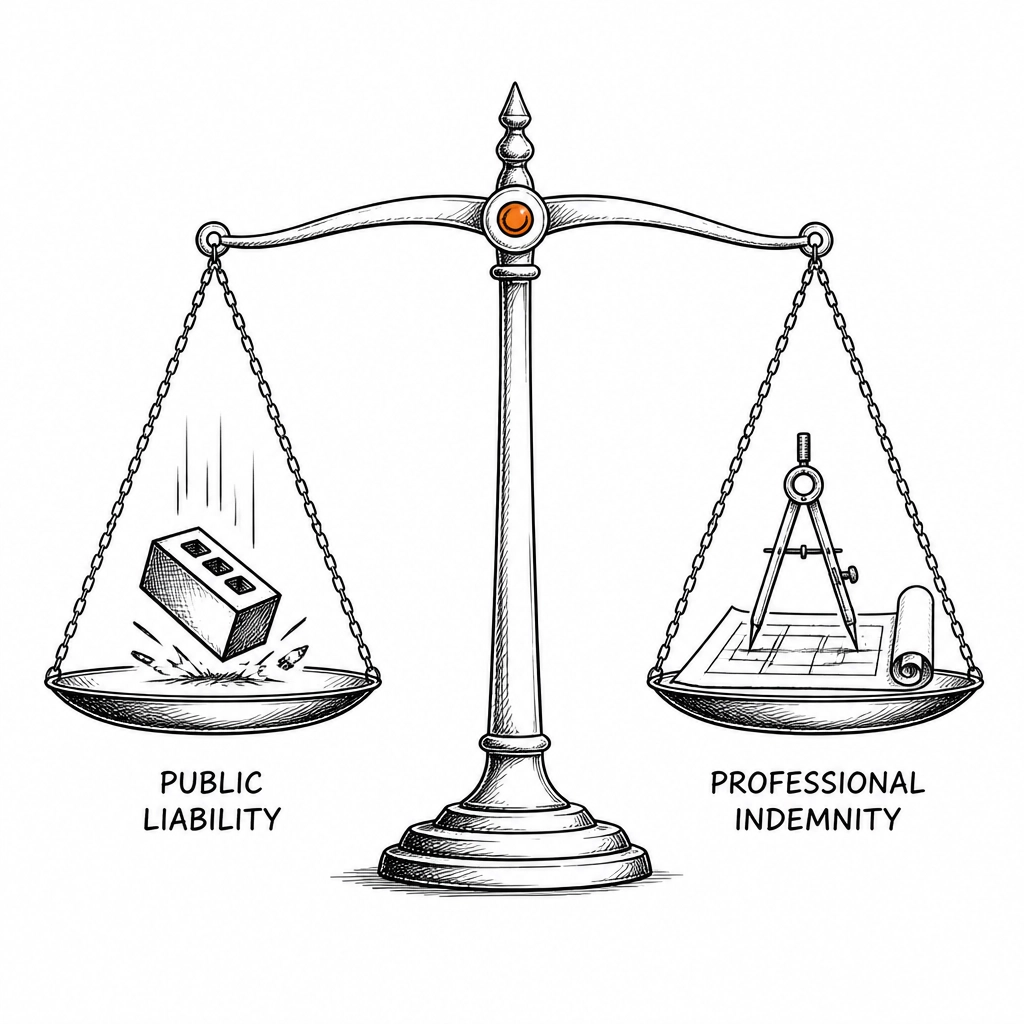
This is where the confusion usually starts. For years, general contractors didn’t think they needed Professional Indemnity (PI) insurance unless they were doing “design and build.” But in 2026, the lines have blurred.
Under the current regime, if you provide any level of technical advice, sign off on a “substitution of materials,” or manage the “Golden Thread” of information, you are performing a professional service. Standard General Contractor Liability Insurance typically excludes professional negligence.
I’ve seen cases where a contractor in Essex made a “common sense” swap for a cladding fixative because of a local shortage. On paper, it seemed fine. But when the building safety regulator audited the “Golden Thread” two years later, the swap was deemed non-compliant. The cost to rectify wasn’t covered by their Public Liability because there was no “accidental damage”, it was a professional error. This is one of the biggest construction insurance pitfalls I see firms falling into today.
The “Golden Thread” is Your Best Friend (And Your Worst Enemy)
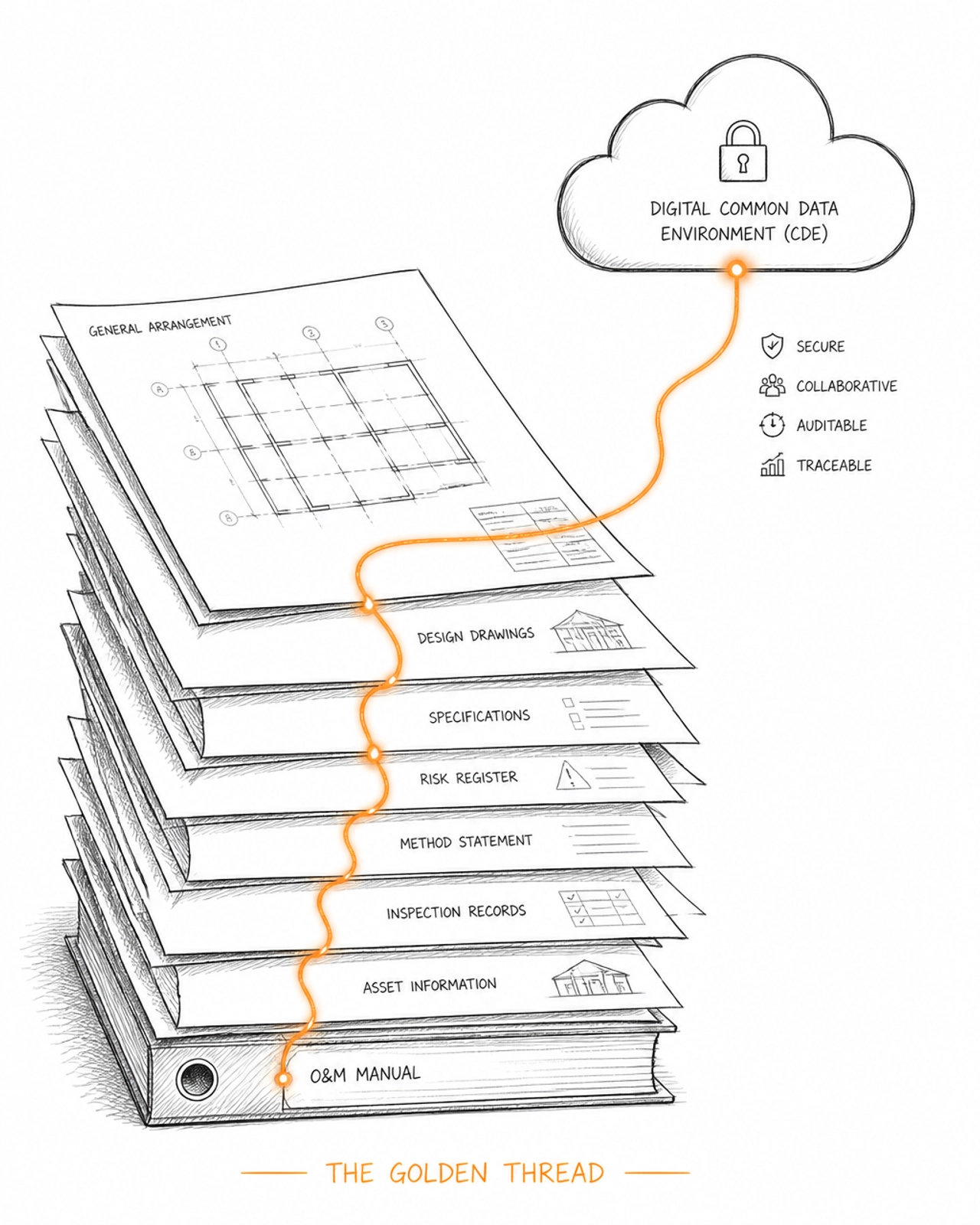
If you want to secure competitive Business Insurance in Essex or London, you need to prove you have mastered the “Golden Thread.” This is the digital record of everything, from the initial design intent to the final screw turned on site.
Going forward, insurers aren’t just looking at your claims history; they are looking at your data management. I’ve noticed that brokers are now asking for evidence of digital logbooks and real-time compliance tracking before they even offer a quote. If your filing system is still a collection of muddy folders in the back of a van, you are going to find your premiums skyrocketing, or worse, you’ll be declined cover altogether.
The “Golden Thread” isn’t just a regulatory hurdle; it’s your evidence. If a claim arises five years from now, that digital trail is what will determine if your insurer stands by you or points to a “failure to maintain records” clause to void the policy.
The Competence Trap in Essex and London
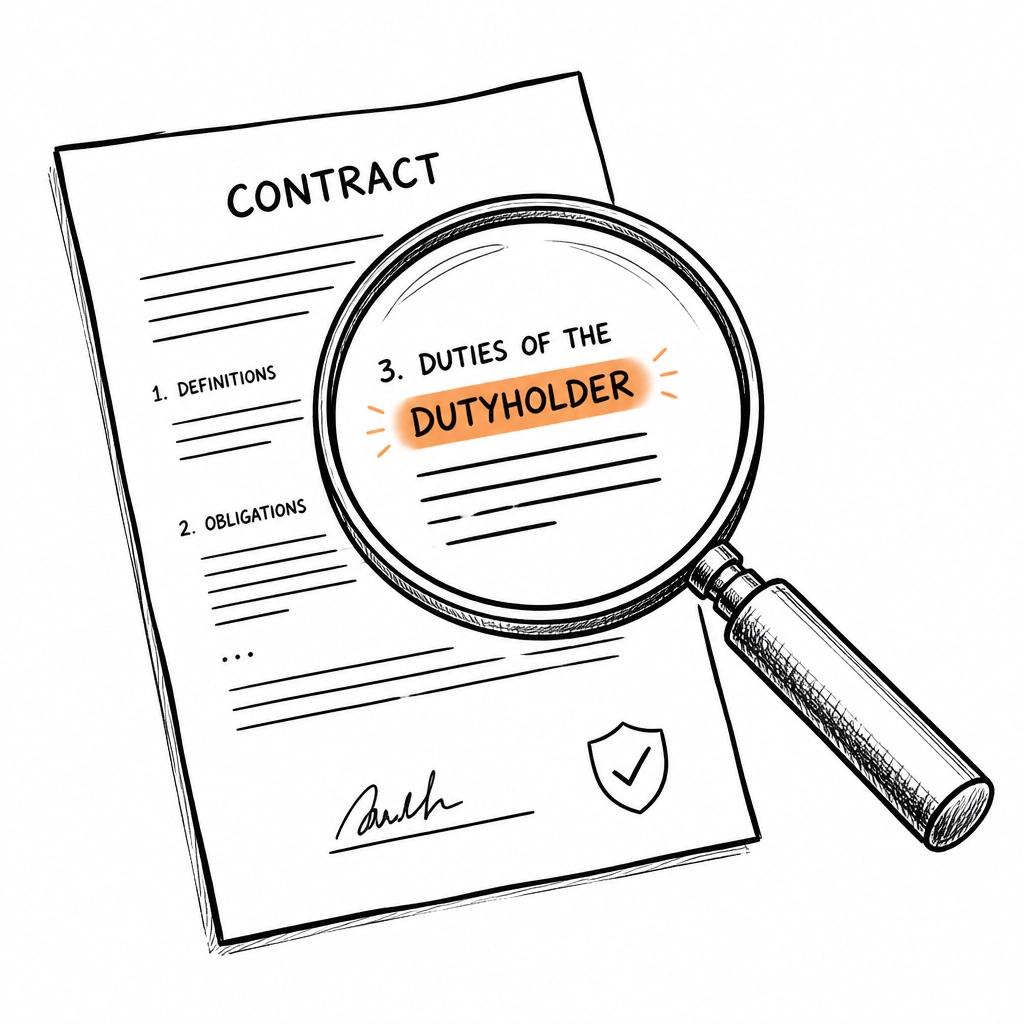
In highly competitive markets like London and the South East, there is always pressure to move fast. However, the 2026 Building Safety Act updates have put a massive spotlight on “Competence.” You are now legally required to ensure that every subcontractor you hire is competent for the specific task they are doing.
In the past, checking a subcontractor’s insurance certificate was enough. Today, that isn’t even the bare minimum. You need to be checking their training records, their specific experience with the materials being used, and their understanding of their own dutyholder roles.
If a subcontractor fails and you can’t prove you did your due diligence on their competence, the liability “flows up” to you. I see this happening more often in Business Insurance London renewals, where the “vicarious liability” section of a policy is being tightened significantly. You can find more about this in our guide on 7 mistakes construction contractors make.
4 Steps to Fix Your Cover for 2026
If you are worried that your current setup might fail you, here is how I recommend fixing it:
- Audit Your Role, Not Your Title: Don’t just look at what’s on your business card. Look at what you actually do on site. Are you managing design? Are you coordinating other trades? If yes, you likely need a combined Public Liability and Professional Indemnity policy.
- Digitise the “Golden Thread”: Invest in a project management tool that tracks compliance in real-time. Show this to your broker. It proves you are a lower risk because you have the evidence to defend a claim.
- Review Subcontractor Clauses: Ensure your contracts clearly define who is the “Principal Contractor” and what their dutyholder obligations are. Don’t leave it to “standard terms” that haven’t been updated since 2022.
- Work with a Specialist Broker: The “average” person might understand the basics of insurance, but the 2026 regime is technical. You need someone who understands the difference between a “claims-made” PI policy and an “occurrence-based” PL policy.
Pragmatic Realism: The Industry is Changing

I understand the frustration. It feels like every year there is a new set of acronyms and a new reason for premiums to go up. But I think it’s important to look at this pragmatically. The goal of the 2026 regulations is to ensure that when we build something in Essex or London, it stays safe for the long term.
As a broker at Moyak Insurance Services, I see the firms that embrace these changes: the ones who take their dutyholder roles seriously and invest in their “Golden Thread”: actually ending up with better projects and more stable insurance costs in the long run. They aren’t just buying a policy; they are securing their future.
If you are unsure where you stand or if your General Contractor Liability Insurance is truly fit for purpose in this new era, don’t wait for a claim to find out. Let’s have a practical conversation about your specific risks and get your cover where it needs to be.