
On 24 September 2026, W G Carter Limited was fined £120,000 and ordered to pay £5,247 in costs after pleading guilty to breaching Regulation 4(1) of the Work at Height Regulations 2005. The case followed the death of carpenter Richard “Felix” Roper, who fell through an unsafe first floor during refurbishment work at Manor Barn House in Gloucestershire.
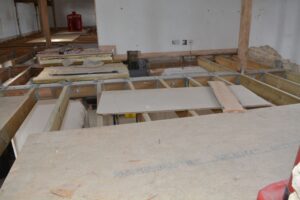
On 30 August 2022, Mr Roper was replacing rotten joists and floorboards while other workers removed flooring in the same area. Large parts of the floor had been stripped back, leaving open gaps between joists; some joists were missing or unsecured. He fell to the concrete floor below, suffered severe head injuries and died in hospital the following day.
A joint investigation by the Health and Safety Executive (HSE) and Gloucestershire Police found the work had not been properly planned, appropriately supervised or carried out safely. The HSE served a Prohibition Notice stopping further work at height until adequate safeguards were in place. The company later adopted a safer method: installing joists from below using suitable equipment and keeping people off the first floor during the work.
The HSE’s account of the prosecution is a sobering reminder that renovation work in a private home is still construction work, with real risks and legal duties. The HSE says falls from height accounted for over a quarter of all work-related deaths in 2025/26.
For contractors and refurbishment firms, there are also important insurance lessons. Here are five to consider.
1. A criminal fine and an injury claim are different things
The £120,000 fine is a criminal penalty imposed on the company. Businesses should not expect employers’ liability (EL) insurance to pay a fine imposed for their own offence. Criminal fines are generally not insurable as a matter of public policy, and policy terms may also exclude fines and penalties. The same caution applies to prosecution costs: whether any legal costs are covered depends on the policy wording and circumstances.
A separate civil claim is different. If an employee is injured or killed at work and the employer is found legally liable, EL insurance is designed to cover compensation and associated legal costs, subject to the policy terms and limit. A serious injury or fatality can lead to a substantial claim, but the HSE prosecution and any civil claim are separate processes.
One point is worth being clear about: a breach of health and safety rules does not automatically mean an insurer will refuse every related claim. The response depends on the facts, the policy wording and the legal basis of the claim. But neither should a business assume that insurance will protect it from every consequence of unsafe work. Check your policy and speak to your broker if you are unsure.
2. Domestic refurbishment is not a lower-risk exception
The work at Manor Barn House was taking place in a domestic property, but that does not make the working environment less hazardous or remove an employer’s duties. The Work at Height Regulations apply to work where someone could fall a distance liable to cause personal injury. That can include an opening or gap in a floor, not only a roof edge or ladder.
The HSE’s brief guide to working at height explains that employers must make sure work is properly planned, appropriately supervised and carried out safely. Regulation 4 also includes planning for emergencies and rescue.
Insurance needs the same practical attention. EL relates to employee injury claims. Public liability (PL) may respond to certain claims for injury to other people or damage to their property, but damage to the part of a property being worked on can be treated differently under policy wording. Don’t assume a standard PL policy covers damage to a client’s home or the specific area under renovation. Ask your broker to check the relevant exclusions and extensions against the work you undertake.
3. A Prohibition Notice can stop work, but ordinary cover may not pay for the delay
After the fatal fall, the HSE served a Prohibition Notice stopping further work at height until suitable safeguards had been introduced. That kind of enforcement action can mean a project stops while a business reviews its method, makes the site safe and arranges a compliant way to continue.
The financial impact may include lost working days, remobilisation costs, disruption to other trades and pressure on contractual deadlines. But a stop-work notice does not automatically create an insured loss. Contract works insurance is generally concerned with accidental physical loss or damage to the works, while business interruption cover commonly depends on insured physical damage. Pure delay caused by a notice or unsafe working method may not be covered unless a specific extension applies.
Review your contract works and business interruption arrangements with your broker, and check whether any relevant delay or non-damage extension is available and suitable. Do not assume a policy will cover delay costs simply because the project has been interrupted.
4. Safer methods can also help manage insurance risk
The HSE’s approach to work at height is to consider whether the work can be avoided, then how falls can be prevented, and then how the distance and consequences of a fall can be minimised. In this case, the company later adopted a method of installing joists from below and keeping workers off the exposed first floor while the work was done.
That is a practical example of changing the method rather than relying only on workers to take care around dangerous openings. For refurbishment firms, the right approach depends on the job, the structure, access and the equipment available. Where work at height cannot be avoided, the plan should set out suitable equipment, safe access, protection against falls, supervision and rescue arrangements.
Insurers assess the risk they are asked to cover. A clear, credible approach to controlling hazards can help a broker present your business accurately and find appropriate terms. It does not guarantee a lower premium, but sound risk management can help prevent accidents and reduce the chance that a poor claims record will make cover harder or more expensive to arrange.

5. Tell your broker what work at height you actually do
A description such as “builder” or “refurbishment contractor” may not tell the whole story. Your broker needs to understand whether your team works on roofs, carries out loft conversions, replaces floor joists, uses scaffolding or access platforms, and whether you use employees, labour-only subcontractors or other subcontractors.
Be open about the types of work and the way they are carried out. If the insurer has imposed a height limit, specific safety condition or other restriction, ask your broker to explain what it means in practice. A policy is not automatically invalid just because a safety failure has occurred, but incorrect or incomplete information, or a relevant policy condition that has not been met, may create complications when a claim is assessed.
Keep risk assessments, method statements, briefings, equipment checks, supervision records and rescue plans current and relevant to the job. A method statement that does not reflect the actual layout or sequence of work will not help the team manage the risks. In the W G Carter case, several workers were working in the same area while flooring and structural supports had been removed. Work sequencing and access control are important parts of the plan, not details to leave until the site is open.
You can read more about choosing cover in our construction contractor insurance guide, explore general contractor insurance or review the options available through commercial combined insurance.
Review your method and your cover
Felix Roper’s death was preventable, according to HSE principal inspector James Lucas. His loss is first and foremost a tragedy for his family and colleagues. For contractors, the case also shows how quickly unsafe work at height can lead to fatal consequences, enforcement action and serious financial pressures.
Review how your business manages openings, exposed joists and other fall risks. Check that the method is properly planned, the right equipment is available, workers understand the sequence of work and access is controlled. Then ask your broker to review whether your EL, PL and contract works cover reflect the work your business actually undertakes.
Moyak Insurance Services works with businesses across Essex, Kent and London. For a free insurance review, contact our team and tell us about your work, your projects and the cover you currently have.