
Scaling a construction business in Essex is a significant achievement. It means you’ve moved past the initial struggle of finding work and are now managing bigger teams, more complex projects, and larger budgets. Whether you are moving from residential extensions in Chelmsford to commercial developments in Southend, or taking on more specialised subcontracting work across the county, the transition is exciting.
However, as someone who spends every day looking at the “fine print” of the industry, I can see how quickly this growth can outpace your protection. In fact, many of the most successful contractors I’ve worked with initially came to us because their old “one-size-fits-all” policy was starting to buckle under the weight of their new operations.
When you scale, your risk doesn’t just grow: it changes shape. The insurance that worked for you as a small team of three won’t hold up when you’re managing a dozen subcontractors on a £2 million site. In this guide, I want to walk you through the most common insurance pitfalls I see Essex construction firms fall into and how you can avoid them.
1. The Underinsurance Trap: Turnover vs. Reality
The most common mistake is also the simplest: failing to update your turnover and wage-roll figures. In the rush of winning new contracts and hiring more hands, the “boring” administrative task of updating your insurance often falls to the bottom of the pile.

Most Business Insurance Essex policies are rated based on your estimated turnover and payroll. If you tell your insurer at the start of the year that you expect to do £500,000 in work, but you end up landing a project that pushes you to £1.5 million, you are potentially underinsured.
In the event of a claim, insurers can apply what is known as the “Condition of Average.” This means if you are underinsured by 50%, they might only pay out 50% of your claim. I’ve seen this happen, and for a scaling business, it can be a fatal blow to your cash flow. It is vital to treat your insurance as a living document that grows as you do.
2. Ignoring Height and Depth Restrictions
As you take on larger projects, the physical nature of the work often changes. You might find yourself working on taller buildings or digging deeper foundations than your original policy allows.
I recently spoke to a contractor who had been doing standard two-storey residential work for years. Their General Tradesmen Liability Insurance had a 10-metre height limit. When they won a contract for a five-storey apartment block, they didn’t check their policy. If a tool had fallen from the fourth floor and injured someone, they would have been personally liable for the damages.
Always check your height and depth limits before signing a new contract. If your work in Essex is moving into town-centre developments or more significant civil engineering projects, you likely need to have these limits extended or removed.
3. The “Bona-Fide” Subcontractor Confusion
Scaling almost always involves using subcontractors. However, there is a massive difference between “Labour-only” subcontractors and “Bona-fide” subcontractors in the eyes of an insurer.
- Labour-only subcontractors: These people work under your direct supervision, use your tools, and are treated essentially as employees. You MUST include them in your Employers’ Liability calculations.
- Bona-fide subcontractors: These are independent businesses that provide their own tools, materials, and insurance.
The pitfall here is assuming that because a subcontractor is “Bona-fide,” you don’t need to worry about them. You must verify: every single time: that they have their own Construction Contractor Insurance with limits that match yours. If they cause a major fire on-site and their insurance is invalid, the claim will almost certainly work its way up the chain to you.
4. Contractual Obligations and JCT Clauses
If you are moving into larger commercial work, you are likely encountering JCT (Joint Contracts Tribunal) contracts. These documents are excellent for clarity, but they often come with specific insurance requirements that catch growing firms off-guard.
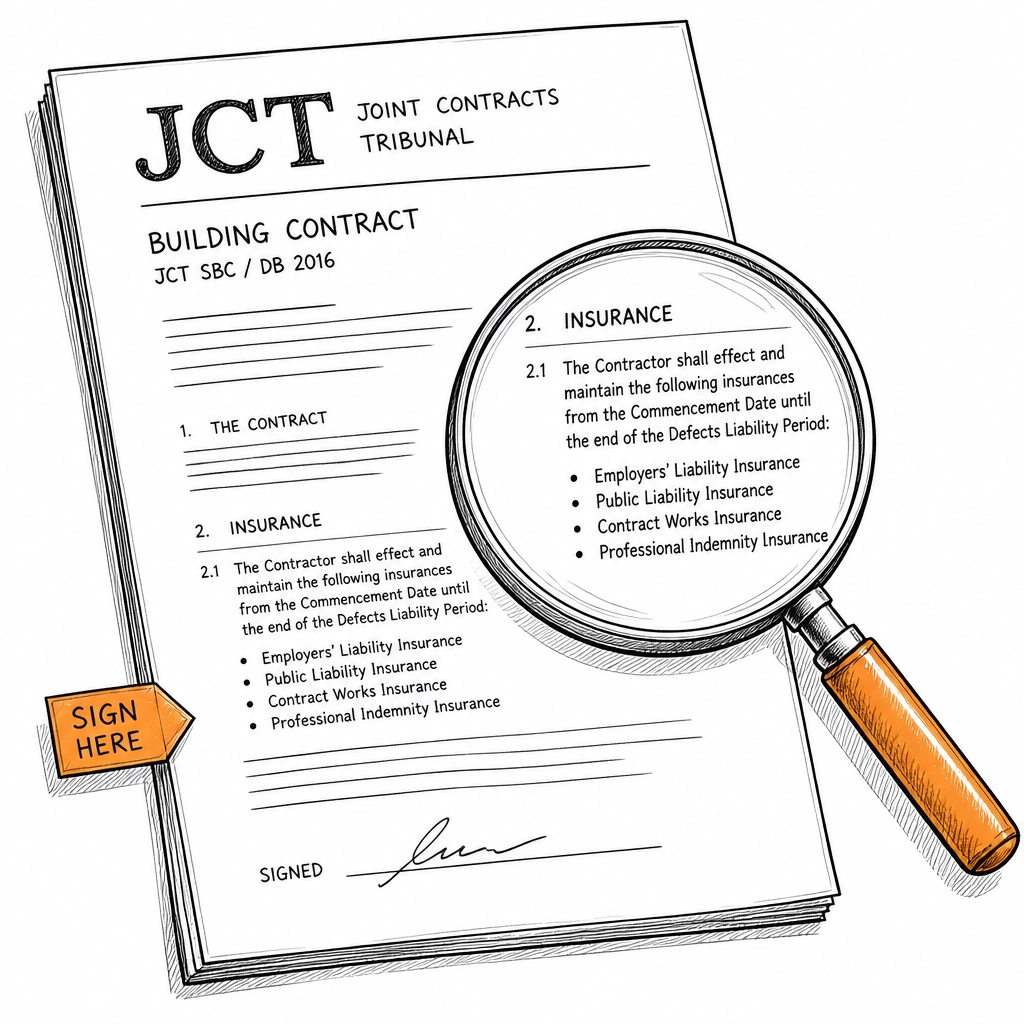
One of the most critical is JCT Clause 6.5.1 (formerly 21.2.1) Non-Negligent Liability. Standard Public Liability insurance only pays out if you are negligent (i.e., you did something wrong). But what if you are doing a basement dig in a terrace in Epping and the neighbouring house cracks, even though you followed all the professional advice? There’s no “negligence,” so your standard policy won’t pay.
This specific cover is often a requirement for many Essex-based developments, and if you haven’t arranged it, you are in breach of contract from day one. I think it’s one of the most overlooked areas of risk for contractors moving into the “mid-market” space.
5. The Need for Professional Indemnity (PI)
In the past, construction was simple: the architect designed it, and the contractor built it. Today, the lines are blurred. If you are involved in “Design and Build,” or even if you are just suggesting a specific material or technical solution on-site, you are taking on professional risk.
Standard liability insurance covers “tangible” things: injury or property damage. It does not cover financial loss caused by poor advice or design errors. As you scale, adding a Professional Indemnity element to your Moyak Insurance portfolio becomes a necessity rather than an option.
Why an Individual Approach Matters
When you search for “Business Insurance Essex,” you’ll find plenty of websites that offer an instant quote. While those are fine for a sole trader with a van, they are dangerous for a scaling business.

At Moyak Insurance Services, we believe in a different way of doing things. Our “Individual Approach” isn’t just a marketing slogan; it’s a necessity for complex industries like construction. We act as your broker, dealing with the UK’s leading master insurance brokers to find the best cover for your specific budget and project types.
I can see the value in sitting down with a client to understand exactly what they do. We don’t just ask about your turnover; we ask about the heights you work at, the heat processes you use, and the types of subcontractors you hire. This level of care ensures that when you do need to make a claim, there are no hidden exclusions waiting to trip you up.
Actionable Checklist for Scaling Contractors
If your Essex construction firm is in a growth phase, here is a quick checklist to run through with your broker:
- Projected Turnover: Is your declared turnover within 10% of what you actually expect to earn this year?
- Working Limits: Does your policy cover the maximum height and depth you are currently working at?
- Heat Work: Are you using blowtorches, welding equipment, or angle grinders? Ensure your “Use of Heat” conditions are being met.
- Subie Checks: Do you have a system for collecting and checking the insurance certificates of every subcontractor you hire?
- Contract Review: Before signing a JCT or NEC contract, has your broker reviewed the insurance requirements?
Conclusion: Build on a Solid Foundation
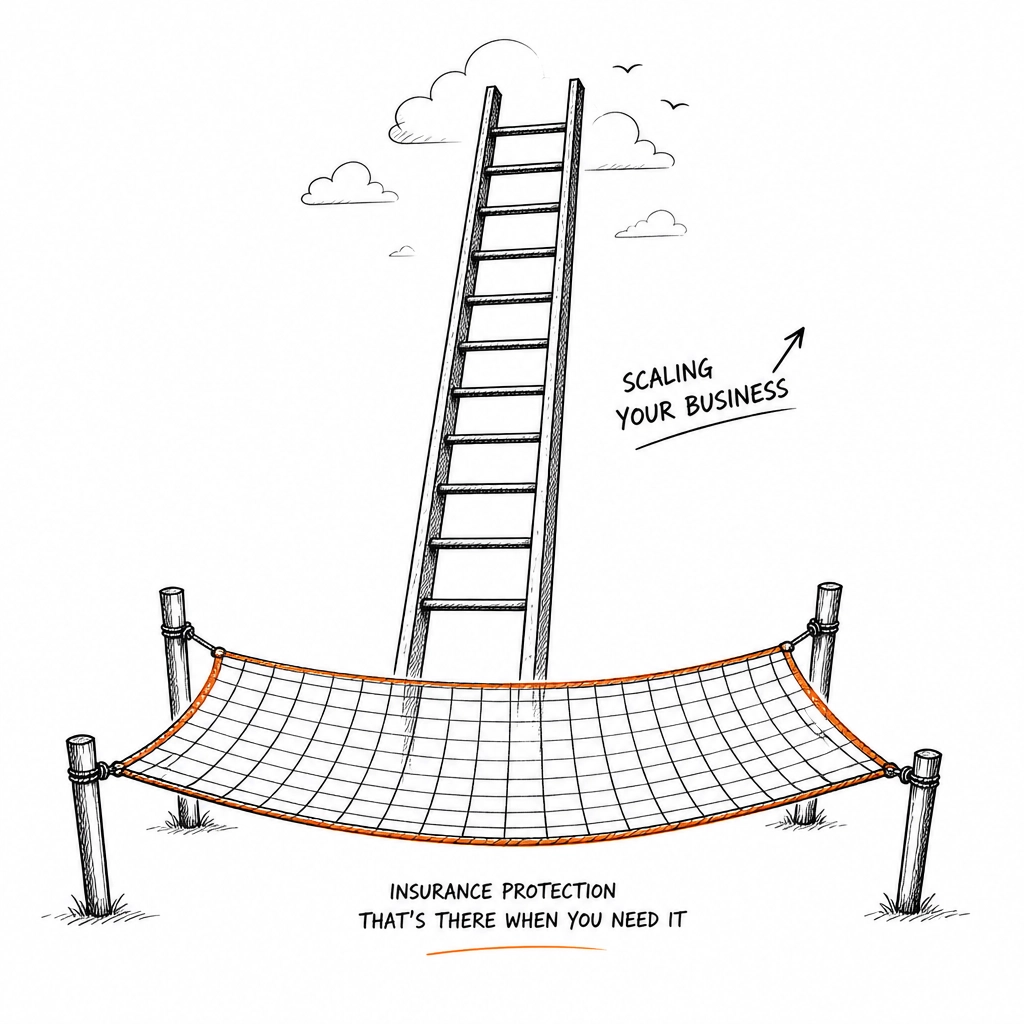
Scaling your business is a marathon, not a sprint. Just as you wouldn’t build a house on a weak foundation, you shouldn’t build a growing company on inadequate insurance.
The pitfalls are many: from the “Condition of Average” in underinsurance to the complexities of non-negligent liability: but they are all avoidable with the right advice. If you’re a contractor in Essex, Kent, or London looking to move to the next level, don’t leave your protection to a generic online form.
At Moyak Insurance Services, we specialise in helping growing businesses secure their investments and their future. Let us take the “insurance headache” off your plate so you can focus on what you do best: building the future of Essex.
Are you ready to review your cover? Contact us today for a personalized consultation and see how our individual approach can save you a fortune while providing better protection.