

As we move through 2026, the landscape for construction in the UK has shifted fundamentally. I remember talking to contractors a few years back who thought the Building Safety Act (BSA) was just another layer of red tape that would eventually fade into the background. But sitting here today, I can see that the opposite has happened. The “new normal” is officially here, and for those of us working as a Business Insurance Broker in Essex, it’s clear that the stakes have never been higher.
If you are a contractor operating in London or Essex, the Building Safety Act 2026 requirements aren’t just about safety on-site anymore: they are about the very survival of your business. From the way you document a single screw to the level of General Contractor Liability Insurance you carry, everything has changed.
In this guide, I’ll break down exactly what you need to know to stay compliant, protected, and profitable in this new era.
The “Golden Thread”: Documentation is No Longer Optional
In the past, keeping records was often seen as a “nice to have” or something that was tidied up at the end of a project. That’s a dangerous mindset in 2026. The Building Safety Act has formalised the “Golden Thread” of information. This is a digital record of everything: from design intent to the specific materials used and the competence of the person who installed them.
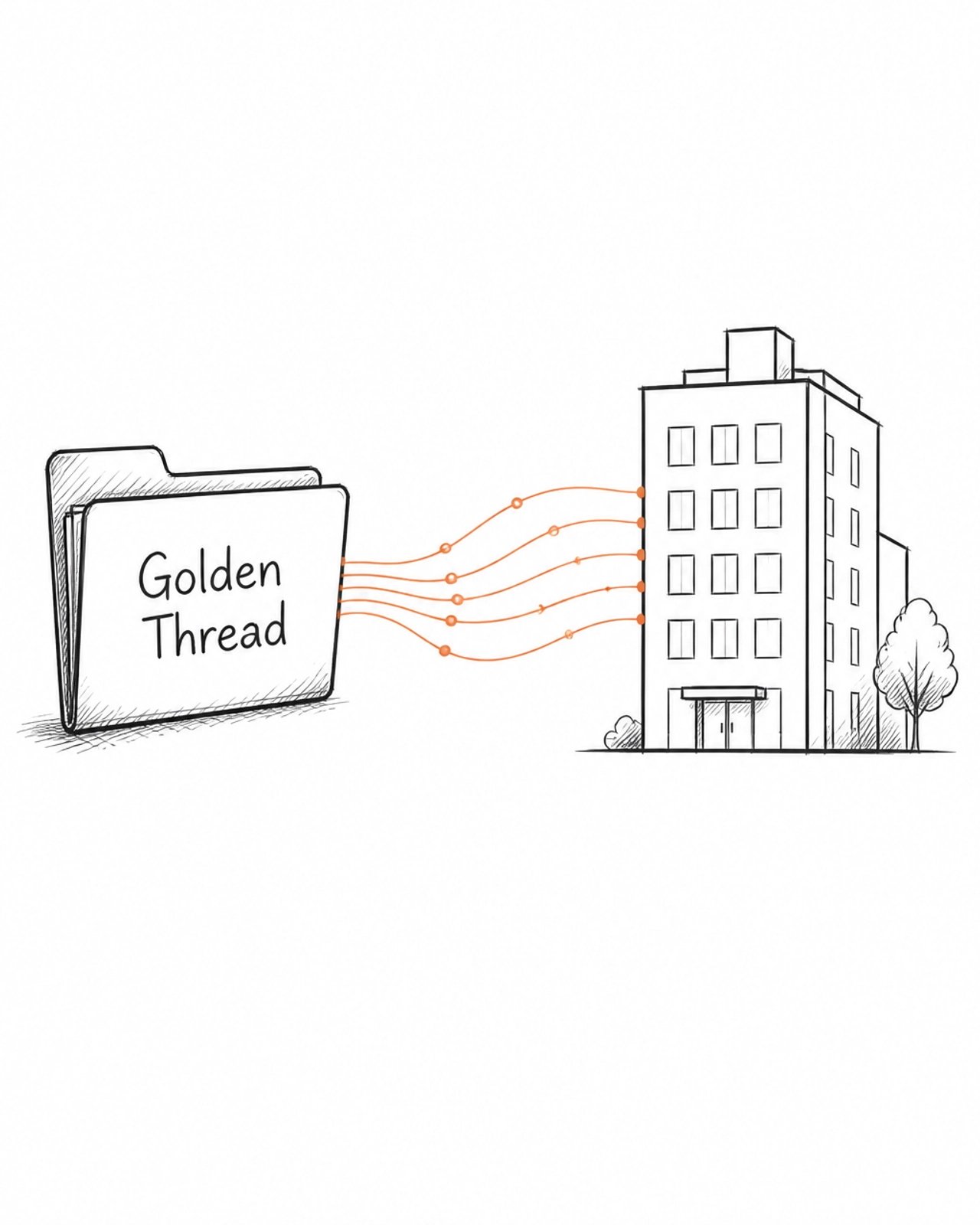
I’ve spoken to several project managers recently who found themselves in hot water because they couldn’t produce the digital evidence required during a gateway inspection. In 2026, if it isn’t documented digitally, it didn’t happen. From an insurance perspective, this is critical. If a claim arises ten years from now, your ability to defend yourself will rest entirely on this Golden Thread. Without it, your Construction Contractor Insurance might not provide the shield you expect.
Dutyholders and the New Weight of Liability
One of the biggest shifts I’ve observed is the clear definition of “Dutyholders.” Whether you are the Client, the Principal Designer, or the Principal Contractor, the law now assigns specific legal responsibilities to you.
It’s no longer enough to say, “I followed the drawings.” You are now legally required to ensure that the people you hire are competent and that the work complies with all building regulations. In fact, we are seeing a significant rise in the need for Directors & Officers (D&O) insurance because the Act allows for personal liability to be attached to senior management for safety breaches.
The Insurance Landscape in 2026: What’s Changed?
The insurance market has reacted sharply to the BSA. In my experience, insurers are no longer just looking at your turnover; they are looking at your processes.
1. Professional Indemnity (PI) – The 30-Year Tail
The limitation period for claims under the Defective Premises Act has extended to 30 years for some projects. This is a massive “long-tail” risk. When you’re looking at your PI cover, you need to ensure it reflects this exposure. A policy that was “standard” five years ago might leave you dangerously exposed today.
2. Public and Products Liability
While Business Insurance London has always required robust limits due to the complexity of the city’s infrastructure, the BSA has pushed this even further. Clients and developers are now demanding much higher limits of indemnity: often £10m or more: especially for any work involving high-rise residential buildings.
3. General Contractor Liability Insurance
If you are a general contractor, your role as a “gatekeeper” of safety is now enshrined in law. Insurers want to see that you have a rigorous process for vetting subcontractors. We’ve recently written about the 7 mistakes contractors make regarding these fixes, and it remains a top priority for our clients.
London vs. Essex: Navigating the Regional Nuances
Working across both London and Essex, I see two different but equally challenging environments.

In London, the focus is heavily on “Higher-Risk Buildings” (HRBs). The density and height of projects mean that the regulatory scrutiny is intense. If you’re a contractor in the city, you are likely dealing with the Building Safety Regulator (BSR) on a weekly basis.
In Essex, while we have fewer high-rise developments, the “BSA-lite” approach is becoming the standard for all construction. Even smaller residential developments are now adopting the same documentation and competence standards as the big London projects. Whether you are in Chelmsford or Canary Wharf, the expectation of Business Insurance Essex specialists like us is that you operate at the highest level of compliance.
Your 2026 Compliance Checklist
To help you navigate these changes, I’ve put together a practical checklist that every contractor should be following right now:

- Audit Your Digital Records: Is your “Golden Thread” actually a thread, or is it a series of disconnected emails? Ensure all project data is centralized and accessible.
- Verify Subcontractor Competence: Don’t just check their insurance certificates; check their training records and specific BSA competence.
- Review Your Limitation Periods: Talk to your broker about the 30-year liability window. Does your current PI policy cover your past works adequately?
- Update Your RAMS: Ensure your Risk Assessments and Method Statements explicitly reference the new building safety standards.
- Check for Fire Safety Exclusions: Many older policies have “cladding” or “fire safety” exclusions that could be devastating under the current Act.
How Moyak Insurance Services Can Help
At Moyak Insurance Services, we don’t just sell policies; we partner with you to manage risk. I spend a lot of my time looking through contract clauses and insurance schedules to find the gaps that others miss.

We know the London and Essex markets inside out. Whether you’re looking for General Contractor Liability Insurance or need a full review of your business’s risk profile, we are here to help. The Building Safety Act doesn’t have to be a threat to your business: with the right preparation and the right insurance partner, it can be a framework that helps you stand out as a leader in the industry.
Going forward, the contractors who embrace these changes will be the ones winning the biggest contracts. If you’re unsure where you stand, let’s have a conversation.
Contact Moyak Insurance Services today to ensure your business is built on a foundation of safety and security.