📞 01375 392 087  ·  ✉ info@moyakinsurance.co.uk

Mon–Fri: 9:30am – 5:30pm

Author: moyakinsurance

  • Euna’s 14 New PI Extensions: What Every Contractor Needs to Know About General Contractor Liability Insurance in 2026

    Euna’s 14 New PI Extensions: What Every Contractor Needs to Know About General Contractor Liability Insurance in 2026

    If you have been keeping a close eye on the construction insurance market this week, you likely saw the news from Euna Underwriting. On 22 July 2026, they officially released 14 new extensions to their Professional Indemnity (PI) product for building and engineering contractors.

    As someone who spends a lot of time reviewing policy wordings and talking to firms across Essex and London, I can tell you this isn't just another routine update. This is a direct response to the massive liability shift we have seen since the Building Safety Act and its subsequent regulations really took hold. The landscape for Construction Contractor Insurance has changed, and if your policy is still using a standard wording from three or four years ago, you are likely carrying risks you don't even realise.

    In fact, I often see contractors assuming their combined commercial insurance covers everything, only to find a massive gap when it comes to design responsibility or regulatory fallout. These new extensions from Euna are designed to plug those gaps.

    The Building Safety Act: Why the Goalposts Moved

    The primary reason we are seeing these 14 new extensions is the "long tail" of liability created by the Building Safety Act. For years, the standard limitation period for defect claims was six or twelve years. Now, we are looking at a 30-year retrospective period for certain claims and a 15-year prospective period for new work.

    A magnifying glass over a legal document representing the Building Safety Act with subtle orange highlights.

    When the liability period doubles or triples, the insurance market has to evolve. I’ve spoken to several developers in Kent who are suddenly being asked for proof of cover on projects they finished a decade ago. It is a pragmatic reality: the risk is staying on your books for much longer. Euna’s update addresses this by broadening how the policy responds to these extended liability tails and the heightened oversight from regulators.

    Breaking Down the Key Extensions

    While "14 extensions" sounds like a lot of technical jargon, they essentially boil down to a few critical areas that every general contractor should understand.

    1. Regulatory and Disciplinary Proceedings

    In 2026, the Building Safety Regulator is more active than ever. If you are working on higher-risk buildings (HRBs) in London, you are under a microscope. Euna’s new wording includes specific cover for costs related to regulatory investigations. This is no longer a "nice-to-have" extension; it is essential. If a regulator calls you in for a formal interview regarding a safety compliance issue, the legal costs alone can be staggering.

    2. Building Information Modelling (BIM) Risks

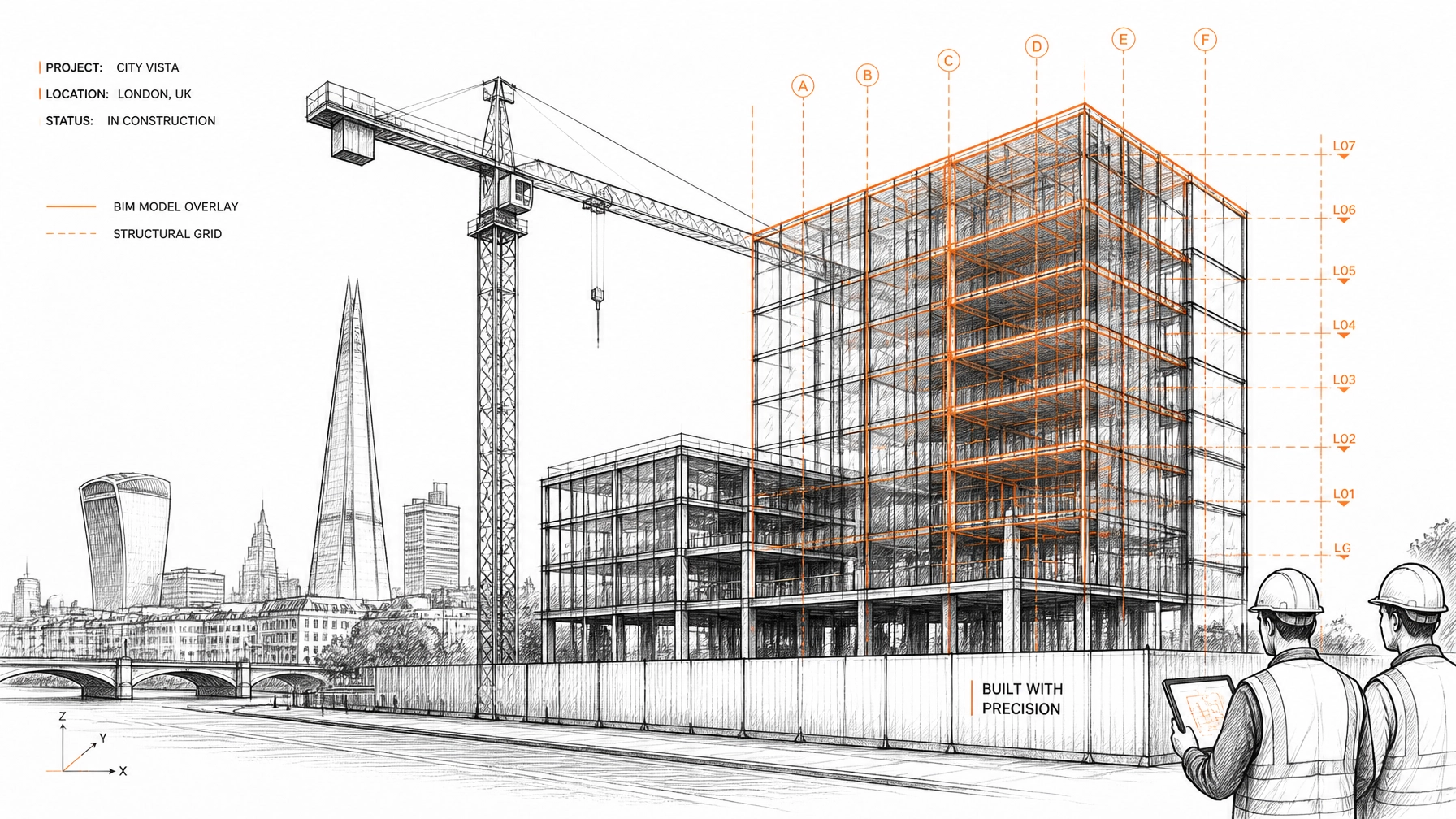
    We have moved far beyond BIM being just a "fancy 3D model." Today, the BIM model is a legal record. If there is a clash detection error that isn't spotted because of a digital data failure, who is at fault? Euna has explicitly introduced BIM-related liability cover. This addresses risks around data integrity, version control, and the shared reliance on digital models. For contractors in the London market where BIM Level 2 or 3 is the standard, this is a vital piece of the puzzle.

    3. Subcontracted Design Exposure

    I see this mistake all the time: a contractor thinks they don't need PI insurance because "the architect does the design." But as a general contractor, you often have a contractual duty of care that makes you liable for the failure of your sub-consultants. These new extensions ensure that if a subcontracted designer makes an error, your PI policy is positioned to respond effectively.

    4. Rectification and Mitigation Costs

    One of the most practical additions is the improved cover for rectification costs. This allows you to claim for reasonable expenses incurred to fix an error before it turns into a massive claim. In the past, some policies wouldn't pay out until a formal claim was made against you. Waiting for a claim to crystallise is often the most expensive way to handle a defect. Being able to mitigate early saves everyone money and preserves your reputation.

    Why This Matters for Business Insurance in Essex and London

    Whether you are a growing business in Essex or an established firm handling major projects in London, your General Contractor Liability Insurance needs to reflect the modern reality of the UK construction sector.

    A tablet showing a 3D BIM model with orange accents, illustrating digital coordination on a construction site.

    The PI market has been "hard" for a few years now: meaning higher premiums and stricter terms. However, seeing an insurer like Euna provide these specific extensions is a sign that the market is becoming more sophisticated in how it handles risk. Instead of just raising prices, they are providing better tools.

    If you are a contractor working on higher-risk buildings, your insurance requirements are naturally more complex. You aren't just looking for a cheap quote; you are looking for a policy that won't leave you hanging when a BIM data dispute arises three years from now. This is where the independent broker vs online comparison debate becomes very real. An online form isn't going to ask you about your BIM Execution Plan (BEP) or your 15-year prospective liability tail.

    Practical Steps to Align Your Policy

    If you are reading this and wondering if your current cover is up to scratch, here are a few steps I recommend:

    • Review Your "Professional Services" Definition: Does your policy actually cover the coordination and management of digital data? Many older policies don't.
    • Check the Retroactive Date: With the Building Safety Act changes, your retroactive date is more important than ever. Ensure there are no gaps between when you started work and when your cover began.
    • Disclose Your BIM Usage: Be transparent with your broker about how you use BIM. If you are taking on the "Information Manager" role, that needs to be noted.
    • Audit Your Sub-consultants: Ensure they have their own PI insurance with limits that match your own obligations to the client.

    The Moyak Approach: Personalised Care

    At Moyak Insurance Services, we take an individual approach to every client. We aren't just here to sell you a policy; we are here to act as your business insurance broker in Essex, Kent, and London. We deal with the UK's leading master insurance brokers to ensure you get the best cover for your budget.

    A professional black-and-white sketch of a handshake between a broker and a contractor with an Essex town silhouette.

    I think the biggest value we provide is our ability to translate these complex insurance updates: like Euna's 14 extensions: into what they actually mean for your day-to-day operations. Whether you're worried about cleaning business insurance or high-level professional indemnity for a multi-million-pound build, we make sure you're protected.

    Going forward, the construction industry will only get more regulated. Having a partner who understands the difference between a standard policy and one with these critical extensions can save you a fortune: not just in premiums, but in the long-term survival of your business.

    Frequently Asked Questions

    What is Professional Indemnity (PI) insurance for contractors?

    It covers legal costs and expenses incurred in your defence, as well as any damages or costs that may be awarded, if you are alleged to have provided inadequate advice, services, or designs that caused your client a financial loss.

    Do I need BIM-specific insurance?

    In 2026, you don't necessarily need a separate "BIM policy," but you do need your PI and General Liability policies to be extended to cover digital data, BIM-related activities, and the liabilities arising from shared digital models.

    How has the Building Safety Act changed insurance?

    It has significantly extended the period during which you can be held liable for defects (up to 30 years for some historic projects). This means your insurance needs to provide much longer "tail" coverage and account for more rigorous regulatory oversight.

    What is a "liability tail"?

    The liability tail refers to the period after a project is completed during which a claim can still be made. For contractors, this tail has grown much longer due to recent legislative changes in the UK.

    Why should I use a broker in Essex or London instead of a national firm?

    Local brokers like Moyak Insurance Services understand the specific regional risks and have established relationships with London-market underwriters. This allows for a more personalised approach and often better access to specialized products like Euna's PI extensions.
  • JCT Insurance Clauses Explained: A Contractor’s Guide to Navigating 2026 Standards for Construction Contractor Insurance

    JCT Insurance Clauses Explained: A Contractor’s Guide to Navigating 2026 Standards for Construction Contractor Insurance

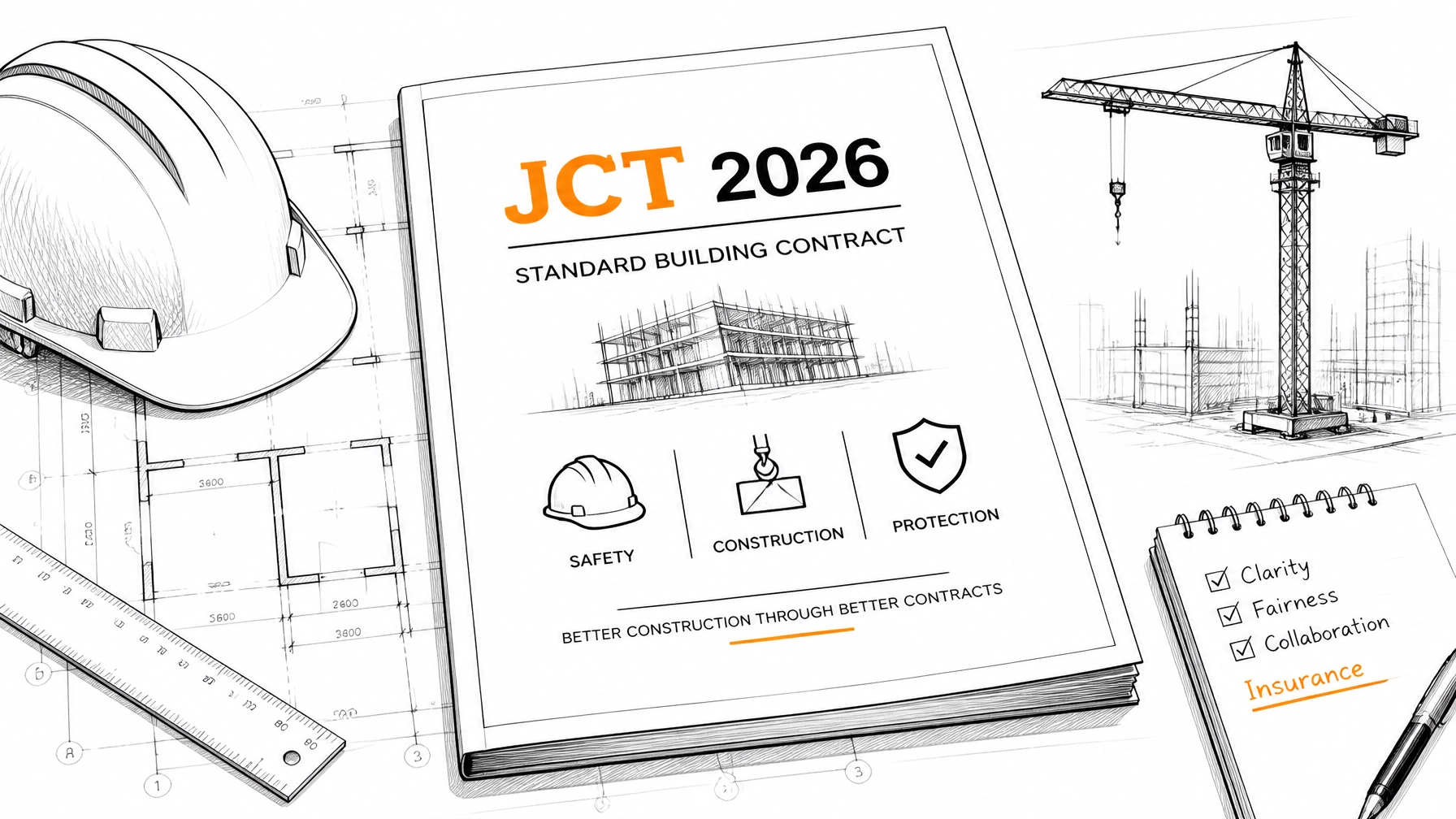
    Navigating the landscape of construction contracts has never been a simple task, but as we move through 2026, the complexity of JCT (Joint Contracts Tribunal) insurance clauses has reached a new peak. For contractors operating in Essex, Kent, and London, the transition to the 2024 JCT suite, which is now the industry standard, has brought several significant shifts that directly impact your liability and financial exposure.

    In my time working across the London and Essex construction sectors, I have often seen contractors treat the insurance section of a JCT contract as a formality to be ticked off by the broker at the last minute. However, the 2026 reality is that the interface between insurance, the Building Safety Act, and professional indemnity is now so tightly woven that a misunderstanding can lead to a project becoming effectively uninsured for certain risks.

    In fact, I think the most dangerous phrase in a contractor’s vocabulary today is "we’ve always done it this way." The new JCT standards demand a more forensic approach to Construction Contractor Insurance than we have seen in previous decades.

    Understanding Joint Names – More Than a Name on a Policy

    Sketch of Contractor and Employer bridging a gap with Joint Names Insurance

    The concept of "Joint Names" is the bedrock of JCT insurance, yet it remains one of the most frequently misunderstood areas. Whether you are operating under Option A (Contractor takes out insurance), Option B (Employer takes out insurance), or Option C (Work to existing structures), the goal is a "waiver of subrogation."

    This essentially means that the insurer agrees they will not sue any of the parties named on the policy to recover their losses. If a fire occurs due to a contractor's negligence, the insurance pays out, and the insurer cannot then turn around and sue that contractor to get their money back.

    Going forward, however, contractors need to be extremely careful. I’ve noticed that while the contract might specify Joint Names, the actual policy sitting in a filing cabinet might not always reflect the full scope of the project. If a sub-contractor isn't explicitly recognised under that Joint Names umbrella, they could find themselves facing a massive subrogation claim. It is vital to ensure that your General Contractor Liability Insurance is perfectly aligned with the specific Option (A, B, or C) chosen in the Contract Particulars.

    The Professional Indemnity Shift

    One of the most practical updates in the 2024 JCT suite, which we are now seeing fully implemented in 2026, is the language surrounding Professional Indemnity (PI) insurance. In the past, contracts often demanded PI levels that were simply no longer available or were priced so high they would bankrupt a project before it even started.

    The newer standards now expressly state that the obligation to maintain PI is subject to cover being available at "reasonable rates" and on "reasonable terms." This is a pragmatic acknowledgment of the hardening PI market we’ve seen in London and the South East.

    But there is a catch. The Contract Particulars now include specific spaces to record aggregate limits and, crucially, categories of cover that are excluded. If your PI policy has a fire safety exclusion, which is common in 2026, you must ensure this is noted in the JCT contract before you sign. If you don't, you are essentially promising the employer cover that you do not have, leaving you personally liable for any safety-related design failures.

    The Building Safety Act Interface

    Sketch of a shield representing the Building Safety Act and Professional Indemnity

    The Building Safety Act 2022 has fundamentally changed the risk profile for any contractor working on "higher-risk buildings." By 2026, the JCT clauses have matured to accommodate these risks, but the insurance market is still catching up.

    I can see that many insurers are now imposing strict sub-limits on claims related to fire safety or cladding. The 2026 JCT standards allow for these sub-limits to be documented, but it requires the contractor to be transparent about what their policy actually covers. If you are a business in London working on multi-storey residential projects, the gap between the Building Safety Act requirements and your insurance policy could be your biggest financial risk.

    It’s no longer enough to just have a certificate; you need to understand the "carve-outs." We often speak to clients who assume their PI covers everything, only to find that the "fire safety" sub-limit is a fraction of the total policy value.

    Reinstatement as a "Change" – What This Means for Your Cash Flow

    A significant change in the 2024/2026 JCT standards relates to how reinstatement work is handled under Option A. If the works are damaged by an insured peril, the work to fix them is now expressly treated as a "Change."

    This is good news for your schedule, you are entitled to a "Relevant Event" and an extension of time. However, the financial side is more restrictive. You are generally only entitled to the money that the insurance company pays out. If there is a shortfall because you didn't value the "sum insured" correctly, or because of inflation in material costs in the Essex area, you could find yourself doing the reinstatement work at a loss.

    I think this is why having an independent broker vs an online comparison is so critical. A specialist broker will help you calculate the sum insured to include not just the build cost, but professional fees and debris removal, adjusted for 2026's economic climate.

    Common Pitfalls: Why Essex and London Contractors Are Leaving Themselves Exposed

    Sketch of a contractor identifying a contract pitfall through a magnifying glass

    Even with the new standards, certain mistakes keep recurring. Here are the three most common ones I see:

    1. Ignoring Option C Alternatives: For work on existing buildings, the employer is supposed to provide Joint Names insurance for the existing structure. But many employers, especially on high-risk residential blocks, can't get this cover. They then use "Replacement Schedules" to shift that risk back to the contractor. If you don't spot this, you could be liable for the whole building if something goes wrong.
    2. Mismatched Liability Limits: Your General Contractor Liability Insurance might be for £5 million, but the contract might demand £10 million. If you sign without checking, you are in breach of contract from day one.
    3. The "Composite" vs. "Joint" Confusion: There are technical differences in how parties are noted on a policy. If the policy isn't set up as a "Composite" policy where required, the actions of a negligent employer could potentially invalidate your cover.

    Practical Steps Before You Sign

    Sketch of a professional checklist for JCT insurance review

    Before you put pen to paper on your next project in Kent, London, or Essex, I recommend taking these three steps:

    • Review the Contract Particulars with your Broker: Send the insurance section (usually Clause 6) to your broker immediately. Don't wait until the week before you start on site.
    • Check the Building Safety Act Exclusions: If the project falls under the Act, verify exactly how your PI and All Risks policies handle fire safety.
    • Value the Sum Insured Accurately: Ensure the insurance value covers the full cost of rebuilding, including the inevitable 2026 price hikes in labor and materials.

    At Moyak Insurance Services, we take an individual approach to every client. We understand that a contractor in Southend has different needs and risks than a major developer in the City of London. We act as a specialist Business Insurance Broker across Essex, Kent, and London, dealing with the UK's leading master insurance brokers to bring you the best cover for your budget.

    If you’re unsure about your JCT obligations or if you're worried your current Construction Contractor Insurance isn't up to the 2026 standards, let’s have a conversation. We pride ourselves on caring about every client and ensuring your investment is truly secure.

    FAQ: JCT Insurance Standards 2026

    What is the main change in JCT 2024/2026 regarding Professional Indemnity?
    The new standards explicitly state that PI insurance only needs to be maintained if it is available at reasonable rates and on reasonable terms. It also requires more detailed documentation of policy exclusions and sub-limits in the Contract Particulars.

    What does "Joint Names" insurance actually protect?
    It protects both the employer and the contractor (and often sub-contractors) under one policy. Crucially, it includes a waiver of subrogation, meaning the insurer cannot sue one of the insured parties to recover losses from a claim.

    Is Professional Indemnity insurance mandatory for JCT Design and Build contracts?
    Yes, for Design and Build forms, maintaining PI insurance is a mandatory requirement, though the level of cover and the specific terms must be agreed upon and recorded in the contract.

    How does the Building Safety Act affect my JCT insurance?
    The Act increases the liability period and safety requirements for higher-risk buildings. This has led many insurers to introduce exclusions or sub-limits for fire safety. The 2026 JCT standards allow these to be documented, but contractors must ensure their policy and contract are aligned to avoid being personally liable for safety risks.

    What is Option C in JCT insurance?
    Option C relates to insurance for work on existing structures (like renovations or extensions). It typically requires the employer to take out Joint Names insurance for both the new works and the existing building, although alternative arrangements are common if this cover is unavailable.

  • JCT Insurance Clauses Explained: A Contractor’s Guide to Navigating 2026 Standards for Construction Contractor Insurance

    JCT Insurance Clauses Explained: A Contractor’s Guide to Navigating 2026 Standards for Construction Contractor Insurance

    Navigating the landscape of construction contracts has never been a simple task, but as we move through 2026, the complexity of JCT (Joint Contracts Tribunal) insurance clauses has reached a new peak. For contractors operating in Essex, Kent, and London, the transition to the 2024 JCT suite, which is now the industry standard, has brought several significant shifts that directly impact your liability and financial exposure.

    In my time working across the London and Essex construction sectors, I have often seen contractors treat the insurance section of a JCT contract as a formality to be ticked off by the broker at the last minute. However, the 2026 reality is that the interface between insurance, the Building Safety Act, and professional indemnity is now so tightly woven that a misunderstanding can lead to a project becoming effectively uninsured for certain risks.

    In fact, I think the most dangerous phrase in a contractor’s vocabulary today is "we’ve always done it this way." The new JCT standards demand a more forensic approach to Construction Contractor Insurance than we have seen in previous decades.

    Understanding Joint Names – More Than a Name on a Policy

    Sketch of Contractor and Employer bridging a gap with Joint Names Insurance

    The concept of "Joint Names" is the bedrock of JCT insurance, yet it remains one of the most frequently misunderstood areas. Whether you are operating under Option A (Contractor takes out insurance), Option B (Employer takes out insurance), or Option C (Work to existing structures), the goal is a "waiver of subrogation."

    This essentially means that the insurer agrees they will not sue any of the parties named on the policy to recover their losses. If a fire occurs due to a contractor's negligence, the insurance pays out, and the insurer cannot then turn around and sue that contractor to get their money back.

    Going forward, however, contractors need to be extremely careful. I’ve noticed that while the contract might specify Joint Names, the actual policy sitting in a filing cabinet might not always reflect the full scope of the project. If a sub-contractor isn't explicitly recognised under that Joint Names umbrella, they could find themselves facing a massive subrogation claim. It is vital to ensure that your General Contractor Liability Insurance is perfectly aligned with the specific Option (A, B, or C) chosen in the Contract Particulars.

    The Professional Indemnity Shift

    One of the most practical updates in the 2024 JCT suite, which we are now seeing fully implemented in 2026, is the language surrounding Professional Indemnity (PI) insurance. In the past, contracts often demanded PI levels that were simply no longer available or were priced so high they would bankrupt a project before it even started.

    The newer standards now expressly state that the obligation to maintain PI is subject to cover being available at "reasonable rates" and on "reasonable terms." This is a pragmatic acknowledgment of the hardening PI market we’ve seen in London and the South East.

    But there is a catch. The Contract Particulars now include specific spaces to record aggregate limits and, crucially, categories of cover that are excluded. If your PI policy has a fire safety exclusion, which is common in 2026, you must ensure this is noted in the JCT contract before you sign. If you don't, you are essentially promising the employer cover that you do not have, leaving you personally liable for any safety-related design failures.

    The Building Safety Act Interface

    Sketch of a shield representing the Building Safety Act and Professional Indemnity

    The Building Safety Act 2022 has fundamentally changed the risk profile for any contractor working on "higher-risk buildings." By 2026, the JCT clauses have matured to accommodate these risks, but the insurance market is still catching up.

    I can see that many insurers are now imposing strict sub-limits on claims related to fire safety or cladding. The 2026 JCT standards allow for these sub-limits to be documented, but it requires the contractor to be transparent about what their policy actually covers. If you are a business in London working on multi-storey residential projects, the gap between the Building Safety Act requirements and your insurance policy could be your biggest financial risk.

    It’s no longer enough to just have a certificate; you need to understand the "carve-outs." We often speak to clients who assume their PI covers everything, only to find that the "fire safety" sub-limit is a fraction of the total policy value.

    Reinstatement as a "Change" – What This Means for Your Cash Flow

    A significant change in the 2024/2026 JCT standards relates to how reinstatement work is handled under Option A. If the works are damaged by an insured peril, the work to fix them is now expressly treated as a "Change."

    This is good news for your schedule, you are entitled to a "Relevant Event" and an extension of time. However, the financial side is more restrictive. You are generally only entitled to the money that the insurance company pays out. If there is a shortfall because you didn't value the "sum insured" correctly, or because of inflation in material costs in the Essex area, you could find yourself doing the reinstatement work at a loss.

    I think this is why having an independent broker vs an online comparison is so critical. A specialist broker will help you calculate the sum insured to include not just the build cost, but professional fees and debris removal, adjusted for 2026's economic climate.

    Common Pitfalls: Why Essex and London Contractors Are Leaving Themselves Exposed

    Sketch of a contractor identifying a contract pitfall through a magnifying glass

    Even with the new standards, certain mistakes keep recurring. Here are the three most common ones I see:

    1. Ignoring Option C Alternatives: For work on existing buildings, the employer is supposed to provide Joint Names insurance for the existing structure. But many employers, especially on high-risk residential blocks, can't get this cover. They then use "Replacement Schedules" to shift that risk back to the contractor. If you don't spot this, you could be liable for the whole building if something goes wrong.
    2. Mismatched Liability Limits: Your General Contractor Liability Insurance might be for £5 million, but the contract might demand £10 million. If you sign without checking, you are in breach of contract from day one.
    3. The "Composite" vs. "Joint" Confusion: There are technical differences in how parties are noted on a policy. If the policy isn't set up as a "Composite" policy where required, the actions of a negligent employer could potentially invalidate your cover.

    Practical Steps Before You Sign

    Sketch of a professional checklist for JCT insurance review

    Before you put pen to paper on your next project in Kent, London, or Essex, I recommend taking these three steps:

    • Review the Contract Particulars with your Broker: Send the insurance section (usually Clause 6) to your broker immediately. Don't wait until the week before you start on site.
    • Check the Building Safety Act Exclusions: If the project falls under the Act, verify exactly how your PI and All Risks policies handle fire safety.
    • Value the Sum Insured Accurately: Ensure the insurance value covers the full cost of rebuilding, including the inevitable 2026 price hikes in labor and materials.

    At Moyak Insurance Services, we take an individual approach to every client. We understand that a contractor in Southend has different needs and risks than a major developer in the City of London. We act as a specialist Business Insurance Broker across Essex, Kent, and London, dealing with the UK's leading master insurance brokers to bring you the best cover for your budget.

    If you’re unsure about your JCT obligations or if you're worried your current Construction Contractor Insurance isn't up to the 2026 standards, let’s have a conversation. We pride ourselves on caring about every client and ensuring your investment is truly secure.

    FAQ: JCT Insurance Standards 2026

    What is the main change in JCT 2024/2026 regarding Professional Indemnity?
    The new standards explicitly state that PI insurance only needs to be maintained if it is available at reasonable rates and on reasonable terms. It also requires more detailed documentation of policy exclusions and sub-limits in the Contract Particulars.

    What does "Joint Names" insurance actually protect?
    It protects both the employer and the contractor (and often sub-contractors) under one policy. Crucially, it includes a waiver of subrogation, meaning the insurer cannot sue one of the insured parties to recover losses from a claim.

    Is Professional Indemnity insurance mandatory for JCT Design and Build contracts?
    Yes, for Design and Build forms, maintaining PI insurance is a mandatory requirement, though the level of cover and the specific terms must be agreed upon and recorded in the contract.

    How does the Building Safety Act affect my JCT insurance?
    The Act increases the liability period and safety requirements for higher-risk buildings. This has led many insurers to introduce exclusions or sub-limits for fire safety. The 2026 JCT standards allow these to be documented, but contractors must ensure their policy and contract are aligned to avoid being personally liable for safety risks.

    What is Option C in JCT insurance?
    Option C relates to insurance for work on existing structures (like renovations or extensions). It typically requires the employer to take out Joint Names insurance for both the new works and the existing building, although alternative arrangements are common if this cover is unavailable.

  • Crest Nicholson v Ardmore: The Landmark 2026 Ruling That Changes Everything for General Contractor Liability Insurance

    Crest Nicholson v Ardmore: The Landmark 2026 Ruling That Changes Everything for General Contractor Liability Insurance

    For anyone involved in high-rise development or large-scale construction in Essex, London, or Kent, the legal landscape just shifted significantly. Earlier this month, the Technology and Construction Court (TCC) handed down its decision in Crest Nicholson v Ardmore [2026] EWHC 789 (TCC). If you’ve been following our previous discussions on Building Liability Orders (BLOs), you’ll know that the Building Safety Act 2022 introduced some aggressive new tools for recovery. However, this new ruling is the first time we’ve seen the courts actually grant "anticipatory" and "adjudication-based" BLOs.

    I’ve spent the last week speaking with developers and insurance underwriters across London, and the consensus is clear: the "corporate veil" that used to protect parent companies from the failings of their subsidiaries is no longer just thin, it’s effectively transparent in the eyes of the law.

    Why This Case Matters for General Contractor Liability Insurance

    In the past, if a Special Purpose Vehicle (SPV) or a subsidiary went bust or lacked the funds to fix a defect, the claimant was often out of luck. The parent company sat safely behind its corporate structure. Crest Nicholson v Ardmore has changed that reality. The court has confirmed that it can, and will, make associated companies jointly and severally liable for building safety risks, even before a final trial has concluded.

    For those of us in the General Contractor Liability Insurance sector, this means the risk profile for a construction group has fundamentally changed. It’s no longer enough to insure the contracting entity; the entire group exposure must be considered.

    The Rise of Anticipatory BLOs

    One of the most striking elements of this July 2026 ruling is the granting of an "anticipatory" Building Liability Order.

    Essentially, the court didn't wait for a final determination of liability at a full trial. Instead, it fixed associated entities with liability that is contingent on a future finding against the primary defendant. Legal experts are calling this a "contingent statutory indemnity."

    A minimalist hand-drawn sketch showing a high-rise building blueprint being wrapped in a thick legal chain with one orange link.

    I think this is a game-changer for how we handle claims. Going forward, a claimant in Essex or London doesn't have to wait years for a trial to end before they can start targeting the deep pockets of a parent company. They can secure the BLO early, ensuring that if the contractor is found liable, the money will be there, regardless of whether that specific contractor is still solvent.

    Adjudication: The New Liability Trigger

    Perhaps even more concerning for contractors is how the court treated adjudication. Usually, adjudication is seen as a "pay now, argue later" mechanism, a temporary fix to keep cash flowing. However, the TCC held that an adjudicator’s decision constitutes a "relevant liability" under the Building Safety Act.

    This means that if a contractor loses an adjudication over a building safety risk and fails to pay, that unpaid award can be used to trigger a BLO against the rest of the corporate group.

    In fact, I can see this becoming the preferred route for claimants. Adjudication is fast. If they can get a quick decision and then immediately apply for a BLO to bring in the parent company, the leverage they hold over a construction group becomes immense. It bypasses the traditional protections that Business Insurance London policies were designed to manage.

    The End of the SPV Shield

    For decades, the industry has relied on SPVs to ring-fence risk. It made sense from a business perspective: if a project failed, the loss was capped at that specific entity. But the "just and equitable" test used in this ruling shows that the courts are prioritising the protection of residents and the recovery of costs over corporate formatting.

    The court emphasised that BLOs are intended to ensure those responsible for defective work cannot escape liability via corporate structuring. If a primary contractor is under-capitalised or insolvent, the court will look to the "associated companies."

    A professional, hand-drawn sketch of a corporate organizational chart showing a parent company and subsidiaries connected by an orange path.

    I spoke to a client in Kent last week who was worried about their historic projects from the early 2010s. This ruling confirms that legacy issues can come back to haunt current group structures. If you are part of a group where one subsidiary handled a project that now has fire-safety defects, the entire group is potentially on the hook.

    Practical Steps for Essex, Kent & London Contractors

    Given this shift, what should you be doing? Maintaining the status quo is a recipe for a massive, uninsured loss. Here is what I recommend to our clients:

    1. Review Group-Wide Coverage: Ensure your Construction Contractor Insurance actually covers the parent and sister companies for liabilities arising from BLOs. Many standard policies only name the specific contracting entity.
    2. Audit Your SPVs: Identify which of your historical SPVs might have exposure to fire-safety or building safety risks. Don't assume that because an entity is dormant, the risk is gone.
    3. Adjudication Preparedness: Since adjudication can now trigger group-wide liability via BLOs, you cannot afford to take these "interim" battles lightly. Treat every adjudication as if the future of the entire group depends on it.
    4. Avoid the "Inflation Trap": As we've discussed before, underinsurance is a major risk in 2026. Ensure your limits are high enough to cover group-wide liability, not just project-specific risks.

    Final Thoughts

    The Crest Nicholson v Ardmore ruling is a stark reminder that the legal environment for construction is getting tougher. The courts are clearly aligned with the government’s goal of making the industry pay for building safety remediation, and they are willing to push through traditional corporate boundaries to do it.

    Whether you are looking for Business Insurance Essex or navigating the complexities of London’s high-rise market, you need a broker who understands these legal shifts. We don't just provide quotes; we provide a professional strategy to protect your entire corporate legacy.

    A minimalist sketch of an insurance professional holding a magnifying glass over a document with an orange checkmark.

    FAQ: Crest Nicholson v Ardmore & BLOs

    What is a Building Liability Order (BLO)?
    A BLO is a court order that makes "associated companies" (like parent or sister companies) jointly and severally liable for building safety risks or defects, even if they weren't the original party to the contract.

    What did the Crest Nicholson v Ardmore ruling decide?
    It confirmed that BLOs can be granted "anticipatorily" before a final trial and that adjudication decisions can be used as the basis for these orders.

    Does my current General Contractor Liability Insurance cover BLOs?
    Not necessarily. Most policies are entity-specific. You need to ensure your policy wording accounts for statutory liabilities imposed under the Building Safety Act 2022 on associated companies.

    Why is this a risk for companies in Essex and London?
    These areas have a high density of developments covered by the Building Safety Act. The ruling makes it easier for claimants to target the assets of larger parent companies based in these financial hubs.

    Can an old project from 10 years ago trigger a BLO?
    Yes, the Building Safety Act has extended limitation periods for certain defects to 30 years, and BLOs can be applied to these legacy liabilities.

  • Unsafe Cladding Costs 56% More to Insure in 2026: What Every London Contractor Needs to Know About Their General Contractor Liability Insurance

    Unsafe Cladding Costs 56% More to Insure in 2026: What Every London Contractor Needs to Know About Their General Contractor Liability Insurance

    If you have been working in the London or Essex construction sector for any length of time, you already know that the cladding crisis isn’t just a "safety issue", it is a full-blown financial one. But the latest data from the July 2026 government Remediation Programme Insurance Survey has finally put a hard number on the problem, and it is a staggering 56%.

    According to the findings, buildings with unsafe or flammable cladding now cost roughly 56% more to insure than those without such defects. For property owners, this is a nightmare. For you, the contractor, it’s a direct threat to your bottom line, your General Contractor Liability Insurance, and your ability to secure new work.

    I’ve been speaking with brokers across the industry recently, and the sentiment is clear: the insurance market for anything involving external wall systems (EWS) remains incredibly "hard." Even as remediation work progresses, the costs aren't coming down as fast as we’d all like. In fact, many firms are finding that their premiums stay stubbornly high even after the scaffolding has been taken down.

    The 56% Premium Gap: Breaking Down the Numbers

    The July 2026 survey, which looked at over 2,000 buildings across England and Wales, revealed that buildings with flammable cladding faced an average premium rate of 0.14% of the sum insured. Compare that to buildings that were either defect-free or already remediated, which sat at 0.09%.

    A hand-drawn bar chart showing the 56% insurance cost increase for buildings with unsafe cladding

    While a 0.05% difference might look small on paper, when you apply it to a £15 million London residential block, the numbers become massive. We are talking about average total premiums of £20,000 per building, with some units facing costs of over £1,800 a year just for insurance.

    For contractors working in the Business Insurance London or Business Insurance Essex markets, these figures are critical. When a client sees their insurance costs ballooning, they look for someone to blame, and often, they look toward the professionals who handled the original installation or the ones currently tasked with the fix.

    Why Premiums Stay High After the Work is Done

    I often hear contractors ask: "If we’ve fixed the cladding, why is our liability insurance still through the roof?" It’s a fair question, but the answer lies in how insurers view risk, and it’s more complex than just "replacing the panels."

    1. The "Claims-Made" Reality: Most professional indemnity and liability policies for contractors work on a "claims-made" basis. This means the insurance in place now has to cover work you did years ago. Insurers are still terrified of the "long-tail" risk of historic projects coming back to haunt them, even if your current work is 100% compliant.
    2. Property Risk vs. Life Safety: Current standards like PAS 9980 focus on "life safety", getting people out of the building alive. However, insurers care about "property risk", preventing the building from burning down entirely. Even if a building is "safe enough" for residents, an insurer might still see it as a total loss risk, keeping the premium high.
    3. Legal Extensions: Recent legal changes, including the extension of limitation periods under the Defective Premises Act, mean contractors are now liable for work done up to 30 years ago. That is a massive window for claims, and insurers price that uncertainty into your Construction Contractor Insurance.

    The Impact on Essex and London Contractors

    In London and the surrounding Essex areas, the concentration of high-rise buildings and complex developments is higher than anywhere else in the UK. This puts a unique pressure on local firms.

    If you are a contractor based in Chelmsford or Romford but working on high-rise projects in the City or Canary Wharf, you are likely finding that many standard insurers won't even look at your business if you have any exposure to "cladding remediation." The market has shrunk, and those who are left are charging a premium for the privilege of coverage.

    In fact, some government-funded remediation projects now require contractors to carry Professional Indemnity (PI) limits of up to £10 million. In my experience, very few small-to-medium-sized firms can easily find, or afford, that level of cover without a specialized broker. This creates a barrier to entry, where only the biggest players can compete for the work, despite the desperate need for more contractors to solve the cladding backlog.

    Practical Steps: How to Fight Back Against Rising Costs

    While you can’t control the global insurance market, you can control how you present your business to an underwriter. Here is what I recommend for any contractor currently struggling with their General Contractor Liability Insurance:

    A hand-drawn sketch of a contractor's risk management checklist and a hard hat

    • Document Everything: When applying for renewal, don’t just send a one-page form. Provide a detailed "risk profile" that includes your specific remediation methods, the materials you use (A1 or A2 rated only), and your quality control processes.
    • Showcase Your Expertise: If you have specific certifications or have completed PAS 9980 training, highlight it. Insurers are looking for reasons to say "yes," and proving you are a specialist rather than a generalist can help.
    • Start Early: Do not wait until 30 days before your renewal. In the current climate, you need at least 60 to 90 days to shop the market, especially if you need high limits for London-based projects.
    • Work with a Specialist Broker: A generalist broker might not understand the nuances of the cladding market. You need someone who speaks the language of underwriters and can argue your case based on the specific safety measures you’ve implemented.

    Looking Ahead: Is There Light at the End of the Tunnel?

    The government survey has triggered a "focused review" by the Financial Conduct Authority (FCA). They are looking into whether insurers are providing "fair value" to leaseholders and how remediation work is being reflected in pricing.

    I think we will see some stabilization toward the end of 2026, but it won't be a quick drop. The industry is still licking its wounds from the post-Grenfell fallout. Going forward, the contractors who will thrive are those who embrace transparency and treat their insurance renewal as a critical part of their business strategy, rather than just an administrative chore.

    A sketch of a broker and contractor discussing insurance terms in a London office

    At Moyak Insurance Services, we understand the specific challenges facing the construction industry in London and Essex. We know that finding the right Business Insurance London isn't just about the lowest price: it's about finding the cover that actually protects you when a claim lands on your desk.

    If you are worried about your upcoming renewal or the impact of the cladding crisis on your premiums, get in touch. We take an individual approach to every client, ensuring you get the best possible cover for your budget.

    Frequently Asked Questions

    1. Why did the government survey find a 56% increase in cladding-related insurance?

    The July 2026 survey found that buildings with unsafe cladding have a higher "premium rate" (0.14%) compared to those without (0.09%). This reflects the higher risk of fire spread and property damage perceived by insurers.

    2. Does removing cladding immediately lower my liability insurance premiums?

    Not necessarily. Because of "claims-made" policy structures, you remain liable for past work. However, over time, a clean record of remediated projects will make your business more attractive to underwriters and should lead to more competitive rates.

    3. What is the difference between PI and General Contractor Liability Insurance for cladding?

    Professional Indemnity (PI) covers you for errors in design or advice, which is where most cladding claims fall. General Liability usually covers physical damage or injury on-site. Both are becoming harder to secure for contractors involved in EWS work.

    4. How can Essex-based contractors find better rates for London projects?

    By working with a specialist broker who can differentiate your risk from the "broad-brush" exclusions often applied to the construction sector. Detailed documentation of your safety protocols is essential.

  • The £10m Verdict Problem: Why General Contractor Liability Insurance Costs Rose 22% in 2026 (And How to Fight Back)

    The £10m Verdict Problem: Why General Contractor Liability Insurance Costs Rose 22% in 2026 (And How to Fight Back)

    I was sitting across from a long-term client last week: a seasoned structural contractor based out of Chelmsford: when he dropped a renewal notice on my desk that looked more like a ransom demand. His General Contractor Liability Insurance premium had spiked by exactly 22% since the previous year. He hadn't changed his turnover, his staff count was stable, and he hadn't filed a single claim in five years.

    "How does this happen?" he asked. "I'm doing everything right."

    It is a question I’ve been hearing a lot lately across Essex, Kent, and London. As we move through 2026, the construction insurance market is undergoing a fundamental shift. We aren't just dealing with standard inflation or the rising cost of materials anymore. We are dealing with a phenomenon known as the "nuclear verdict," and it is driving the cost of Construction Contractor Insurance through the roof.

    What is a Nuclear Verdict?

    In the insurance industry, we use the term "nuclear verdict" to describe a jury award or legal settlement that exceeds £10 million. While these astronomical figures were once reserved for massive pharmaceutical scandals or international shipping disasters, they have started to bleed into the construction sector.

    I can see the trend clearly from where I sit. What used to be a £2 million settlement for a serious site injury is now being pushed toward £10 million or more. This isn't necessarily because the injuries are worse, but because "social inflation": a term for rising litigation costs and changing societal views on corporate responsibility: is pushing settlements higher.

    Even if you aren't facing a £10m claim yourself, you are paying for the possibility of one. Insurers and reinsurers operate on a global scale. When they see multi-million-pound payouts becoming the new normal, they reprice their risk across the board. For a general contractor in London or Essex, that translates to a double-digit percentage hike at renewal.

    A rising line graph transforming into the London and Essex skylines, showing the 22% increase in insurance costs.

    Why 2026 is Different

    You might be wondering why we are seeing such a sharp 22% rise specifically this year. While 2024 and 2025 saw relatively moderate increases of 5% to 10%, 2026 has brought a "perfect storm" for liability markets.

    First, there is the issue of capacity. Many insurers have decided that the liability risk for high-hazard trades: like roofing, demolition, or structural steel: is simply too high. When insurers leave the market, there is less competition, and those who remain can charge a premium.

    Second, the complexity of modern construction projects in areas like London and Kent has increased the "severity potential." We are building higher, deeper, and closer to existing infrastructure than ever before. A single error in a crowded London borough doesn't just damage a building; it can shut down a tube line or displace hundreds of residents. The "tail" on these risks is getting longer and more expensive.

    In fact, going forward, I think we need to stop looking at General Contractor Liability Insurance as a "set and forget" commodity. It has become a strategic business cost that requires active management.

    The Impact on Essex and London Contractors

    For a mid-sized firm, a 22% rise in premiums is enough to wipe out the profit margin on a major project. I even spoke to a groundworks specialist in Southend who had to pass on a project because the insurance requirements in the contract, combined with the new premium rates, made the job financially unviable.

    This is the hidden cost of the nuclear verdict. It doesn't just affect the giants; it squeezes the growing businesses that make up the backbone of the Business Insurance Essex market. When the "floor" for insurance costs rises, small-to-medium contractors are the ones who feel the vibration most acutely.

    How to Fight Back: The Moyak Strategy

    The worst thing you can do right now is accept a renewal quote without a fight. At Moyak Insurance Services, we take a different approach. We aren't just looking for the cheapest quote; we are looking to present your business as a "best-in-class" risk so that insurers want to compete for your business.

    Here is how you can push back against the 22% trend:

    1. Audit Your Documentation

    In the world of nuclear verdicts, paperwork is your best defense. If an incident occurs, the first thing a claimant’s solicitor will look for is a gap in your safety logs or a missing signature on a site induction. I often tell my clients that if it isn't written down, it didn't happen. By proving to an underwriter that your documentation is airtight, we can often negotiate "preferred" rates that bypass the general market hikes.

    2. Re-evaluate Your Limits

    Do you actually need £20 million in cover, or is £10 million sufficient for your current contracts? Many contractors are over-insured because they haven't reviewed their requirements in years. Conversely, being under-insured can be even more expensive if a large claim hits. We can help you find that "sweet spot" where you are protected without overpaying. You can read more about balancing these needs in our guide on combined commercial insurance vs individual policies.

    3. Focus on "Social Inflation" Proofing

    This means investing in modern safety tech. Use of drones for site inspections, wearable safety tech for workers, or telematics for your fleet. Insurers love data. When we can show an insurer a dashboard of your safe working practices, it moves you from the "risky construction" pile to the "proactive risk manager" pile.

    A construction hard hat next to a legal shield, representing the importance of risk management in 2026.

    4. Use an Independent Broker

    This might sound biased, but in a hard market, a Business Insurance London broker is your greatest asset. Comparison sites and automated platforms don't understand why your business is different from the contractor down the road. We deal with the UK's leading master insurance brokers directly. We know which underwriters are still "hungry" for construction risk and which ones have tightened their belts.

    The "One Clause" Trap

    One thing I have noticed recently is that some insurers are trying to keep premiums lower by inserting restrictive clauses. I’ve seen new exclusions for specific types of injury or "height limits" that are buried in the fine print.

    I wrote about this recently in our post on the one clause in your contractors insurance that could leave you uncovered. If you are offered a renewal that looks "too good to be true" in this 22% market, it probably is. You might be paying less, but you're likely getting significantly less protection.

    Final Thoughts: A Practitioner’s Perspective

    The 22% rise in General Contractor Liability Insurance costs isn't just a temporary blip. It's a reflection of a legal and financial landscape that has become more volatile. But while we can't stop a jury from awarding a £10 million verdict, we can control how your business is positioned in front of the people who set your rates.

    At Moyak Insurance Services, our Individual Approach and Care About Every Client isn't just a marketing slogan: it's a survival strategy for contractors in the current climate. We take the time to understand your specific trade, your specific risks, and your specific budget.

    If your renewal is coming up and you're staring at a 20% or 30% increase, don't just sign the cheque. Let’s have a practical conversation about how we can make your business a more attractive prospect for the market.

    A broker and a contractor shaking hands over blueprints, symbolizing a partnership in risk management.

    Whether you are a growing business in Essex or a large-scale firm in the heart of London, the tools to fight back against rising insurance costs are within your reach. It starts with better risk management and ends with a broker who actually knows your name.

    Contact Moyak Insurance Services today for a personalised review of your construction liability needs.

  • The Future Homes and Buildings Standards: What Every Essex Contractor Needs to Know About Construction Contractor Insurance in 2027

    If you’ve been working the sites across Essex, Kent, or London lately, you’ve likely heard the rumblings about the Future Homes and Buildings Standards (FHS). While the regulations were officially laid in March 2026, the real pressure starts on 24 March 2027. That is the date when the grace period ends and enforcement truly begins.

    I’ve been speaking to several contractors recently, and there’s a common thread: everyone is focused on the carbon emissions targets: that 75% reduction: but far fewer are looking at how these changes ripple through their General Contractor Liability Insurance. The reality is that building a home in 2027 isn't just about different insulation; it’s about a fundamentally different risk profile.

    Going forward, the way we build is changing, and the way we insure those projects has to keep pace. At Moyak Insurance Services, we take an individual approach to every client because a one-size-fits-all policy simply won’t cover the complexities of a 2027-compliant build.

    The Shift to Low-Carbon Heating and Mandatory Renewables

    The most visible change under the new standards is the end of gas boilers in new builds. From March 2027, the focus shifts entirely to low-carbon heating, primarily air-source or ground-source heat pumps, or connection to heat networks.

    A professional hand-drawn sketch of an air-source heat pump and a smart thermostat with subtle orange accents.

    For a General Tradesman, this introduces two main shifts in liability. First, the installation of heat pumps requires specialized skills. If you’re a general contractor, your vicarious liability for these subcontractors is now higher because the cost of failure is higher. A poorly installed heat pump doesn't just "not work"; it can lead to moisture issues, structural damage from improper siting, or systemic failure that prevents the property from being signed off.

    In fact, Functional Requirement L3 now legally requires on-site renewable electricity generation. We’re talking about mandatory solar PV and, increasingly, battery storage systems.

    New Materials, New Risks

    The "fabric first" approach isn't new, but the standards for energy efficiency are becoming so tight that we are seeing more high-performance materials on-site. Thicker insulation, triple glazing as standard, and airtight membranes are the norm now.

    From an insurance perspective, I think we need to be very honest about "hot work" and material storage. Some of the newer high-performance insulations, while compliant with building regs, have different fire-spread profiles during the construction phase than traditional materials. If you haven't updated your Commercial Combined Insurance to reflect the specific materials you’re using on a 2027-standard site, you might find yourself under-insured or in breach of warranty conditions.

    The Subcontractor Liability Chain

    I can see a potential headache forming for Essex developers regarding the subcontractor mix. The 2027 standards require ventilation systems to be commissioned by members of a "competent person scheme" using specific powered flow hoods.

    If you use a subbie who isn't properly certified, or if they use the old-school rotating vane anemometers that are now prohibited, you aren't just failing building regs: you’re potentially voiding your professional indemnity cover. Insurers are becoming much stricter about asking for proof of competence. Going forward, "he’s a good lad who’s worked for me for years" isn't going to be enough for the broker or the underwriter. You need a paper trail of certification that matches the 2027 requirements.

    A hand-drawn sketch of solar PV panels and a battery storage unit with orange indicators.

    Higher Property Values and Sums Insured

    Let’s talk about the money. A home built to the 2027 Future Homes Standard is more expensive to build. The tech alone: the solar, the batteries, the heat pumps, the advanced ventilation: adds significant value to the project.

    If you are still setting your "Contract Works" limit based on 2024 or 2025 prices, you are almost certainly under-insured. If a fire or major theft occurs on-site in 2027, the cost of replacing those high-value renewables and specialist components will be much higher. As a Business Insurance Broker in Essex, I always tell my clients: the sums insured must reflect the future cost of replacement, not the historical cost of construction.

    Why the "Individual Approach" Matters Now More Than Ever

    At Moyak Insurance Services, we don’t just look at a spreadsheet. We care about every client and take the time to understand the specifics of their projects. Are you building a single high-spec home in Kent? Or a multi-unit development in East London?

    A professional hand-drawn sketch of a contractor in Essex looking at a tablet on a construction site.

    The 2027 standards mean that the "average" contractor doesn't exist anymore. Everyone is specializing. We deal with the UK’s leading master insurance brokers to ensure that your policy covers the exact risks you face: from the new ventilation testing requirements to the liability of installing solar-plus-storage systems.

    I’ve seen too many contractors get caught out by "standard" policies that have hidden exclusions for certain types of renewable installations or specific construction methods like MMC (Modern Methods of Construction). We act as your advocate, making sure you aren't just "insured," but "protected."

    Final Thoughts for 2027 Readiness

    The transition to the Future Homes and Buildings Standards is a massive step for the industry. It’s a good thing for the environment, but it’s a complex thing for your business risk.

    As we approach the March 2027 enforcement date, I recommend every contractor in the Essex, Kent, and London areas does three things:

    1. Audit your subbies: Ensure they have the specific certifications required for the new standards.
    2. Review your sums insured: Make sure your contract works cover reflects the higher cost of 2027-compliant materials and tech.
    3. Talk to your broker: Don't wait for renewal. If you’re starting a project that will complete in 2027, you need to be talking about these risks now.

    A minimalist hand-drawn sketch map of Essex, Kent, and London with a protective insurance shield.

    Frequently Asked Questions

    When do the Future Homes and Buildings Standards actually start?

    While the regulations were laid in March 2026, the mandatory enforcement for most new homes begins on 24 March 2027. There is a 12-month transitional period for projects already in the planning system, but by 2028, almost everything will need to comply.

    Does my current liability insurance cover solar and battery installations?

    Not necessarily. Many standard policies have limitations on the height of work or the specific types of electrical installations allowed. Given the mandatory nature of solar PV under the 2027 standards, you must ensure your Business Insurance Essex explicitly covers these activities.

    Why does the new standard affect my "Contract Works" limit?

    The cost of components like air-source heat pumps and battery storage systems is significantly higher than traditional gas boilers and standard electrical kits. Your insurance limit must be high enough to cover the replacement cost of these high-value items in the event of a total loss.

    Can I still use my regular plumber for heat pump installations?

    Only if they are certified under a competent person scheme for low-carbon heat. Using uncertified installers can not only lead to building regulation failures but can also give insurers grounds to reject a professional indemnity or liability claim.

  • 7 Mistakes You’re Making with Construction Contractor Insurance (and How to Fix Them) , 2026 Market Update

    If you have been keeping an eye on the insurance market lately, you will have noticed a shift. After a few years of relentless premium hikes, 2026 has finally brought us a "softer" market. For many of the contractors I speak with in Essex, Kent, and London, this means seeing premium reductions of anywhere between 5% and 15% on their renewals. It is a welcome relief, but there is a catch.

    I have seen several businesses fail to capitalise on these savings because they are still making the same fundamental mistakes with their Construction Contractor Insurance. Insurers are more willing to deal right now, but they are also more selective. They are looking for the "gold standard" of risk management. If you are still operating like it is 2022, you are likely leaving money on the table, or worse, carrying gaps in cover that could sink a project.

    Here are the seven most common mistakes I am seeing in the 2026 market and how you can fix them to secure the best rates and protection.

    1. Submitting Poor Data Quality on Applications

    In a softer market, the underwriters have more time to scrutinise the "quality of the risk." I have noticed that many contractors treat their insurance application as a tick-box exercise. They provide vague descriptions of their work or "guesstimate" their turnover and wage rolls.

    Sketch of a magnifying glass over data

    When an insurer sees sloppy data, they apply a "uncertainty loading" to your premium. In fact, I recently helped a firm in London that was being quoted 10% more than their peers simply because their application didn't clearly define their work split between new builds and renovations. Going forward, ensure your data is pinpoint accurate. Detailed breakdowns of your activities help us present your business in the best possible light to the UK’s leading master insurance brokers.

    2. Misaligned JCT Contract Clauses

    JCT contracts are the backbone of our industry, but they are also a frequent source of insurance failure. I often see contractors misread the insurance requirements in clauses 6.5A, B, or C. The most common error is assuming the employer’s building policy will cover everything, only to find out too late that the contractor was responsible for insuring "existing structures" for specified perils.

    If your Construction Contractor Insurance isn't explicitly aligned with your contract, you are essentially self-insuring those risks. It is vital to check these clauses before you sign the contract, not when the first claim notification arrives.

    3. Weak Subcontractor Controls

    Liability doesn't end just because you have passed the work to a subbie. One of the biggest mistakes I see is contractors failing to verify the insurance of their bona fide subcontractors.

    Sketch of a chain with an orange link

    Most policies in 2026 have strict conditions: your subcontractors must carry their own General Contractor Liability Insurance with limits equal to your own. If they don't, and something goes wrong, your insurer might refuse to pay the claim or seek to recover the costs from you personally. I suggest implementing a digital "compliance gate", no insurance certificate, no access to the site. It is that simple.

    4. Not Updating Sums Insured Despite Inflation

    While the insurance market has softened, the cost of materials hasn't followed suit at the same pace. Many contractors are still using 2024 or 2025 valuations for their plant, tools, and contract works.

    If you are underinsured, you fall foul of the "Condition of Average." If you insure a project for £800,000 but the actual reinstatement cost is £1,000,000, you are 20% underinsured. If you have a £100,000 claim, the insurer may only pay out £80,000. You are essentially paying for a policy that won't fully protect you when you need it most.

    5. Ignoring the "Escape of Water" Risk

    Fire used to be the big concern, but in 2026, water is the primary driver of construction claims. A single burst pipe during a high-end fit-out in Essex can cause hundreds of thousands of pounds in damage, especially with modern open-plan designs and expensive finishes.

    Sketch of a water tap and droplet

    I have seen many contractors treat water risk as an afterthought. Insurers are now looking for specific site controls, such as automatic shut-off valves or "drip-dry" procedures at the end of every shift. Documenting these steps doesn't just prevent claims; it makes you a much more attractive prospect for Business Insurance Essex underwriters.

    6. Failing to Document Your Risk Management

    I cannot stress this enough: in the eyes of an insurance auditor, if it isn't documented, it didn't happen. Many firms have excellent site safety cultures, but they fail to record their daily inspections, subcontractor checks, or hot work permits.

    When we approach the market for your Business Insurance London quotes, being able to attach a digital log of your risk management procedures is a massive leverage point. It proves to the insurer that you are a "proactive" risk rather than a "reactive" one.

    7. Treating Insurance as a Commodity

    The final mistake is the most common: viewing insurance as a grudge purchase and simply looking for the cheapest number on a screen. In the construction world, "cheap" often means "full of exclusions."

    Sketch of a handshake and orange key

    Insurance should be a strategic investment. A slightly more expensive policy that includes non-negligent damage cover or higher professional indemnity limits can be the difference between a minor setback and a business-ending lawsuit. This is where our Individual Approach at Moyak Insurance Services comes into play. We don't just find you a price; we find you the right protection for your specific trade.

    The Way Forward for 2026

    The 2026 market is giving contractors a rare opportunity to improve their cover while reducing their costs. However, you have to do the legwork. By cleaning up your data, aligning your contracts, and tightening your subcontractor controls, you put yourself in the strongest possible position.

    I think the biggest shift we will see in the coming year is the move toward "intelligent" insurance, where premiums are directly tied to your real-time site data and documented procedures. If you want to make sure you are not making these mistakes, I would be happy to take a look at your current schedule. We care about every client, and often, a few small tweaks can save you a fortune on your quotes.

    Frequently Asked Questions

    What is the "Condition of Average" in construction insurance?
    This is a clause that reduces your claim payout if you have undervalued your assets or project. If you are 25% underinsured, the insurer will only pay 75% of your claim, regardless of the claim size.

    Do I need Professional Indemnity (PI) if I am not an architect?
    Yes. In 2026, most JCT contracts imply some level of "design and build" responsibility. If you make a suggestion on-site that leads to a structural issue or a delay, your public liability won't cover it: but PI will.

    Why is Business Insurance in Essex often cheaper through a broker?
    As a Business Insurance Broker in Essex, we have access to "master brokers" and wholesale markets that are not available to the general public. We can often negotiate better terms because we understand the specific risks of the local construction market.

    What is JCT Clause 21.2.1 (Non-Negligent Damage)?
    This covers damage to neighbouring property (like subsidence or collapse) that occurs even if you followed all safety procedures and were not negligent. It is often excluded from standard policies and must be added specifically.

  • Why the 2026 Commercial Payments Bill Will Change the Way You Buy Business Insurance Essex

    If you’ve been working in the construction industry in Essex or London for any length of time, you’ve likely grown used to the "waiting game." You finish a project, submit your invoice, and then wait 90, 120, or even 150 days to see the cash. It’s a systemic issue that has crippled cash flow for thousands of subcontractors and small firms.

    But things are about to change. The 2026 Commercial Payments Bill is more than just another piece of red tape; it is a fundamental shift in how money moves through the supply chain. From my perspective, working within the insurance sector, I can see that this isn't just a financial reform: it’s a risk reform. When the way you get paid changes, the way you protect your business must change too.

    Whether you are looking for Construction Contractor Insurance or broader Business Insurance in Essex, understanding this Bill is essential for your 2026 and 2027 strategy.

    What Exactly is the 2026 Commercial Payments Bill?

    At its core, the Bill is designed to level the playing field. For too long, large main contractors have effectively used their supply chain as a line of credit. The new legislation introduces a statutory 60-day cap on most business-to-business payment terms. If you are working on a public sector contract, that term drops even further to 30 days.

    But the real "teeth" of the Bill lie in the mandatory interest. If a payment is late, it will automatically carry interest at 8% above the Bank of England base rate. There’s no opting out of this in the contract terms. If a main contractor tries to write a 120-day payment term into your agreement, that clause will simply be void in the eyes of the law.

    I even spoke to a developer recently who was worried about the "verification" loophole: where a client refuses to sign off on work to delay the payment clock. The Bill addresses this too, placing a 30-day practical limit on verification procedures.

    The End of Retentions: A Game-Changer for Contractors

    Perhaps the most significant part of the Bill for the construction sector is the outright ban on retention payments. For decades, the practice of holding back 3% to 5% of a contract value until the end of a defects liability period has been the norm.

    A minimalist sketch of a shield protecting financial assets and invoices.

    While retentions were intended to ensure quality, they often ended up as a "lost" cost for subcontractors, trapped in the accounts of a main contractor who might go bust before the money is released. With the new Bill, these cash retentions are being phased out in favor of alternative security.

    This is where your General Contractor Liability Insurance and risk management come into play. Without a pot of cash to sit on, clients and main contractors are going to look for other ways to secure themselves against defects. We are already seeing a shift toward:

    • Performance Bonds: Guarantees that a project will be completed.
    • Latent Defects Insurance: Covering the cost of fixing major issues years after completion.
    • Retention Bonds: An insurance product that acts as a guarantee in lieu of cash.

    Why Improved Cash Flow Changes Your Insurance Needs

    You might think that getting paid faster would make insurance simpler, but in fact, it often does the opposite. Better cash flow usually leads to increased capacity. When contractors aren't waiting six months for payment, they can take on more projects, hire more staff, and invest in better equipment.

    However, rapid growth is a risk in itself. If your turnover increases from £500k to £2m because of better payment cycles, your existing Business Insurance London might no longer be fit for purpose. Going forward, I expect to see more contractors needing "Commercial Combined" policies that can scale with their faster-moving financials.

    I've seen many businesses in Kent and Essex struggle because they didn't update their indemnity limits during a growth spurt. If you're doing more work, the statistical likelihood of a claim increases. You need a broker who takes an individual approach to your specific trade, rather than just clicking a button on a comparison site.

    Navigating the Local Markets: Essex, Kent, and London

    The construction landscape in the South East is unique. From the high-rise developments in the City of London to the residential expansions across Essex and Kent, the risks vary wildly.

    A minimalist sketch representing a map of Essex, London, and Kent with a professional focus.

    When the Commercial Payments Bill comes into full effect (expected from 2027), the competition for contracts is going to heat up. Contractors who are "insurance-ready": meaning they have the right bonds and liability cover in place: will be much more attractive to clients than those who are still trying to figure out how to operate without cash retentions.

    In Essex specifically, we work with a wide array of general tradesmen who are often the most affected by late payments. For these smaller firms, the Bill is a lifeline, but it also requires a move toward more professionalized risk management. You aren't just a "white van man" anymore; you are a key part of a regulated supply chain.

    Taking a Position: Is the Industry Ready?

    I’ll be honest: I think many of the larger firms are not ready for this. They have relied on the "retention pot" for so long that the sudden requirement to pay out 100% of certified work is going to cause a working capital shock.

    As a broker, I see this as an opportunity for the smaller, more agile firms to shine. If you can prove to a client that you have robust Construction Contractor Insurance and that your financials are healthy, you will be the first choice for the big contracts. The Bill forces transparency, and transparency favors the well-insured.

    A minimalist sketch showing the removal of retention clauses in construction contracts.

    Practical Next Steps for 2026

    If you are a business owner in the construction space, don't wait until 2027 to react. Here is what I recommend:

    1. Review Your Contracts: Check your current payment terms. If they are over 60 days, start the conversation with your clients now about how they plan to transition.
    2. Audit Your Insurance: Speak to a specialist broker about "Retention Bonds" and how they might replace cash withholding on your next big project.
    3. Monitor Your Turnover: If you expect the Bill to speed up your growth, make sure your liability limits reflect your new reality.
    4. Stay Informed: Keep an eye on updates from the Small Business Commissioner, who will be the main enforcement body for these new rules.

    At Moyak Insurance Services, we take pride in our care for every client. We understand the Essex, Kent, and London markets because we are in them every day. The 2026 Commercial Payments Bill is a massive step forward, and we’re here to make sure your insurance keeps pace with the progress.

    FAQ: The 2026 Commercial Payments Bill & Insurance

    When does the Commercial Payments Bill take effect?
    The government has indicated that the main reforms will not take effect before 2027, allowing businesses a lead-in period to adjust their contracts and financial models.

    Will the ban on retentions apply to all construction contracts?
    The current plan is for an outright prohibition on the deduction and withholding of retention payments in construction contracts. However, the exact timing of this ban is subject to further consultation.

    How does this affect my Business Insurance in Essex?
    Faster payments mean you may be able to scale your business more quickly. This often requires higher liability limits and specialized products like Performance Bonds to replace the security previously provided by cash retentions.

    What happens if a client refuses to pay within 60 days?
    Under the new Bill, the client will be liable for mandatory interest at 8% above the Bank of England base rate. You may also be able to refer the dispute to the Small Business Commissioner for adjudication.

    Can I get insurance to protect against late payments?
    While standard liability insurance doesn't cover late payments, credit insurance can protect your business against the risk of a client becoming insolvent before they pay you.

  • Looking For General Contractor Liability Insurance? 10 Things You Should Know About the 2026 ‘Building Liability Orders’

    For years, the construction industry in places like London and Essex has relied on a very specific way of doing business. You set up a Special Purpose Vehicle (SPV) for a project, the project finishes, and eventually, that company is wound down. It was a clean way to ring-fence risk. But as someone who spends every day looking at how risk is actually managed on the ground, I can tell you that those days are officially over.

    The introduction of the Building Safety Act was the first tremor, but 2026 has brought the real earthquake: Building Liability Orders (BLOs). These orders are changing the fundamental rules of Construction Contractor Insurance and how we think about corporate protection. If you are a developer, a general contractor, or even a major subcontractor, the "limited liability" shield is looking a lot thinner than it used to.

    I’ve been watching these cases move through the High Court recently, and the implications for your General Contractor Liability Insurance are massive. Here are the 10 things you need to know about the 2026 BLO landscape.

    1. The "Corporate Veil" is No Longer a Shield

    In the past, if a project company went bust, the claimants were usually out of luck. Now, under Section 130 of the Building Safety Act, the High Court can effectively ignore that corporate boundary. A BLO allows the court to make an "associated" company, like a parent company or a sister entity, jointly and severally liable for building safety defects. I think this is the biggest shift in construction law we’ve seen in decades.

    2. "Associated" is a Very Broad Term

    You might think your parent company is safe because it wasn't involved in the day-to-day work. Unfortunately, the definition of an "associated" company is wide. If there was a common group or control relationship during the "relevant period" of the project, that entity can be targeted. In fact, going forward, we have to look at the entire corporate family tree when assessing risk for Business Insurance in Essex or London.

    Magnifying glass focusing on a legal document

    3. Dissolving a Company Won’t Help

    I’ve spoken to many contractors who believed that once a company was dissolved, the liability vanished. That isn't the case with BLOs. The court can grant an order even if the original contracting entity has been dissolved. This means legacy projects from ten or fifteen years ago can suddenly come back to haunt the wider group. It’s a pragmatic realism we all have to accept now: liabilities don't just disappear.

    4. The Rise of "Anticipatory BLOs"

    One of the most significant developments in 2026 is the court’s willingness to grant "Anticipatory BLOs." This means a claimant doesn’t have to wait for a final judgment against the project company before asking for an order against the parent. If it’s "just and equitable," the court can decide now that the parent company will be liable for whatever the final bill turns out to be. This creates a huge amount of uncertainty for group balance sheets.

    5. Adjudication Decisions Can Now Trigger BLOs

    We used to think of adjudication as a "quick and dirty" way to resolve pay disputes, with the results being temporarily binding. However, recent 2026 case law has confirmed that an adjudicator’s decision can be the basis for a BLO. This means a parent company could find itself on the hook for an adjudication award very quickly, without the long process of a full High Court trial.

    6. It’s Not Just About High-Rise Cladding

    While the Building Safety Act started because of high-rise residential fire safety, BLOs are broader. They apply to "building safety risks," which generally means the spread of fire or structural failure. This can extend to commercial and non-residential buildings too. I can see a future where more types of structural defects fall under this net, making General Contractor Liability Insurance even more critical for all types of builds.

    7. Professional Indemnity (PI) Insurance is Under Strain

    The biggest headache I see right now is the mismatch between these long-tail liabilities and the way PI insurance works. PI is usually written on a "claims-made" basis. But if you're being sued for a project completed 15 years ago via a BLO, your current policy might have exclusions or lower limits for legacy fire safety issues. It’s creating a gap that many contractors aren't prepared for.

    Group of buildings under an umbrella

    8. The "Just and Equitable" Test is Subjective

    The court has a lot of discretion. They will grant a BLO if they think it is "just and equitable" to do so. They look at the purpose of the Act, which is to make sure those responsible for defective work actually pay for it, and they don't want people using SPVs to avoid those costs. It’s not a tick-box exercise; it’s a fact-specific judgment that makes defending these claims much more complex.

    9. Why Essex and London Contractors are at the Forefront

    Because of the sheer density of development in London and the surrounding areas like Essex and Kent, we are seeing the majority of these legal challenges happen here. If you are looking for Business Insurance in London, you need a broker who understands these specific local pressures and the evolving legal landscape of the UK courts.

    10. Record Keeping is Your Only Real Defense

    If you’re targeted by a BLO, your best defense is being able to prove that the work was done correctly or that the liability should sit elsewhere. But if that project was finished 12 years ago, do you still have the design logs? The inspection reports? The email chains? I can't stress this enough: you need to keep project records far longer than you used to.

    Handshake between professionals

    How Does This Affect Your Insurance Quotes?

    When you come to us for a Construction Contractor Insurance quote, we aren't just looking at your turnover for the next 12 months. We have to consider your legacy.

    In the current market, insurers are becoming much more selective. They want to know about your corporate structure and your history of SPVs. They are looking for evidence of high-quality risk management. At Moyak Insurance Services, we take an individual approach. We don't just put your details into a computer; we talk to the UK's leading master insurance brokers to find cover that actually addresses these BLO risks.

    Whether you need Business Insurance in Essex for a growing firm or comprehensive General Contractor Liability Insurance for a major London project, you need a policy that reflects the reality of 2026, not 2016.

    Practical Steps to Protect Your Business

    1. Map Your Group Risk: Don't just look at individual project companies. Look at the whole group and identify where "building safety risks" might exist in past projects.
    2. Review Your PI Limits: Check your Professional Indemnity insurance for any exclusions related to the Building Safety Act or fire safety. You might need to look at excess layers or dedicated cover.
    3. Audit Your SPVs: Even if an entity is dissolved, keep the records. You never know when a BLO might be applied for.
    4. Speak to a Specialist Broker: Don't rely on generic business insurance. You need someone who understands the nuances of the construction industry in Essex, Kent, and London.

    The landscape is changing, and while it might feel frustrating to have these new liabilities hanging over you, the best approach is pragmatic realism. By acknowledging the risks and securing the right insurance, you can focus on building the future without worrying about the ghosts of projects past.


    FAQ: Building Liability Orders and Contractor Insurance

    What is a Building Liability Order (BLO)?
    A BLO is a court order that makes an "associated" company (like a parent company) jointly and severally liable for building safety defects, even if they didn't sign the original contract.

    Does General Contractor Liability Insurance cover BLOs?
    Standard liability insurance may have gaps, especially regarding legacy structural or fire safety issues. It is essential to review your Professional Indemnity and Public Liability policies with a specialist broker to ensure you have adequate protection.

    Can a parent company be sued if the project company still exists?
    Yes. With "Anticipatory BLOs" in 2026, claimants can target parent companies even before a final judgment is reached against the original project company.

    How long does liability for building defects last in 2026?
    The Building Safety Act has extended limitation periods significantly; up to 30 years in some cases for retrospective claims under the Defective Premises Act.

    Where can I find specialist Construction Contractor Insurance in Essex?
    Moyak Insurance Services provides tailored Business Insurance in Essex and London, specializing in the complex needs of general contractors and developers.

    Scheduled for: Tuesday, 14th of July 2026 at 6:00 PM
    Category: Blog
    Alias: looking-for-general-contractor-liability-insurance-building-liability-orders-2026