
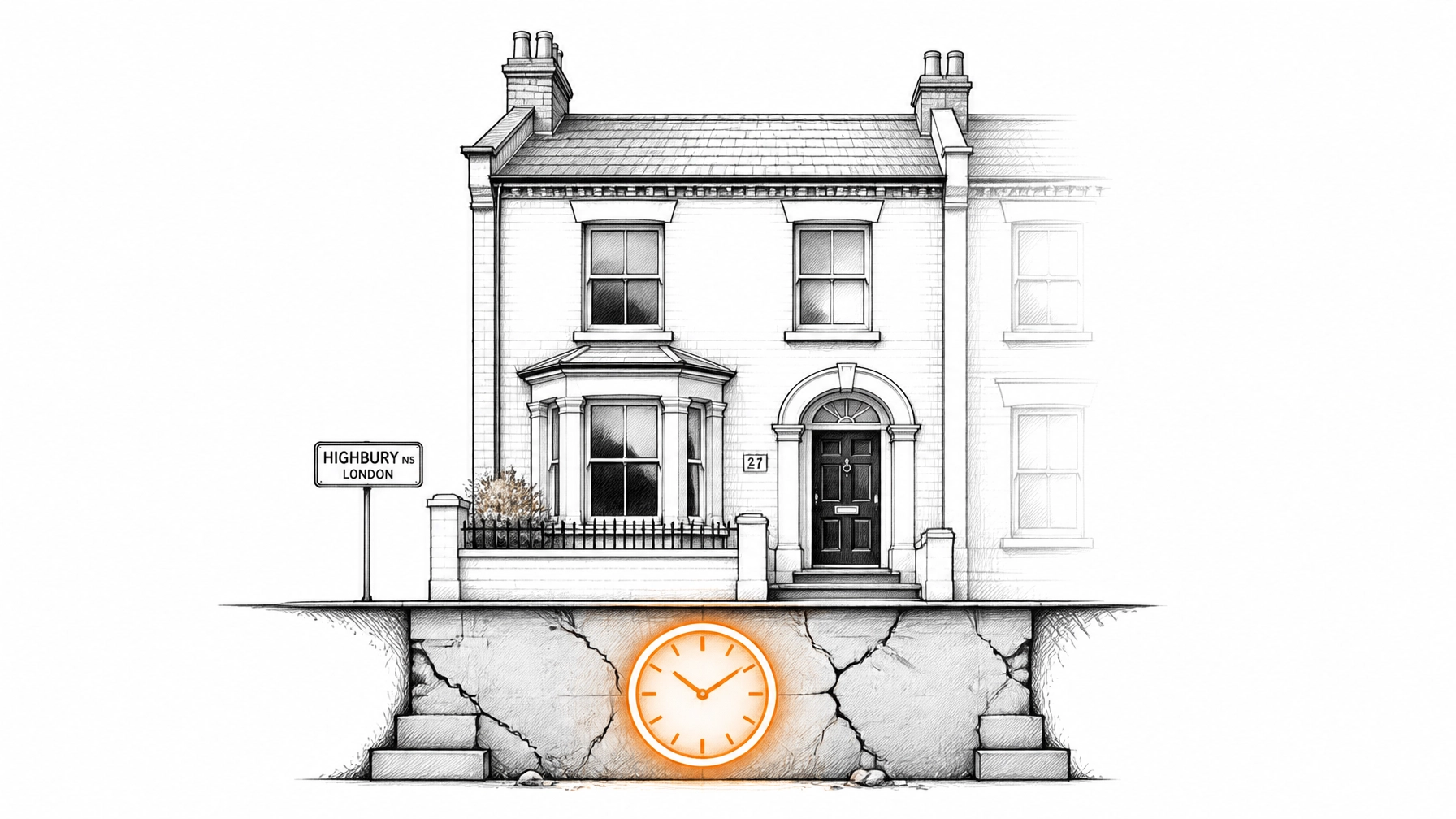
I’ve spent most of my career in the insurance world, and if there is one thing I can tell you for certain in 2026, it’s this: many construction contractors in London and Essex are walking around with policies that are effectively worthless when the real trouble starts.
I’ve sat across the desk from experienced builders who thought they were covered for “everything” because they had a high-limit General Contractor Liability Insurance policy. Then, a neighbour’s wall starts to crack during a basement dig, or the notorious London clay decides to shift after a dry spell, and suddenly that “comprehensive” policy is full of more holes than a piece of Swiss cheese.
It’s a frustrating reality. As a broker, I see the gap between what a client expects and what the fine print actually delivers. Going forward, we need to talk about the “ticking time bombs” hidden in your insurance documents, specifically those tucked away in the exclusions.
The “London Clay” Trap: Why 2026 is Different
London is a unique beast for construction. Most of the city sits on “London Blue Clay.” It’s a material that’s incredibly sensitive to moisture. When it’s wet, it expands; when it’s dry, it shrinks. After the record dry spells we’ve seen in the last couple of years, subsidence claims in the capital have skyrocketed.
I even spoke to a developer in East London last month who found out the hard way that his standard buildings insurance didn’t cover “climate-driven subsidence” because he hadn’t disclosed the presence of mature oak trees within ten metres of his site.
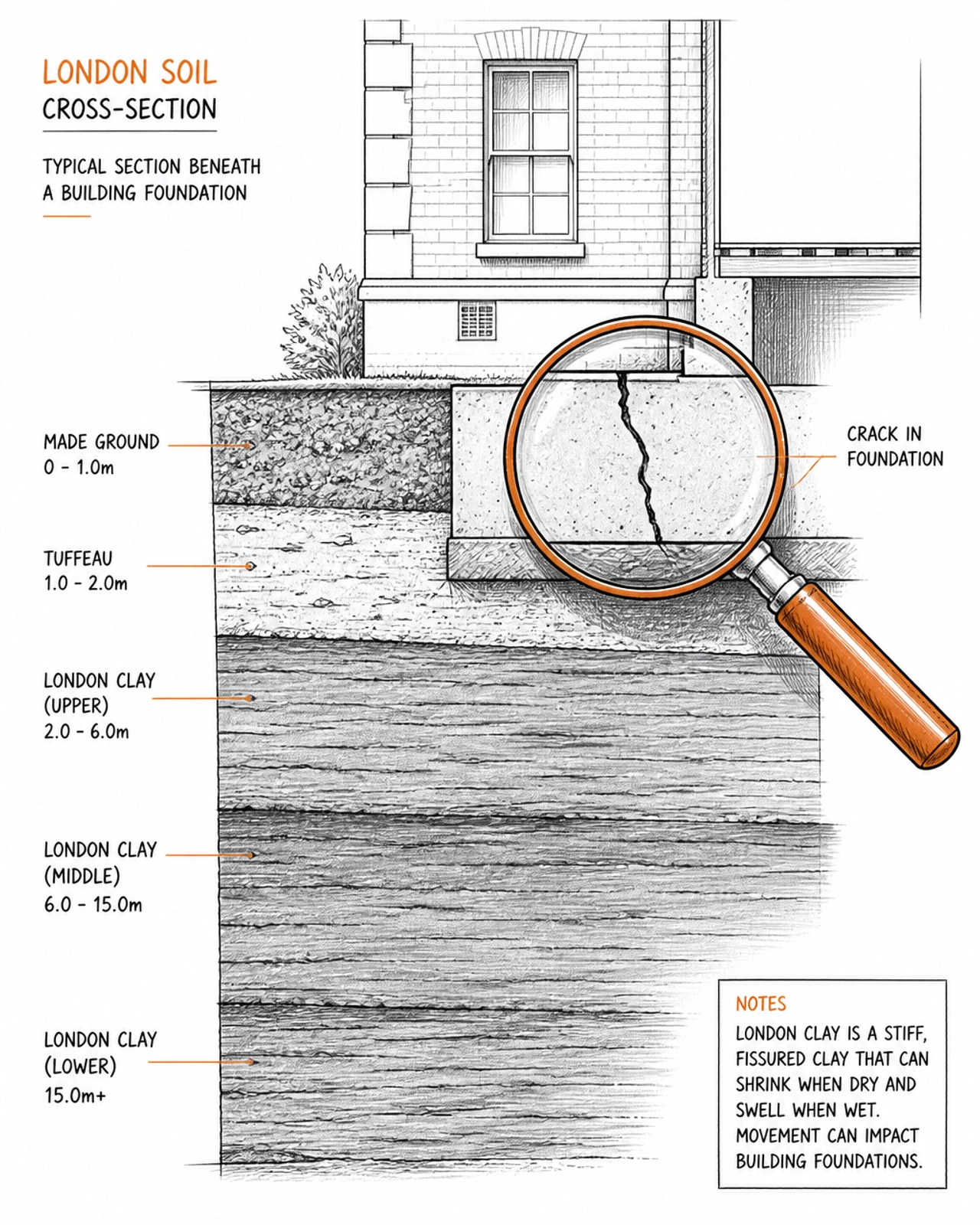
For anyone looking for Business Insurance London, you have to realise that insurers are getting much smarter. They aren’t just looking at your postcode anymore. They are using high-resolution soil mapping and climate data to decide your premiums. If you’re a contractor working in these high-risk zones, a generic policy bought off a comparison site won’t cut it. You need something that specifically addresses the ground you’re standing on.
The “Settlement” vs. “Subsidence” Loophole
This is perhaps the most common “gotcha” in the industry. I’ve seen insurers use this distinction to walk away from six-figure claims.
In the insurance world, Subsidence is generally covered. It’s the downward movement of the ground beneath a building. However, Settlement, the expected movement of a new or altered structure under its own weight, is almost always excluded.
If you are doing basement works or major underpinning, and the property develops cracks, the first thing an insurer’s loss adjuster will do is try to classify that damage as “settlement” or “defective design.” If they succeed, your General Contractor Liability Insurance won’t pay out.
I think this is where the value of a specialist broker really comes in. We know how to push back on these definitions, but better yet, we know which insurers have “fairer” definitions of what constitutes a claimable event during structural works.
Basements: The High-Stakes Game
Basement conversions are the ultimate test for any insurance policy. In 2026, many insurers have introduced “basement flood exclusions” as a standard clause.
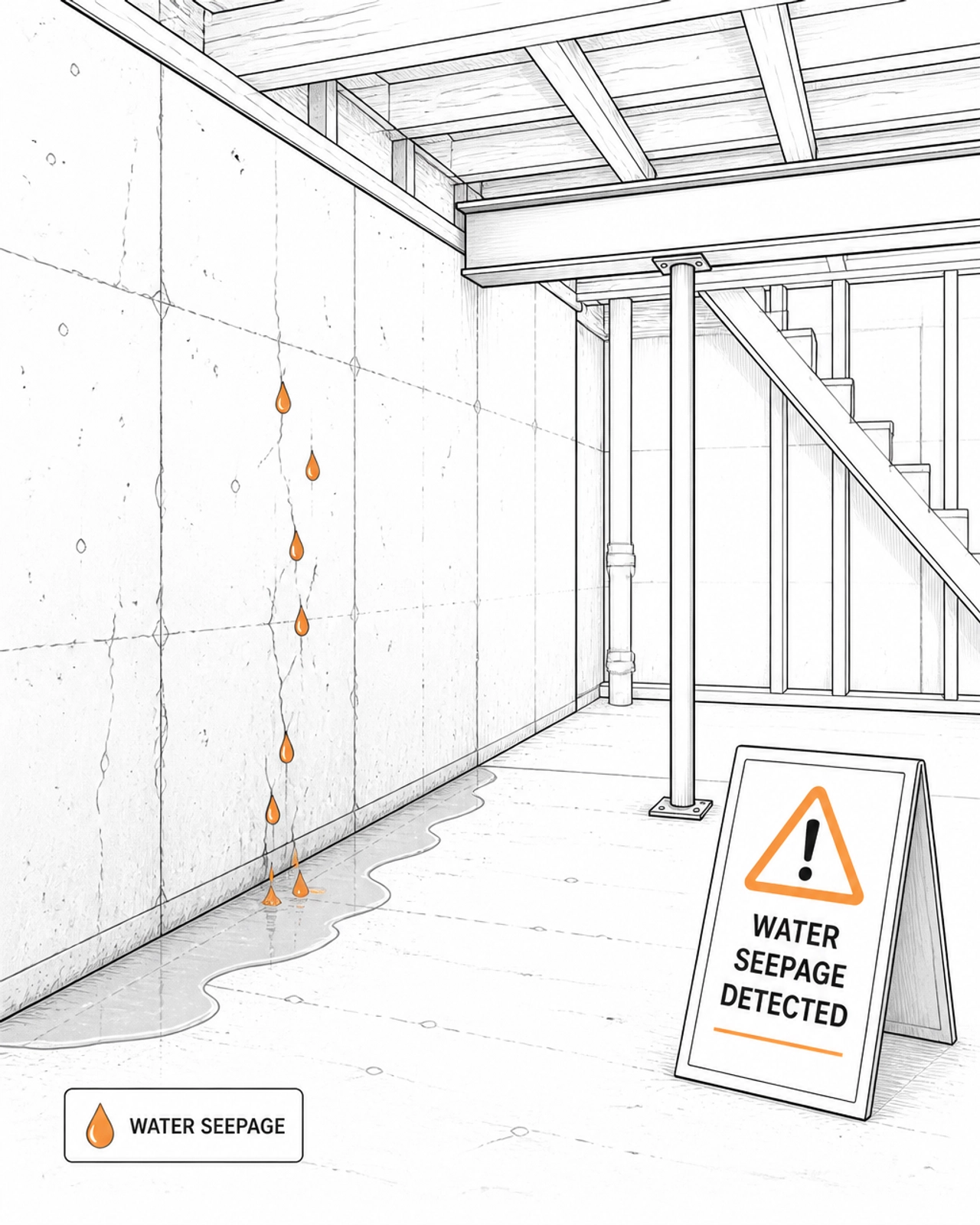
Most contractors worry about fire. Fire is dramatic, it’s visible, and yes, it’s a risk. But in a basement project, water is the silent killer. I’m not just talking about a burst pipe (which is usually covered as “escape of water”). I’m talking about:
- Hydrostatic pressure: Groundwater pushing through the tanking.
- Surface run-off: Intense rainfall flooding a lightwell.
- Sewer back-up: A common issue in London’s aged infrastructure.
Many policies exclude “gradual ingress of water.” If your client’s new basement smells like damp six months after completion, and the insurer can trace it back to a minor failure in the tanking membrane or “design defect,” they’ll likely decline the claim. You’re then left defending a Professional Indemnity claim or paying out of pocket to fix a very expensive mistake.
Why “Online Quotes” are a Trap for Professionals
It is tempting to just jump on a portal and find the cheapest quote for Business Insurance Essex or London. In fact, many of our clients come to us after trying that and realizing the “all-risk” policy they bought had a £5,000 excess for subsidence and a total exclusion for any works below two metres in depth.
We’ve discussed this before in our guide on online quotes vs specialist brokers. When you use an automated system, there is no one to ask, “Are you doing basement digs?” or “Is this project near a Party Wall?” The computer just gives you a price based on your turnover.
What You Should Be Asking Your Broker Right Now
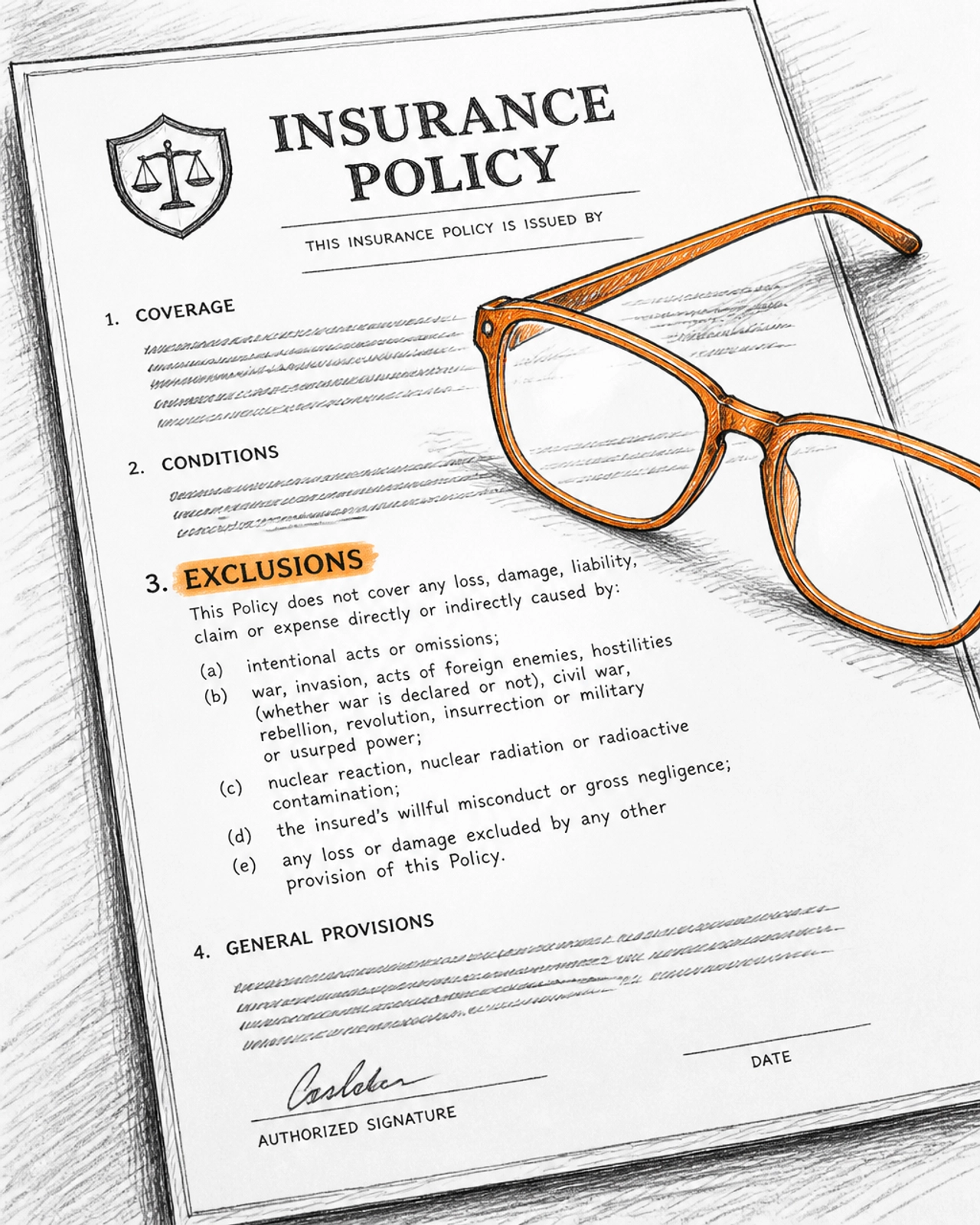
If you’re a contractor in the London area, I suggest you take a morning to actually look at your policy wording. Don’t just look at the “Statement of Fact” or the summary page. Go to the exclusions section and look for these red flags:
- Depth Restrictions: Does your policy exclude work below a certain depth? Many standard policies stop at 2 or 3 metres.
- Piling and Underpinning: Are these specifically listed as covered activities? If they aren’t mentioned, they are often excluded by default in the “General Exclusions” section.
- Non-Negligence Cover (JCT 6.5.1): If you damage a neighbour’s property but you weren’t negligent (e.g., the ground just shifted), your Public Liability won’t cover it. You need specific non-negligence cover for this.
- Water Ingress: Is “gradual ingress” or “groundwater pressure” excluded?
The Moyak Approach: Pragmatic Realism
At Moyak Insurance Services, we don’t believe in just “selling a policy.” We act as an Essex and London business insurance broker that actually understands the trades. We know that a contractor working on a Victorian terrace in Chelsea has completely different risks than a tradesman doing a kitchen fit-out in Southend.

I can see the industry becoming more restrictive in the coming years. Insurers are tired of paying out for poorly planned basement excavations. My advice? Be honest about the scope of your work. It might cost a bit more in premium, but it’s a lot cheaper than a £250,000 claim for a collapsed party wall that you have to fund yourself.
We deal with the UK’s leading master insurance brokers to ensure our clients have the best cover for their budget. We don’t just look for the cheapest price; we look for the policy that will actually show up when the “bomb” goes off.
If you’re worried about the gaps in your current Construction Contractor Insurance, give us a call. We offer a personal approach and we care about every client: it’s how we’ve built our reputation. Let’s make sure your business is built on solid ground, literally and figuratively.
Next Steps:
- Review your current depth limits on your Public Liability policy.
- Check your “Excess” specifically for subsidence: it’s often much higher than your standard excess.
- Contact us for a tailored quote that accounts for the specific soil risks of your project area.