
📞 01375 392 087  ·  ✉ info@moyakinsurance.co.uk

Mon–Fri: 9:30am – 5:30pm

Category: Blog

  • Faster Planning, Harder Insurance: What the New Mayoral Powers Mean for Construction Contractor Insurance in Essex and London

    Faster Planning, Harder Insurance: What the New Mayoral Powers Mean for Construction Contractor Insurance in Essex and London

    The government’s latest planning announcement points to a faster pipeline for major developments, but the construction insurance market is moving in the opposite direction.

    Around 24 August 2026, the government announced that mayors across 13 combined authority areas in England will receive new powers to call in and override local councils on major planning decisions. The aim is to help deliver 1.5 million new homes by the end of the decade and unblock developments that have stalled at local level.

    For contractors and developers in Essex, Kent and London, this matters even when a project is not directly inside one of the newly affected combined authorities. London’s mayor already has similar powers, and Essex and Kent provide a significant amount of the construction capacity, subcontracting expertise and professional support behind the capital’s development pipeline.

    The opportunity is clear: more approvals, larger schemes and potentially more work. The insurance question is less straightforward. A faster planning process does not automatically create more skilled labour, better inspections or stronger quality control. If construction volume rises while those underlying pressures remain, insurers may respond with tighter terms, larger deductibles and greater selectivity.

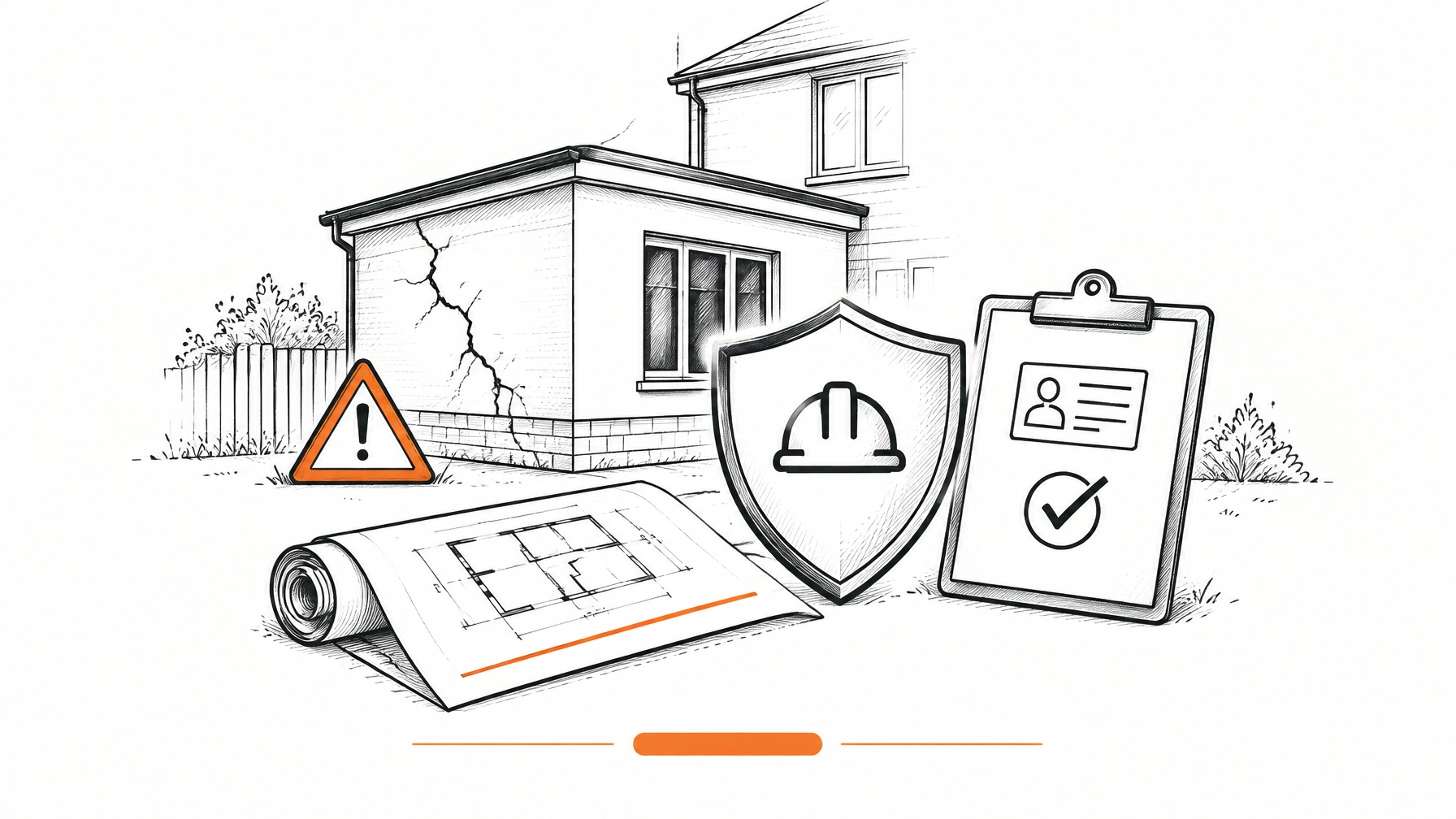
    Hand-drawn illustration of construction plans moving quickly while an insurance shield applies caution

    What the new mayoral powers change

    The new call-in powers are intended to apply to major developments, including:

    • Developments of more than 150 homes
    • Commercial schemes exceeding 15,000 square metres
    • Buildings taller than 30 metres

    Areas named in the announcement include Greater Manchester, Liverpool City Region, the West Midlands and the West of England. London is being used as an existing example of how mayoral planning powers can help unblock strategic sites, with housing minister Matthew Pennycook pointing to the capital’s current system.

    The policy is not without controversy. The Conservatives, Liberal Democrats and Greens have argued that transferring more decision-making from local councils to mayors could reduce local democratic accountability. Other political leaders have welcomed the change, particularly where they believe stalled schemes can now be approved more quickly.

    For the construction industry, however, the immediate issue is not simply who grants permission. It is what happens when more large and technically complex projects enter the market at the same time.

    The insurance market is already cautious

    Several insurers have already stopped writing certain construction risks, while others have increased deductibles to levels as high as £150,000. The reasons include rising defective workmanship claims, tight project margins and increasingly aggressive contractor behaviour in a competitive market.

    This is a concern for businesses arranging Construction Contractor Insurance because the availability of cover is only one part of the issue. The policy may still be available, but the deductible could be much higher, exclusions may be broader and insurers may require more information before offering terms.

    For example, a Contractors All Risks policy may contain specialist defect provisions with a substantial deductible. A recent dispute involving the application of a £150,000 deductible demonstrated how a number of defects and resulting losses may, depending on the wording and the facts, be treated as one event. That can leave a contractor or developer carrying a significant first share of the loss.

    The practical point is simple: do not look only at the premium. Review the deductible, the definition of an event, the defects exclusion and the amount that your business could realistically fund following a serious claim.

    More planning speed does not remove construction risk

    Approving a project more quickly does not shorten the construction process. It does not remove the need for properly qualified trades, competent supervision, tested materials, accurate records or independent inspection.

    In fact, accelerated delivery can create pressure at every stage:

    • Contractors may take on projects outside their usual capacity.
    • Subcontractors may be appointed quickly because programmes are compressed.
    • Materials may be substituted to control costs or avoid delays.
    • Inspection and sign-off processes may become less consistent.
    • Design changes may not be recorded clearly enough.
    • Businesses may accept contractual responsibilities that their insurance does not fully support.

    These are familiar problems, but they become more serious when the number of major schemes increases. A defect may not become visible until years after practical completion, by which point the original contractor may have changed ownership, ceased trading or moved into a different area of work.

    That is why the insurance market is particularly sensitive to structural warranty and latent defects exposure. The claim may arrive long after the original underwriting decision.

    The 15-year liability tail

    The Building Safety Act 2022 extended the limitation period for future claims under the Defective Premises Act from six years to 15 years from practical completion. This change took effect on 28 June 2022.

    The Act also requires developers to provide a new-build home warranty of at least 15 years, compared with the older 10-year Buildmark NHBC norm that many businesses have historically used as a reference point.

    For developers and contractors, the consequence is that older 10-year assumptions may no longer be sufficient. Structural warranty and latent defects cover should be checked carefully to confirm that the period of protection matches the legal and contractual exposure.

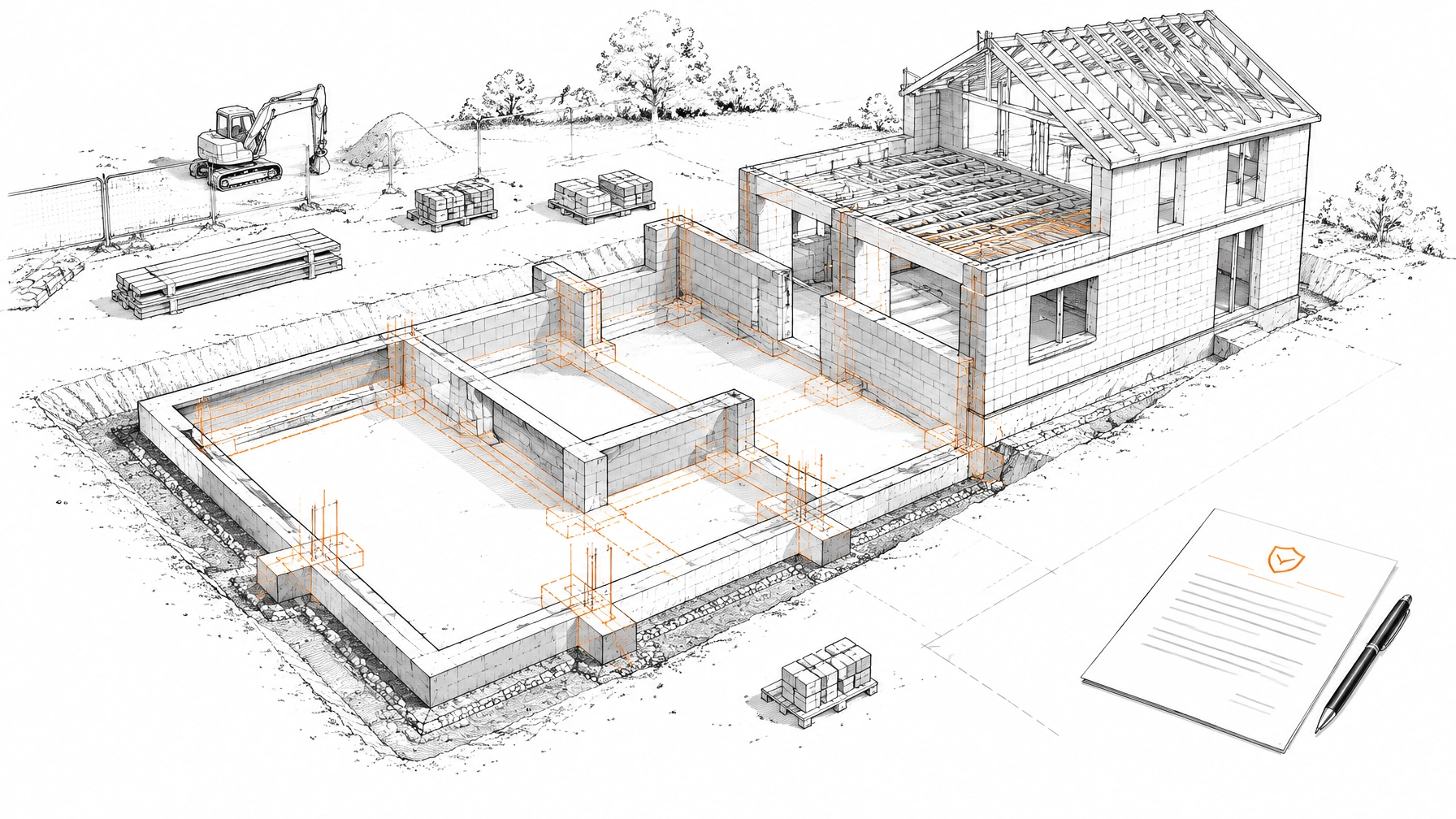
    Hand-drawn illustration of a building inspection, structural beam and a fifteen-year liability timeline

    The issue is not just the headline duration. Businesses should also consider:

    • When cover starts and ends
    • Whether the policy responds to defects discovered late in the period
    • The scope of structural damage covered
    • Any exclusions for design, workmanship, materials or compliance
    • The role of third-party inspectors
    • Whether cover can be transferred to future owners or funders
    • What evidence must be retained to support a claim

    The dispute involving AmTrust Europe and MD Insurance Services is a useful reminder that third-party inspection quality can be central to latent defects underwriting. Where serious structural problems emerge years later, questions may arise about what was inspected, how it was recorded and whether the original risk was assessed properly.

    A warranty is not a substitute for good construction management. Equally, good construction management does not remove the need to understand the warranty wording.

    Professional indemnity and planning challenges

    The planning changes may also increase pressure on professional indemnity insurance.

    Where a mayor calls in a scheme and overrides a local planning decision, affected parties may challenge the process through judicial review or other legal routes. Not every challenge will succeed, but a more centralised and contested planning environment could create additional work and potential allegations against architects, planning consultants, surveyors and other professionals.

    Professional indemnity policies should therefore be reviewed for:

    • The description of professional services
    • Planning and development consultancy activities
    • Limits of indemnity and aggregate limits
    • Retroactive dates
    • Contractual liability exclusions
    • Legal costs and defence arrangements
    • Any exclusions relating to planning, building control or regulatory decisions

    Local authorities and planning officers also need to understand the scope of their own arrangements. The more responsibility that sits around strategic decisions, the more important it becomes to document the advice, information and process behind those decisions.

    What this means for Essex, Kent and London contractors

    For a contractor arranging General Contractor Liability Insurance, the basic foundation remains public liability and employers’ liability where staff are employed. But major development work often requires a wider programme, including:

    • Contractors All Risks or contract works cover
    • Owned and hired-in plant insurance
    • Tools and equipment cover
    • Professional indemnity where design or advice is provided
    • Environmental or pollution liability for relevant trades
    • Contractual legal expenses
    • Directors’ and officers’ liability where appropriate
    • Business interruption and delay-related protection

    The exact combination depends on the work, the contract and the role your business is taking. A contractor acting as a principal contractor may carry different responsibilities from a specialist subcontractor, even when both are working on the same site.

    Businesses searching for Business Insurance Essex or Business Insurance London should avoid treating construction insurance as a standard package that can be renewed without discussion. A change in turnover, project size, building height, subcontracting arrangements or contract wording can materially change the risk.

    Practical steps before accepting more work

    Before entering an accelerated project pipeline, contractors and developers should:

    1. Check the warranty period. Confirm that structural warranty and latent defects cover reflects the 15-year requirement and liability window.

    2. Review defect exclusions. Understand whether the policy covers damage caused by defective work, or only the resulting damage, and identify any improvement or rectification exclusions.

    3. Calculate the deductible. Ask how a deductible applies to one event, multiple locations, design defects or repeated workmanship issues.

    4. Review PI wording. Architects, consultants and contractors providing design input should check that their professional services and planning responsibilities are accurately described.

    5. Improve project records. Keep inspection reports, photographs, material certificates, design changes, subcontractor checks and completion documents in an organised format.

    6. Check contractual insurance requirements. A contract may require limits or extensions that are not included in the existing policy.

    7. Plan for the long tail. Keep insurance records and project evidence beyond completion, particularly where statutory or contractual claims may arise many years later.

    8. Use specialist advice. Work with a broker who can approach the relevant construction markets and explain the difference between available cover, restricted cover and cover that looks suitable but leaves a significant gap.

    Moyak Insurance Services works with businesses across Essex, Kent and London to review commercial insurance arrangements around the needs of the individual business. You can contact Moyak Insurance Services for a discussion about your contractor insurance requirements, or visit our useful information and resources.

    The next stage is not simply faster building

    The government wants more homes and faster approvals. That may create valuable opportunities for contractors, developers and construction professionals in the South East, particularly if similar powers extend further across the region.

    But insurance markets are responding to the quality and claims experience they are seeing today. More projects will not automatically mean more capacity. If speed is prioritised without investment in skills, supervision, inspection and documentation, the resulting claims will eventually appear in public liability, professional indemnity, structural warranty and latent defects portfolios.

    My view is that contractors should welcome the potential pipeline but approach it with discipline. Before accepting a larger or faster-moving project, make sure your Construction Contractor Insurance reflects the work you will actually undertake, your General Contractor Liability Insurance limits are adequate, and your long-term defect exposure has been properly considered.

    The planning decision may be made quickly. The insurance consequences could remain for 15 years or more.

    Frequently asked questions

    Do the new mayoral powers apply to every construction project?

    No. The announced thresholds focus on major developments, including schemes of more than 150 homes, commercial developments over 15,000 square metres and buildings taller than 30 metres. The precise operation of the powers will depend on the relevant authority and final arrangements.

    Does faster planning mean construction insurance will become cheaper?

    Not necessarily. Insurers are already responding to defective workmanship claims, tight margins and difficult construction risks by withdrawing from some areas, increasing deductibles and applying greater underwriting scrutiny. Increased project volume could place further pressure on capacity.

    Is a 10-year structural warranty still enough?

    Developers should not assume that a traditional 10-year term is sufficient. The Building Safety Act 2022 introduced a 15-year limitation period for future Defective Premises Act claims and requires a new-build home warranty of at least 15 years. The policy wording and contractual requirements should be checked for each project.

    What does General Contractor Liability Insurance cover?

    In the UK, this term commonly refers to public liability insurance for injury to third parties or damage to third-party property caused by the contractor’s work. It is usually considered alongside employers’ liability, Contractors All Risks, plant cover and, where relevant, professional indemnity insurance.

    Should Essex and Kent contractors review their insurance now?

    Yes. Contractors in Essex and Kent are closely connected to London’s development market, and new regional planning powers could increase demand for construction capacity over time. Reviewing policy limits, exclusions, deductibles, project descriptions and warranty arrangements before taking on new work can help prevent avoidable gaps.

  • Your Subcontractor Just Went Bust: How Supply Chain Insolvency Is Rewriting Construction Contractor Insurance in 2026

    Your Subcontractor Just Went Bust: How Supply Chain Insolvency Is Rewriting Construction Contractor Insurance in 2026

    For many construction contractors, the first sign of financial trouble is not an insolvency notice. It is a supplier asking for payment upfront, a subcontractor suddenly slowing down work, or a credit insurer quietly reducing the amount of cover available on a major customer.

    That is why the current construction supply chain credit crunch deserves close attention across Essex, Kent and London. The insurance market is often seeing the risk before contractors do.

    Allianz Trade reportedly told suppliers it could reduce credit limits for new trading agreements with housebuilder Vistry by up to 70%. The issue became public after comments from a Travis Perkins executive on an earnings call, contributing to a fall of around 10% in Vistry’s share price. Vistry has said that substantial credit insurance remains available and that it has not seen supply-chain interruptions, but the wider message is still important.

    Credit insurers monitor payment behaviour, financial information and trading patterns every day. They can reduce cover well before a formal downgrade, administration or liquidation appears in the news.

    Construction is carrying a disproportionate share of insolvency risk

    Construction recorded 3,841 company insolvencies in England and Wales in the 12 months to July 2026, according to recent sector reporting based on official insolvency data. That represents approximately 17% of all recorded company insolvencies where the industry was identified.

    The figure is striking because construction contributes only around 6% to 7% of gross value added. In other words, the sector is generating a much larger share of business failures than its contribution to the wider economy would suggest.

    This is not just a problem for the company that fails. Construction businesses are connected through long chains of developers, main contractors, specialist subcontractors, merchants, manufacturers and labour providers. One failure can leave unpaid invoices, unfinished work, defective work and urgent replacement costs moving down the chain.

    Bouygues UK’s 2025 results show how quickly these pressures can build. The company reported a pre-tax loss of £76.1 million, compared with £32.3 million the previous year. Its provisions rose to £270.9 million, with subcontractor failures, supply-chain constraints and building-safety liabilities among the pressures reported.

    For smaller firms in the South East, the concern is not necessarily that every major housebuilder or main contractor is about to fail. It is that the financial stress is already changing trading terms, project decisions and access to credit.

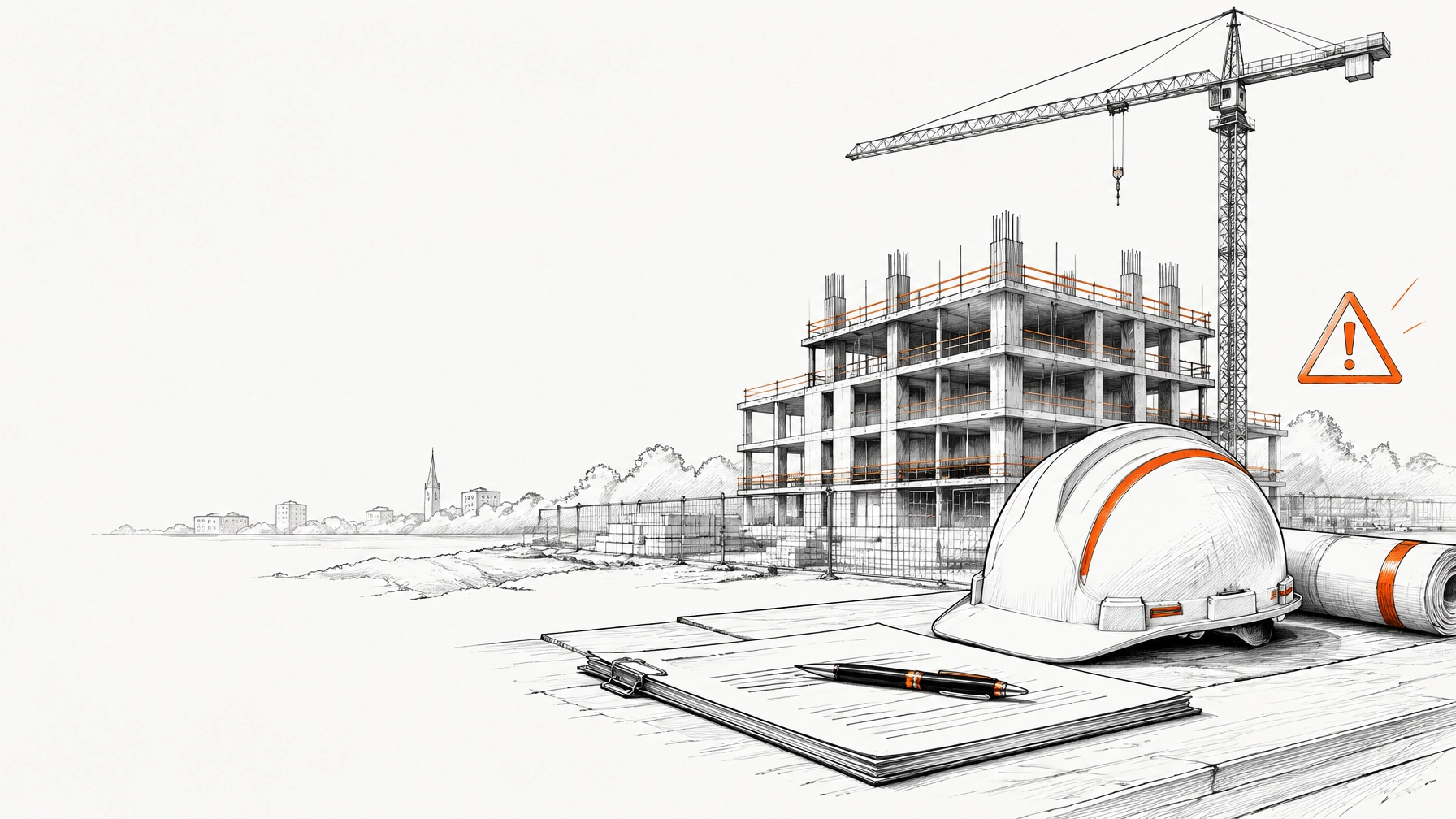
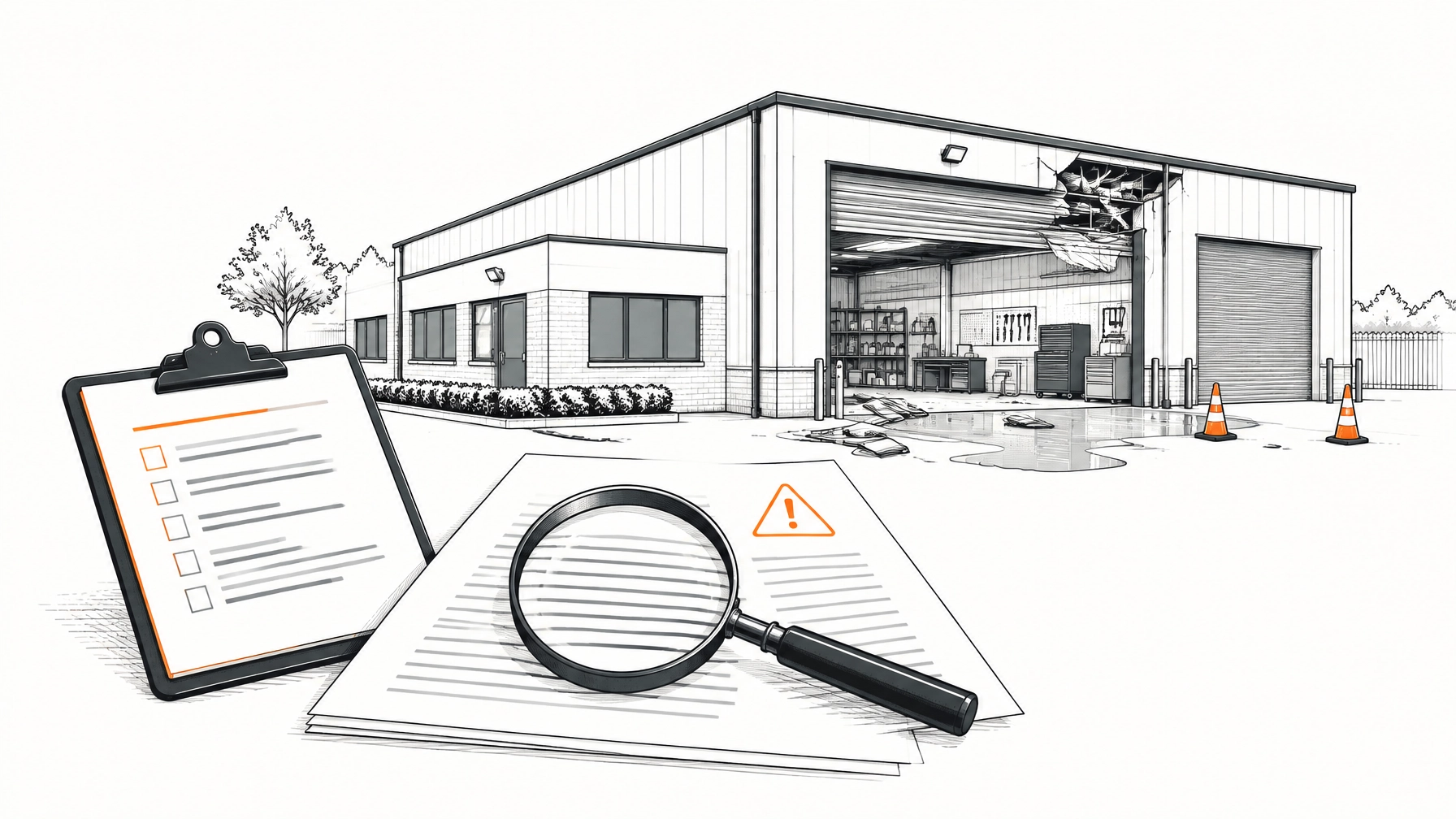
    Construction contractor reviewing an insurance and risk checklist beside a warning symbol

    Late payment is the transmission mechanism

    Construction payment delays are now a major source of concern. Recent industry estimates suggest that invoices are being paid around 30 days beyond agreed terms, with approximately £23.4 billion in overdue invoices outstanding.

    That creates a difficult cycle:

    1. A main contractor pays late.
    2. The subcontractor uses an overdraft or invoice finance to keep operating.
    3. Suppliers become nervous and reduce credit.
    4. The subcontractor demands deposits or upfront payment.
    5. Cash flow tightens further.
    6. A previously viable business becomes vulnerable to insolvency.

    Late-payment notifications to insurers are also rising. Historically, this type of notification has acted as a two- to three-quarter leading indicator of increased claims. It does not mean every late payment will become a claim, but repeated delays, disputed certificates and extended payment requests are warning signs that should be taken seriously.

    The important change in 2026 is that trade credit insurers are generally tightening cover at debtor level rather than withdrawing from construction altogether. That is more targeted, but it can still cause a sudden cash-flow shock. A supplier may discover that it can no longer safely extend £500,000 of credit to one customer, even though the wider policy remains in place.

    What trade credit insurance actually does

    Trade credit insurance protects a business against the risk that a customer will not pay because of insolvency or, depending on the policy, prolonged default.

    For a construction supplier or subcontractor, it can help protect:

    • Unpaid invoices for completed work
    • Materials supplied on credit
    • Contracted payments due from a main contractor
    • Bad debts caused by customer insolvency
    • Some legal and debt-recovery costs, depending on the wording

    The central feature is usually the debtor-level credit limit. The insurer agrees how much exposure it is prepared to cover for each customer. If that limit is reduced, invoices above the new limit may be uninsured unless another arrangement is made.

    There is also a concentration risk that is sometimes overlooked. Placing all your trade credit protection with one insurer may appear efficient, but it can leave you exposed to that insurer’s appetite, terms and interpretation of a particular debtor. Contractors with a large exposure to one housebuilder or main contractor should discuss whether a second insurer, a top-up policy or an excess-of-loss arrangement is appropriate.

    Top-up cover can sometimes protect amounts above the primary insurer’s credit limit. Excess-of-loss structures may work differently, with the business retaining smaller losses and transferring catastrophic losses above an agreed threshold. Neither option is automatic, and both require careful consideration of turnover, debtor spread and claims history.

    The insurance gap when a contractor goes bust

    A subcontractor’s insolvency is disruptive. A main contractor’s insolvency can create a much wider insurance problem.

    On some projects, the project insurance has been arranged in the contractor’s name, with the employer or project owner relying on being included as a co-insured or interested party. If the contractor becomes insolvent, the policy may be cancelled, restricted or difficult to operate. The project owner could then find itself exposed to losses involving:

    • Damage to works in progress
    • Theft or vandalism on site
    • Public liability claims
    • Professional indemnity claims
    • Unfinished or defective work
    • Collateral warranty obligations
    • Additional costs to appoint a replacement contractor

    This does not mean insolvency automatically invalidates every project policy. The outcome depends on the policy structure, the insured parties, cancellation provisions, non-vitiation wording and how claims are notified. However, assuming that the contractor’s policy will simply continue as normal is not a safe approach.

    Project owners should consider whether they need direct rights under the policy, a specific project policy, non-vitiation protection or wording that prevents one insured party’s actions from prejudicing another’s position.

    For contractors, this is also a contract-review issue. The insurance obligation should be checked alongside termination rights, step-in provisions, collateral warranties and requirements to maintain cover after completion.

    Professional indemnity does not automatically cover subcontractor failure

    Professional indemnity insurance is another area where expectations often exceed the actual policy wording.

    Many PI policies exclude losses connected to a subcontractor’s insolvency, particularly where the loss is simply the cost of unpaid or incomplete work because the subcontractor has gone bust. If the subcontractor’s failure creates a pure financial shortfall, there may be no cover.

    A negligence claim may still be arguable where the contractor or consultant failed to supervise, specify, inspect or manage the work properly. But that is a different issue from the subcontractor’s insolvency itself.

    I regularly see businesses treating PI as a general project-failure policy. It is not. The precise cause of loss matters, as do the exclusions, retroactive date, notification requirements and contractual liabilities wording.

    Contractors should read the PI exclusions before a subcontractor fails, not after a claim has already been made.

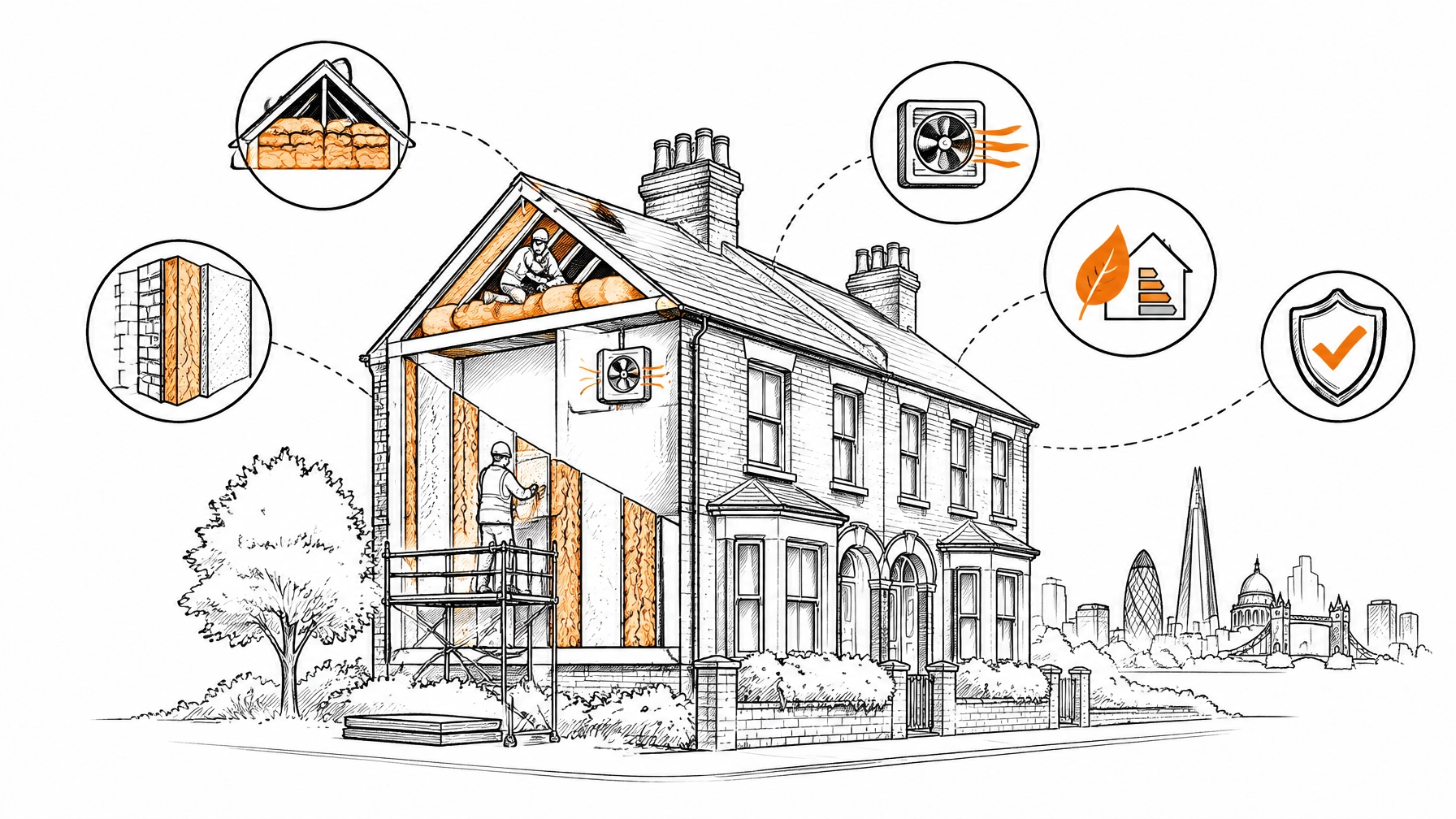
    Construction plans, supplier icons and an insurance shield illustrating supply-chain resilience

    Retentions are changing the cash-flow model

    The Commercial Payments Act 2026 will ban contractual cash retentions after a two-year transition period. Retention bonds, escrow arrangements and surety are expected to become more important as employers and main contractors look for alternative security.

    This matters because retentions have often been used as an informal buffer against defective work or contractor failure. Once cash retentions disappear, businesses will need to structure that protection differently.

    Our earlier guide, Why the 2026 Commercial Payments Bill Will Change the Way You Buy Business Insurance in Essex, explains the wider insurance implications.

    Retention bonds and performance bonds may protect the employer without withholding cash from the contractor. Surety facilities can also help contractors satisfy contract requirements where a client is no longer prepared to rely on a cash retention.

    Invoice financing is another possible tool when credit insurance is reduced. It can release cash against approved invoices, but it is not a replacement for insurance and can become expensive if payment disputes or debtor failures increase.

    A practical checklist for contractors in Essex, Kent and London

    If your business supplies national housebuilders or large main contractors, many of whom are supported by firms based across the South East, I recommend taking the following steps:

    1. Map your customer concentration. Identify the percentage of turnover and outstanding invoices linked to each major debtor.

    2. Ask what your credit insurer is changing. Check debtor-level limits, new trading agreements, notification requirements and exclusions for disputed invoices.

    3. Consider a diversified credit panel. Discuss top-up cover or excess-of-loss options where one customer represents a substantial share of your exposure.

    4. Review who is named on project policies. Confirm that employers, funders and relevant project parties have the rights they need if the contractor becomes insolvent.

    5. Add subcontractor-default triggers to contract reviews. Include credit-limit reductions, missed payments, winding-up petitions, repeated payment disputes and requests for deposits.

    6. Read your PI exclusions. Check specifically how the policy treats subcontractor insolvency, defective work and pure financial loss.

    7. Revisit your retention strategy. Plan now for retention bonds, performance bonds, surety or carefully structured escrow before the transition period ends.

    8. Maintain a realistic cash-flow buffer. Insurance may respond after a defined event, but wages, materials and replacement labour often need to be paid immediately.

    Your wider Construction Contractor Insurance programme should also be reviewed for Contractors’ All Risks, public liability, employers’ liability, plant, hired-in equipment, business interruption and professional indemnity. If your business is growing, our guide to 10 reasons your construction contractor insurance may not be working is a useful starting point, particularly on underinsurance and subcontractor classification.

    The same principle applies to General Contractor Liability Insurance: a certificate is not the same as a policy that responds properly to the contracts you have signed.

    For contractors seeking Business Insurance Essex or Business Insurance London, the local market matters because the risks are different. A specialist working on a compact commercial refurbishment in Kent does not have the same exposure as a contractor managing a high-density London development or supplying a national housebuilder from an Essex depot.

    The construction insolvency wave is not only rewriting credit terms. It is changing how projects should be insured, how subcontractors should be assessed and how contracts should respond when a key participant fails.

    Going forward, the strongest businesses will not simply buy more insurance. They will connect credit monitoring, contract controls, cash-flow planning and insurance advice before a supplier or customer goes bust.

    FAQ: Construction supply chain insolvency and insurance

    Does Construction Contractor Insurance cover a subcontractor going bust?

    Usually not automatically. Liability, Contractors’ All Risks and other sections may respond to specific insured damage or liability, but the cost of replacing an insolvent subcontractor or paying for unfinished work may be excluded.

    Can trade credit insurance protect unpaid construction invoices?

    It can protect eligible invoices against customer insolvency and, depending on the policy, prolonged default. Cover is normally subject to debtor-level limits, policy conditions, waiting periods and notification requirements.

    Will a main contractor’s insolvency cancel project insurance?

    Not necessarily, but it can create uncertainty or a serious coverage gap where the policy is arranged only in the contractor’s name. Employers and project owners should review co-insured, non-vitiation and direct-rights wording.

    Does Professional Indemnity cover subcontractor insolvency?

    Many PI policies exclude pure financial losses caused by subcontractor insolvency or unpaid work. A negligence claim may be considered separately, but policyholders should not assume that every subcontractor failure is covered.

    What will replace cash retentions under the Commercial Payments Act 2026?

    Retention bonds, performance bonds, surety arrangements and some escrow structures are expected to become more common. The correct solution depends on the contract, the parties and how the arrangement is legally structured.

    Source: Allianz Trade’s UK sector and insolvency analysis
    Source: Reuters report on Vistry supplier credit cover
    Source: England and Wales company insolvency statistics
    Source: Construction payment and retention reform analysis

  • The PI Exposure Hiding in Your Contract: Why Essex and London Contractors Need Professional Indemnity Cover in 2026

    The PI Exposure Hiding in Your Contract: Why Essex and London Contractors Need Professional Indemnity Cover in 2026

    For many construction contractors, the most serious insurance gap is not hidden in a difficult claims form or an unusual exclusion. It is sitting in the contract that was signed at the start of the project.

    That is the practical warning from Louis Foscolo, construction and professional indemnity partner at Kennedys, in a recent Insurance Business UK interview. His central point is one that contractors in Essex, Kent and London should take seriously: liability is increasingly spread across the supply chain, but the party carrying the risk does not always realise it has accepted it.

    At the same time, the builder’s risk market is softening. The Amwins H1 2026 market report describes one of the most competitive builder’s risk markets in recent memory, with capacity outpacing demand and rate reductions commonly ranging from 15% to 30% for suitable risks.

    That sounds positive, and it is an opportunity. But a lower premium does not repair a policy wording that does not respond to the liability your contract has created.

    Design responsibility is no longer limited to architects

    Professional indemnity insurance was traditionally associated with architects, engineers, surveyors and other recognised design professionals. Many builders therefore assumed that PI was not relevant to them, particularly where they were installing, manufacturing or constructing from someone else’s drawings.

    Design-and-build contracting has changed that position.

    A contractor may accept responsibility for design coordination, specifications, calculations, performance, compliance or fitness for purpose without describing itself as a designer. The obligation may appear in a standard form contract, a schedule of amendments or a flow-down clause from the main contractor.

    Foscolo gave a useful example in the Insurance Business interview. He spoke to a contractor that was adamant it had no design liability because it was “just fabricating a tank”. The contract, however, said otherwise. The business had accepted design responsibility, creating a PI exposure without holding PI cover.

    This is not an unusual problem. A specialist fabricator, installer or general contractor can gradually move from building to designing without noticing the point at which the insurance requirements change.

    That is why it is worth revisiting our earlier guide on the design creep trap in general contractor liability insurance. The wording of the contract matters more than the label the business uses for itself.

    Construction fabricator, industrial tank and contract containing hidden design responsibility

    The wording trap: negligence versus civil liability

    Once a contractor accepts design or professional obligations, the next question is whether its PI policy is broad enough to respond.

    This is where the difference between a negligence wording and a civil liability wording becomes important.

    A negligence-based PI policy generally responds to negligent acts, errors or omissions. It can be suitable for some businesses, and it is often cheaper. However, it may not respond to every contractual liability, warranty or obligation that does not depend on proving negligence.

    A civil liability wording is generally broader. Depending on the exact policy terms, it may respond to a wider range of civil liabilities arising from the insured’s professional activities, including certain contractual or statutory duties.

    The important point is not that one wording is automatically right for every contractor. It is that the decision should be made after reviewing the work and the contracts, rather than by selecting the cheapest quotation.

    In practice, I still see insurance discussions start and finish with the premium. That is understandable when construction margins are under pressure, but it can be a false economy. A 10% saving is not useful if the policy only covers negligence while the contract imposes a wider obligation.

    Contractors should ask:

    • Does the policy cover civil liability or only negligence?
    • Does it cover design undertaken by employees, subcontractors or appointed consultants?
    • Are contractual liabilities covered, and if so, which ones?
    • Is there a fitness-for-purpose exclusion?
    • Does the policy respond to design coordination and specification work?
    • Are historic projects covered by an appropriate retroactive date?
    • Is the limit sufficient for the contracts being accepted?

    These are broker-client conversations, not simply quotation comparisons.

    Why joint-names CAR is not a complete safety net

    Another common assumption is that a joint-names construction all-risks policy covers “anything that goes wrong” on a project.

    It does not.

    A construction all-risks, or CAR, policy is primarily designed to cover physical loss or damage to the works and associated project exposures, subject to its terms, conditions and exclusions. It is not a substitute for professional indemnity, public liability or employers’ liability insurance.

    Recent court decisions have also narrowed how broadly joint-names CAR cover should be understood. Contractors cannot assume that because their name appears on a project policy, every defect, delay, design issue or liability claim will be absorbed by that policy.

    A design error may lead to physical damage, but that does not automatically mean the design liability itself is covered. The policy may also exclude defective design while providing limited cover for resulting damage, depending on the wording.

    That distinction can become particularly difficult where the main contractor, developer, consultants and subcontractors all carry different policies and each party believes another policy will respond.

    The result is often a dispute after the event, when everyone is trying to establish what was insured rather than dealing with the original problem.

    Professional indemnity policy wording illustrated as broad and narrow protection shields beside a building sketch

    The Building Safety Act creates a long tail

    The Building Safety Act has made historic construction risk more relevant to current insurance decisions.

    For certain building defects, the legislation has extended potential limitation periods significantly, including claims reaching up to 30 years retrospectively for relevant work. The precise application depends on the facts, the type of claim and the legal route being used, so contractors should obtain legal advice on a specific dispute.

    The insurance implication is more straightforward: closing a project does not necessarily mean the risk has disappeared.

    Foscolo highlighted the Ardmore case as an example of the courts’ unwillingness to allow companies to avoid fire-safety and building-regulation liability simply by winding up the entity involved. In the wider Building Safety Act environment, associated companies and historic project structures may not provide the protection that some businesses expected.

    For contractors, this reinforces the need to maintain records, understand retroactive cover and consider run-off arrangements where appropriate. It also means that a business should not assume its current turnover tells the full story of its insurance exposure. Past work can remain relevant for many years.

    A softer market is the right time to review, not cut corners

    The builder’s risk market is currently favourable for many buyers. Amwins reports abundant capacity in domestic and London markets, with insurers competing for fewer construction projects and offering reductions, broader terms and greater flexibility in some areas.

    Professional indemnity pricing has also eased for well-performing contractors. Construction News reported on 3 August 2026 that PI premiums had fallen by around 15% to 20% for some contractors and consultants, depending on claims history, risk profile and insurer appetite.

    That is a good reason to review your insurance programme. It is not a reason to reduce cover without checking the wording.

    When capacity is chasing fewer projects, contractors may be tempted to trade on price, accept wider contractual obligations or take on work outside their traditional scope. This is exactly when cover gaps can develop. A business may win a contract with a lower insurance cost but accept a liability it cannot fund if something goes wrong.

    Price competition should be used to improve the programme, perhaps by:

    • negotiating a broader PI wording;
    • reviewing limits and excesses;
    • removing restrictions introduced during the hard market;
    • checking design and coordination extensions;
    • confirming suitable cover for historic work;
    • strengthening subcontractor insurance requirements; and
    • making sure CAR, liability and PI policies work together.

    Contractor checklist for 2026

    Before accepting or renewing a construction contract, review the following:

    1. Read the design obligations
      Look for responsibilities covering design, coordination, calculations, specifications, approvals, performance or fitness for purpose.

    2. Compare the contract with the PI wording
      Do not rely on the policy schedule alone. The operative wording and exclusions determine the real protection.

    3. Understand negligence versus civil liability
      Ask what would happen if a claim alleges breach of contract or statutory duty without proving negligence.

    4. Do not rely on joint-names CAR alone
      Confirm which policy responds to physical damage, delay, defective design and third-party liability.

    5. Review subcontractor flow-down provisions
      Check whether subcontractors are accepting the same design and liability obligations as the main contractor, and obtain evidence of suitable insurance.

    6. Consider project-specific PI for major schemes
      A single project PI policy can work in theory by covering the whole design chain. It has been used on major Middle East projects, although cost has limited its use in the UK. For a particularly large or complex project, it may still be worth exploring.

    7. Document decisions and communications
      Keep contracts, drawings, design instructions, approvals, variations, meeting notes and insurance certificates. Good records can be critical years after completion.

    The construction industry can often predict how a project might fail. The harder task is allocating responsibility across a fragmented contractual chain. Contractors should therefore treat PI as part of contract planning, not an optional extra added after the work has already been agreed.

    If you operate as a general contractor, specialist fabricator, installer or design-and-build contractor in Essex, Kent or London, contact Moyak Insurance Services to review your Construction Contractor Insurance and General Contractor Liability Insurance requirements. We take an individual approach, review the work you actually undertake and work with leading UK insurance brokers to help secure suitable cover for your budget and contractual obligations.

    This article is for general guidance only and does not constitute legal advice or a guarantee of cover. Insurance policies differ, and the terms, conditions, exclusions and limits of the policy will determine whether a claim is covered.

    Frequently asked questions

    Do construction contractors really need professional indemnity insurance?

    Not every contractor needs PI, but it becomes important when the business accepts design, specification, consultancy, coordination or other professional responsibilities. A contractor can assume these duties through its contract even if it does not describe itself as a designer.

    What is the difference between PI and CAR insurance?

    Professional indemnity generally addresses claims arising from professional services, including certain design errors or omissions. CAR insurance is primarily intended to cover physical loss or damage to construction works during a project. Neither policy should automatically be treated as a replacement for the other.

    Is a negligence PI policy enough for a design-and-build contractor?

    It may be, depending on the contract and the policy wording, but negligence cover is generally narrower than a civil liability wording. A broker should compare the obligations being accepted with the policy’s insuring clause and exclusions before recommending a structure.

    Does the Building Safety Act affect old construction projects?

    It can. Certain Building Safety Act provisions allow relevant claims involving historic defects to reach back up to 30 years, subject to the specific legal requirements. Contractors should keep historic project records and discuss retroactive and run-off arrangements with their broker.

    Are PI premiums falling for UK contractors in 2026?

    Some well-performing contractors and consultants have seen reductions of around 15% to 20%, according to Construction News reporting based on the 2026 market update. The outcome depends on claims history, activities, contract terms, fire-safety exposure and the insurer’s appetite.

    Can Moyak arrange insurance for contractors in Essex, Kent and London?

    Moyak Insurance Services is a business insurance broker serving clients across Essex, Kent, London and the wider UK. Contractors can contact Moyak to discuss their specific trade, contracts, liability limits and professional indemnity requirements.

  • Under-11-Metre Cladding Fund: The 8-Week Window Open Now for Essex and London Contractors

    Under-11-Metre Cladding Fund: The 8-Week Window Open Now for Essex and London Contractors

    Applications for the government’s new Under-11-Metre Cladding Fund opened on 17 August 2026. That means responsible entities in Essex, Kent, London and across England now have an eight-week window to apply, with applications closing on Friday 9 October 2026.

    This is a significant change for multi-occupied residential buildings that previously fell outside the main Cladding Safety Scheme because they were below the 11-metre threshold. It is also a time-sensitive opportunity, because funding is capped, applications do not guarantee support and higher-risk buildings will be prioritised.

    For contractors, developers, housing associations, freeholders, management companies and other responsible entities, the practical message is straightforward: do not wait until September to begin preparing.

    What is the Under-11-Metre Cladding Fund?

    The fund is an expansion of the Cladding Safety Scheme, delivered by Homes England through the Building Remediation Hub.

    It is intended to support the remediation of unsafe cladding and external wall systems on eligible multi-occupied residential buildings in England containing two or more dwellings.

    The important change is that the previous height requirement has been removed for this funding route. Buildings under 11 metres can now apply where a suitable assessment identifies a serious life-critical cladding fire safety risk.

    The fund is tenure neutral, so both privately owned and social housing buildings may be eligible. However, it is not an automatic grant for every building below 11 metres. Homes England will assess applications according to the risk presented by the cladding, the evidence supplied and the availability of funding.

    The government has said that priority will be given to buildings presenting a high life-critical cladding fire safety risk. Applications for high-risk buildings will be progressed in the order they are received, so the date and time of submission may matter.

    A FRAEW is the starting point

    An application cannot be submitted without a completed Fire Risk Appraisal of External Walls, or FRAEW.

    The FRAEW must:

    • Be completed in accordance with PAS 9980:2022
    • Be prepared by a suitably qualified and competent assessor
    • Be carried out by an assessor from the relevant accredited panel
    • Identify whether cladding or an external wall system presents an intolerable life safety risk
    • Explain whether remediation or mitigation is necessary and proportionate

    A general Fire Risk Assessment should also be provided where one is available.

    In practice, this is likely to be the main preparation issue for many applicants. A responsible entity may know that a building has cladding, but that is not the same as having the technical evidence required by Homes England. The assessment needs to explain the construction, materials, fire performance, exposure and risk in a way that can be reviewed and audited.

    Hand-drawn illustration of a qualified assessor reviewing a building elevation and external wall risk appraisal

    I would advise responsible entities to start contacting suitable assessors immediately. There is no benefit in waiting for every other document to be assembled if the FRAEW has not yet been commissioned, particularly as assessor availability can become a problem when a national funding window opens.

    Applications can also be submitted for buildings assessed as presenting a medium risk where action is required, provided a compliant FRAEW is available. These applications may help Homes England build a fuller picture of the buildings affected, although meeting the criteria does not guarantee that funding will be awarded.

    Who submits the application?

    The application must be made by the building’s responsible entity or an authorised representative.

    This could include:

    • A freeholder
    • A head leaseholder
    • A registered provider of social housing
    • A management company
    • A right-to-manage company
    • Another organisation with responsibility for the building

    Leaseholders and residents cannot apply directly for the funding. They should normally raise the issue with the responsible entity. Where residents are struggling to engage with the responsible entity, Homes England has provided a Tell Us Tool so information about a building can still be shared.

    There is no pre-registration or early access process. Applications must be submitted through the Building Remediation Hub before the deadline.

    Prepare more than the FRAEW

    A technically sound FRAEW is essential, but it is only one part of a credible application. Responsible entities should begin gathering:

    • Building plans and construction records
    • Details of the external wall system and cladding materials
    • Previous surveys, inspections and fire risk assessments
    • The completed FRAEW and supporting technical evidence
    • Ownership and management information
    • Details of proposed remediation or mitigation works
    • Initial cost estimates and contractor information
    • Resident and leaseholder communications
    • Previous insurance notifications and claim history
    • Details of developer, warranty or other redress discussions

    Homes England will ask responsible entities to confirm that they have explored redress measures and alternative funding routes before funding is confirmed. This includes potential insurance claims, developer contributions and warranty schemes.

    That requirement is important from an insurance perspective. It does not mean an insurer will automatically pay for cladding remediation, and it does not turn an application into an insurance claim. Policy response depends on the wording, the cause of the damage, the relevant period of cover, notifications, exclusions and the facts of the individual building.

    It does mean that responsible entities should be able to demonstrate that they have checked the available routes properly. A poorly documented insurance enquiry, or a late notification where a policy may have responded, can create unnecessary difficulty later.

    The insurance records contractors and responsible entities should review

    If a contractor, developer or property organisation has been involved in the design, installation, inspection or management of an external wall system, its historic insurance records may become relevant.

    This is where policies such as Construction Contractor Insurance, General Contractor Liability Insurance and professional indemnity cover need to be considered carefully.

    For contractors, the review should include:

    1. Which insurers provided cover during design, construction or installation?
    2. Were notifications made when concerns about the cladding or external wall system first arose?
    3. Are policy schedules, wordings, endorsements and renewal records available?
    4. Are subcontractor certificates and contractual indemnities documented?
    5. Could professional advice, design work or specification issues be relevant?
    6. Has the developer, warranty provider or another responsible party been approached?

    Professional indemnity records may be particularly relevant where the issue concerns design, specification, inspection or professional advice. Liability policies may also need to be reviewed, but the response will depend on whether there is an insured event and how the policy defines damage, defects and associated costs.

    For a contractor operating in the region, this is a sensible time to review Business Insurance Essex or Business Insurance London arrangements with a specialist broker, especially where historic projects, multiple trading entities or older policy documents are involved.

    Moyak’s general contractors insurance service may also be useful for businesses reviewing their current arrangements. The purpose is not simply to obtain another certificate. It is to understand how the business’s insurance programme may interact with construction defects, third-party allegations, professional advice, remediation work and contractual responsibilities.

    Hand-drawn illustration of a responsible entity organising technical reports, insurance records and an online funding application

    Why applying early matters

    The cladding remediation programme has recently been given a red delivery rating, with delivery constraints, regulatory delays, capacity pressures and construction cost inflation all affecting progress. That wider context makes this fund meaningful, but it also means applicants should not assume that approval will be quick or guaranteed.

    The official guidance makes three points clear:

    • Funding is limited.
    • Applications do not create an entitlement to funding.
    • Higher-risk buildings will be prioritised.

    For high-risk buildings, valid applications are date- and time-stamped, and the submission position determines where the application sits in the funding pipeline. A complete application submitted early is therefore preferable to an incomplete application submitted at the last minute.

    There is also a separate consultation concerning emergency repairs under the higher-risk building regime, which runs until 3 September 2026. Responsible entities affected by delays should consider whether the consultation is relevant to their building safety experience, particularly where interim measures or emergency works are needed while permanent remediation is being planned.

    A practical eight-week action plan

    The following sequence should help responsible entities and their advisers keep the process moving:

    This week

    • Confirm who the responsible entity is.
    • Check whether the building is multi-occupied and under 11 metres.
    • Establish whether works started before 9 July 2026, as this may affect eligibility.
    • Contact a suitably qualified FRAEW assessor.
    • Set up or confirm access to the Building Remediation Hub.

    Within the next two weeks

    • Gather building plans, previous reports and construction records.
    • Request missing insurance policy schedules and wordings.
    • Review developer, warranty and contractor information.
    • Record previous notifications, claims and correspondence.
    • Begin discussions with residents, leaseholders and other stakeholders.

    Before submitting

    • Check that the FRAEW follows PAS 9980:2022.
    • Include a Fire Risk Assessment where available.
    • Prepare a clear description and estimated cost of the proposed works.
    • Document the redress and alternative funding routes explored.
    • Make sure the authorised applicant has the required information.
    • Submit through the Building Remediation Hub as soon as the application is complete.

    Hand-drawn illustration of an insurance broker advising a property manager while funding, warranty, developer and insurance routes connect to a residential building

    What this means for Essex, Kent and London businesses

    For contractors and property professionals in Essex, Kent and London, the fund creates a narrow period in which technical, commercial and insurance information needs to come together.

    The most common mistake I see in situations like this is treating the funding application, insurance review and remediation planning as separate exercises. They are connected. The FRAEW informs the proposed works, the proposed works affect costs and contracts, and the redress process may require evidence from historic policies, developers, contractors and warranty providers.

    That does not mean every responsible entity will have a successful insurance claim, or that every building will receive government funding. It does mean that a properly organised evidence trail gives the building a stronger position.

    If you are responsible for an eligible building, start the FRAEW process now, register with the Building Remediation Hub, and avoid leaving submission until the final week.

    If you are a contractor, developer, housing provider or property manager and need to understand how remediation activity may affect your insurance, speak to Moyak Insurance Services. We can help review your existing arrangements, identify missing records and discuss suitable Construction Contractor Insurance, General Contractor Liability Insurance and professional indemnity considerations for your business.

    This article is intended as general information and is not a funding, legal, fire safety or insurance coverage determination. Always check the latest official Homes England guidance and obtain specialist advice for your building or business.

    Frequently asked questions

    When did the Under-11-Metre Cladding Fund open?

    Applications opened on 17 August 2026. As of 19 August 2026, the fund opened two days ago and the application window is already running.

    When is the application deadline?

    Applications must be submitted through the Building Remediation Hub by Friday 9 October 2026.

    Can private and social housing apply?

    Yes. The fund is tenure neutral, so eligible privately owned and social housing buildings can apply.

    Is a FRAEW required?

    Yes. The application cannot be submitted without a Fire Risk Appraisal of External Walls prepared to PAS 9980:2022 by a suitably qualified and competent assessor. A Fire Risk Assessment should also be supplied where available.

    Does meeting the eligibility requirements guarantee funding?

    No. Funding is capped, applications are prioritised according to cladding fire safety risk and meeting the requirements does not create an entitlement to funding.

    Do responsible entities need to check insurance and warranty routes?

    Yes. Before funding is confirmed, responsible entities will be asked whether they have explored redress measures and alternative funding routes, including insurance claims, developer contributions and warranty schemes.

  • The Skills Shortage Is Now an Insurance Problem: How the Expertise Drain Is Changing Construction Contractor Insurance in 2026

    The Skills Shortage Is Now an Insurance Problem: How the Expertise Drain Is Changing Construction Contractor Insurance in 2026

    The UK construction skills shortage is no longer simply a recruitment or human resources issue. In 2026, it is becoming an underwriting issue, a contractual issue and, increasingly, a procurement issue.

    For contractors operating across Essex, Kent and London, the question is not only whether enough people are available to complete a project. Insurers, developers and public-sector clients are also asking whether the people involved have the right experience, whether supervision is adequate, whether subcontractors are genuinely competent and whether the contractor can prove that appropriate controls are being followed.

    That change matters when arranging Construction Contractor Insurance and General Contractor Liability Insurance. A policy may still be available, but the quality of the risk information provided to insurers, and the evidence supporting it, can influence the terms, conditions, excesses and scope of cover offered.

    The expertise drain is creating supervision gaps

    A recent Brown & Brown construction risk insight highlights how labour shortages are affecting site management in practical ways.

    There are fewer experienced senior operatives available, and those who remain may be spread across several projects or asked to manage larger teams than they would have done previously. This can lead to reduced oversight of subcontracted works, less time for quality inspections, inconsistent inductions and compressed handovers between teams.

    None of these issues necessarily looks dramatic in isolation. The difficulty is that small gaps in supervision can combine quickly. A rushed induction, an incomplete handover and a missed inspection may eventually become a defect, an injury, a delay or a dispute over who was responsible for the work.

    This is why insurers are looking beyond physical hazards such as working at height, plant, excavations and hot works. They are also examining the systems around the work:

    • How are site responsibilities allocated?
    • Who supervises critical activities?
    • How are changes to the design or programme recorded?
    • How are subcontractors coordinated?
    • How are inspections and approvals documented?
    • What happens when the original site manager or specialist operative is unavailable?

    For contractors, this means that good risk management must be visible. It is not enough to say that a project is supervised properly. The contractor needs to be able to demonstrate how supervision works in practice.

    Site manager using a supervision checklist during a construction project

    Subcontractor competence is under greater scrutiny

    Shortages in the direct workforce often result in contractors relying more heavily on subcontractors, labour-only arrangements and new supply-chain relationships. That is understandable, but it also increases the importance of subcontractor selection and monitoring.

    Brown & Brown identifies a wider range of checks that contractors and clients are now expected to consider. These include operational procedures, training standards, health and safety management, previous experience, document control, financial stability and quality assurance.

    This is more demanding than checking whether a subcontractor holds a relevant trade card or has worked on a similar project. Those checks can be useful, but they do not always show whether the subcontractor has the management structure needed for the particular work.

    A practical competence review should consider:

    1. Relevant experience – Has the subcontractor completed comparable work, at a similar scale and level of complexity?
    2. Training and qualifications – Are workers appropriately trained, and are refresher records maintained?
    3. Health and safety management – Are risk assessments, method statements, toolbox talks and incident reporting properly managed?
    4. Quality controls – Are inspections, sign-offs and remedial actions recorded?
    5. Document control – Can the contractor quickly identify which drawings, specifications and instructions were current at the time?
    6. Financial stability – Is the subcontractor able to complete the package without cutting corners or failing mid-project?
    7. Supervision arrangements – Who is responsible for the subcontractor’s work, and how often is it checked?

    This also has a contractual dimension. Main contractors may have greater responsibility transferred to them for managing and demonstrating the competence of subcontractors, even where the subcontractor is carrying out the physical work. A contract requiring the main contractor to control, coordinate or warrant subcontracted operations can create significant exposure if those arrangements are not reflected in the insurance programme.

    What this means for Construction Contractor Insurance

    The skills shortage can affect several parts of a contractor’s insurance arrangements.

    Employers’ Liability Insurance may come under closer scrutiny where a workforce includes inexperienced, temporary or newly recruited workers. Insurers may want to understand induction procedures, training records, supervision levels, accident history and near-miss reporting.

    Public Liability Insurance can be affected by the way subcontractors are selected and controlled. Poorly managed work may result in injury to members of the public, damage to neighbouring property or allegations that the contractor failed to coordinate activities safely.

    Contractors All Risks and contract works cover may also be relevant where workmanship defects, mishandling of materials, temporary works failures or poor project coordination lead to physical damage and rework.

    For design-and-build contractors, Professional Indemnity Insurance may need particular attention. A shortage of experienced personnel can affect design coordination, technical approvals, change management and the interface between different trades. If the contractor has accepted design responsibility, it is important to understand exactly where the policy responds and where exclusions may apply.

    There is no single construction liability wording that operates identically across the market. In his 5 August 2026 Insurance Business interview, Steve Kelly, managing director of construction at DUAL UK, stressed that experience, competence and a proven track record are central to judging whether a risk is well managed.

    He also noted that liability cover can vary significantly between insurers. That is particularly important for contractors undertaking newer sustainable building methods or MMC projects, where fire, escape of water, product responsibility and design-related exposures may require careful consideration.

    The lesson is straightforward: comparing premiums alone is not enough. Contractors should compare the actual scope of cover, exclusions, conditions and treatment of subcontracted or design-related work.

    Construction subcontractor competence review shown through certificates, training records and quality checks

    Sustainable and MMC projects require evidence, not optimism

    Modern methods of construction and more sustainable building techniques can improve speed, efficiency and environmental performance. They can also introduce unfamiliar materials, new interfaces and different repair considerations.

    As Steve Kelly pointed out, fire and escape of water remain important concerns. A contractor using unfamiliar systems or materials may need to show that the project team has suitable experience, that design responsibilities are clear and that installation and inspection procedures are properly controlled.

    This does not mean innovation is uninsurable. It does mean that insurers are likely to ask more detailed questions where the contractor has limited experience of the method being proposed.

    A contractor may improve its position by documenting:

    • Previous projects involving the same or similar construction method
    • Specialist training and manufacturer approvals
    • Design reviews and technical sign-offs
    • Fire-stopping and water-management procedures
    • Testing, inspection and commissioning records
    • The roles of consultants, manufacturers and subcontractors
    • Contingency arrangements if a specialist worker or supplier becomes unavailable

    In my experience, insurers are generally more comfortable with unfamiliar risks when the contractor can explain them clearly and show that responsibility has not been left unclear between the parties.

    Skills investment is becoming a procurement advantage

    The commercial importance of training is also changing. Construction Management reported on 6 August 2026 that the government is overhauling its Social Value Model.

    For public-sector contracts worth more than £5 million, the social value weighting is expected to increase from 10% to 20% from next year. The revised approach will place greater emphasis on quality employment, apprenticeships and training that addresses local skills shortages. Contracts below £1 million are exempt from the new requirements, and further guidance is expected in autumn 2026.

    For contractors in Essex, Kent and London, this creates an opportunity as well as an obligation. Apprenticeships, local recruitment and structured training should not be treated as separate tender language that disappears once a contract is won. They should be part of the operational risk strategy.

    A credible training programme can help a contractor:

    • Build a stronger internal skills base
    • Reduce dependence on unfamiliar labour
    • Improve supervision capacity
    • Demonstrate competence to clients and insurers
    • Support social value commitments in public tenders
    • Create better records of training and workforce capability

    It would be wrong to suggest that training investment automatically produces cheaper insurance. Premiums depend on the whole risk, claims record, activities, turnover, contract terms and insurer appetite. However, demonstrable investment in competence can provide a stronger underwriting story and may help distinguish a well-managed contractor from one that is simply reacting to labour shortages.

    Construction apprentice learning from an experienced worker with a tender document and local skills icons

    Practical steps for contractors in Essex, Kent and London

    Contractors should consider taking the following steps before their next insurance renewal or major tender:

    1. Create a supervision plan for each project. Set out who is responsible for each site, work package and high-risk activity.
    2. Keep evidence of inductions and briefings. Include agency workers, labour-only subcontractors and replacement personnel.
    3. Formalise subcontractor competence checks. Record qualifications, previous experience, H&S systems, financial information and quality procedures.
    4. Review contractual responsibilities. Identify where the main contractor has accepted responsibility for subcontractor management, design coordination or quality.
    5. Improve change and handover records. Keep a clear audit trail for revised drawings, instructions, inspections and outstanding works.
    6. Review liability cover insurer by insurer. Check exclusions and conditions, not only the policy limit and premium.
    7. Update declared values and programme assumptions. Labour costs and project delays can affect sums insured, contract works values and business interruption exposures.
    8. Use training records strategically. Present apprenticeships, competency frameworks and refresher training as evidence of operational control as well as social value.

    A specialist broker can help translate these measures into information that underwriters can properly assess. For growing businesses, this is one reason a local broker remains useful rather than relying on a generic online quote.

    The next step for your construction insurance

    The construction skills shortage is now part of the risk profile. Insurers want to know whether a contractor has enough experience and control to deliver its work safely, and public-sector clients increasingly want evidence that contractors are helping to build the future workforce.

    At Moyak Insurance Services, we work with businesses across Essex, Kent and London to arrange practical insurance solutions around their activities, contracts and budgets. We take an individual approach because two contractors with similar turnover can have very different levels of supervision, subcontractor exposure and liability responsibility.

    If your renewal is approaching, or you are preparing for a significant tender, contact Moyak to review your Construction Contractor Insurance, General Contractor Liability Insurance and wider business insurance requirements. The earlier the conversation begins, the easier it is to identify documentation gaps and obtain cover that reflects how your business actually operates.

    Frequently asked questions

    Is the construction skills shortage affecting insurance premiums?

    It can affect how insurers assess a contractor’s risk, but there is no automatic premium increase for every business. Insurers may consider supervision, training, subcontractor management, claims history, project complexity and the contractor’s experience when setting terms.

    What evidence do insurers want from construction contractors?

    Insurers may ask for training and induction records, supervision structures, health and safety procedures, subcontractor checks, quality assurance records, project experience and details of contractual responsibilities. The exact requirements vary by insurer and activity.

    Does General Contractor Liability Insurance cover subcontractors?

    This depends on the policy wording and the contractor’s relationship with the subcontractor. A policy may provide some cover for liability arising from subcontracted work, but conditions, exclusions and contractual liability provisions can differ significantly. Contractors should review the wording with their broker.

    Can apprenticeships and training improve a contractor’s insurance position?

    Training and apprenticeship investment does not guarantee lower premiums, but it can demonstrate a stronger approach to competence and risk management. It may also support public procurement bids where employment, apprenticeships and local skills development carry greater weighting.

    Why should Essex, Kent and London contractors use a specialist broker?

    Construction risks can involve complex contracts, subcontractor responsibilities, design exposure and changing construction methods. A specialist broker can approach suitable insurers, compare policy scope and help present the contractor’s risk-management arrangements clearly.

  • Cladding Supplier Held 87.5% Liable and Overseas Parent Caught: The Mulalley v Sto Ruling Contractors in Essex and London Need to Know About

    Cladding Supplier Held 87.5% Liable and Overseas Parent Caught: The Mulalley v Sto Ruling Contractors in Essex and London Need to Know About

    For contractors working across Essex, Kent and London, the recent Mullalley & Co Ltd v Sto Ltd & Sto SE & Co KGaA [2026] EWHC 1552 (TCC) judgment is important for two reasons.

    First, it shows that a contractor with design-and-build responsibility may still recover most of its remediation costs from a manufacturer or supplier whose product was found to be inherently defective.

    Second, it confirms that a corporate structure will not necessarily prevent recovery. Through a Building Liability Order, the liability of an insolvent UK company was passed to its German parent, even though that parent was not involved directly in the Parkside Court works in Chelmsford.

    The case is a useful companion to recent Building Safety Act decisions, but this time the practical message is aimed squarely at contractors: when a building safety problem arises, the supply chain may provide a substantial recovery route.

    What happened at Parkside Court?

    Chelmer Housing Partnership engaged Mulalley to design and build refurbishment works at Parkside Court, a residential tower block in Chelmsford, Essex. The project included a new podium containing 27 flats, refurbishment of the existing 54-flat tower and the design and installation of external cladding.

    Mulalley subcontracted the cladding works and specified the StoTherm Classic system, supplied by Sto Ltd.

    Following the Grenfell Tower fire and the wider review of external wall systems, Chelmer identified serious problems with the cladding. The system was found not to comply with the functional requirement in Building Regulations B4(1) or regulation 7. The apartments were consequently considered unfit for habitation.

    Mulalley settled with Chelmer in December 2022. Under that settlement, it agreed to remove and replace the defective cladding and pay additional sums. Mulalley then sought a contribution from Sto Ltd under section 149 of the Building Safety Act 2022.

    Sto Ltd subsequently went into administration in January 2025. That created a practical problem for Mulalley because claims against the company became subject to the statutory moratorium. The company’s German parent, Sto SE & Co. KGaA, was therefore pursued through a Building Liability Order under section 130 of the Act.

    Sto Germany did not defend or participate in the proceedings. A default judgment was entered in December 2025, but the court still required Mulalley to prove the amount of its loss. As Mr Justice Pepperall’s decision makes clear, a default judgment establishes liability, but it does not automatically establish the value of the claim.

    Hand-drawn illustration showing a contractor, supplier factory and residential building connected through a construction supply chain

    How did the court assess the claim?

    The court considered four practical questions:

    • What costs had Mulalley actually incurred?
    • Which costs were caused by the defective Sto system?
    • Were the costs reasonably incurred?
    • What contribution was just and equitable, taking account of each party’s responsibility?

    Mulalley’s total gross costs were initially put at approximately £3.73 million. After reviewing the evidence, including subcontractor costs, preliminaries, consultancy fees and legal costs, the court accepted total costs incurred of £3,431,633.53.

    However, the remedial works went beyond the work strictly required to remedy the defective render system. The court therefore separated costs caused by the Sto system from other work. After further reductions, the reasonable costs attributable to the defective cladding were assessed at £2,025,499.62.

    This is a point contractors should take seriously. Even where a supplier is clearly at fault, recovery depends on evidence. Contractors need to retain contracts, specifications, drawings, inspection records, invoices, expert reports, settlement documents and records showing why the chosen remediation was necessary.

    The court was also realistic about the difficult conditions in which remediation decisions are made. It relied on the approach taken in Martlet Homes Ltd v Mulalley & Co Ltd [2022] EWHC 1813 (TCC), where the court noted that it is generally reluctant to criticise remediation expenditure with the benefit of hindsight, particularly where safety is involved.

    That does not mean every cost will be accepted. It means a contractor acting responsibly, efficiently and on professional advice is less likely to be criticised simply because another technical option might later be suggested.

    Why was Sto held 87.5% responsible?

    Mulalley argued for a 90% contribution. The court awarded 87.5%, leaving Mulalley with the remaining 12.5% of the relevant loss.

    That produced a judgment of £1,772,312.17 plus interest against Sto Germany.

    The percentage was assessed under section 2(1) of the Civil Liability (Contribution) Act 1978. The test is whether the contribution is “just and equitable”, having regard to the extent of each party’s responsibility for the damage.

    Mulalley was the main contractor and had responsibility for design and construction. That did not, however, make it responsible for the majority of the loss. The court found that the liability findings included that:

    • Sto had supplied a cladding product that did not comply with the Building Regulations.
    • The StoTherm Classic system was inherently defective.
    • Sto had made misleading statements about the system.
    • Those matters caused the apartments to be unfit for habitation.
    • The Sto product was the principal reason why the remedial works were required.

    Mr Justice Pepperall considered that an architect might commonly receive a contribution assessment of between 67% and 80% for a design breach. In this case, the combination of an inherently defective product, misleading compliance statements and the product’s central role in the remediation justified the higher figure.

    For contractors, this is a significant recovery principle. Design responsibility does not automatically mean that the contractor must carry the main financial burden where the underlying product itself was unsafe and promoted as suitable.

    Corporate structures are no longer a complete shield

    The Building Liability Order is equally important.

    A BLO can extend certain building safety liabilities from one company to an associated company where the court considers that making the order is just and equitable. In this case, Sto Ltd’s liability was passed to its German parent.

    The practical lesson is not that every parent company will automatically be liable for the debts of a subsidiary. That would be too broad. The lesson is that a parent or associated company cannot assume that separation of corporate entities will always prevent a claim, particularly where a UK operating company is insolvent and the wider group remains capable of meeting the liability.

    This matters to contractors dealing with manufacturers, distributors and specialist subcontractors in international groups. When a serious defect emerges, it is worth identifying:

    • The exact contracting entity.
    • The manufacturer and supplier behind the product.
    • Any parent or associated companies.
    • The location of relevant assets and records.
    • Whether the company has entered administration or another insolvency process.
    • Whether a Building Liability Order or another recovery route may be available.

    These are legal questions for construction solicitors, but they should be raised early. Delay can make evidence harder to obtain and limitation issues more complicated.

    Hand-drawn illustration of an insurance folder, shield, hard hat, building plan and contractor liability checklist

    What does this mean for construction insurance?

    The judgment does not mean that an insurance policy will automatically pay a contractor’s contribution claim. Cover depends on the wording, the insured activity, the policy period, exclusions, notification requirements and whether the alleged liability falls within the relevant insuring clause.

    It does, however, highlight why contractors and manufacturers need insurance arrangements that reflect the way modern construction disputes actually develop.

    For contractors, Construction Contractor Insurance should be reviewed alongside:

    • Public and General Contractor Liability Insurance.
    • Products liability cover where the business supplies, distributes or installs products.
    • Professional indemnity insurance where the contractor designs, specifies or advises on systems.
    • Contract works and non-negligent damage cover where appropriate.
    • Employers’ liability insurance.
    • Legal expenses and access to specialist claims support.
    • Cover for work carried out across Essex, Kent, London and other required territories.

    Our General Contractor Insurance Brokers explain that contractor packages can include employers’ liability, public liability, products liability, contract works, hired-in plant, tools, goods in transit and failure to perform, depending on the business and the policy selected.

    Manufacturers and suppliers should also review their products liability and professional indemnity exposures. A product liability claim may arise many years after the product was supplied, and the financial impact can include investigation, legal costs, remediation contributions and settlement payments.

    Cross-border groups should not assume that the UK subsidiary’s policy is sufficient. The group structure, contractual arrangements, territorial limits and applicable law all need to be considered.

    Five checks contractors should make now

    1. Review your supply contracts

    Check contribution clauses, indemnities, limitations of liability, insurance obligations and governing law. Do not assume a short-form subcontract gives you meaningful protection against a major product failure.

    2. Preserve technical evidence

    Keep the specifications, product literature, compliance statements, test information, approvals, emails and meeting records that influenced the design decision. These may become central to proving causation.

    3. Check your contractual and statutory recovery rights

    Review collateral warranties, third-party rights, manufacturer warranties and potential claims under the Building Safety Act. A contribution claim may be available even where you have already settled with the building owner.

    4. Notify insurers early

    Potential building safety claims can develop slowly. Notify relevant insurers as soon as a circumstance may give rise to a claim, while avoiding unnecessary admissions of liability. Late notification can create avoidable coverage problems.

    5. Test the policy against the work you actually do

    If you design, specify, supply, alter or install external wall systems, make sure the insurer knows. The policy should reflect your real activities, not simply the broad description “general contractor”.

    The practical takeaway for Essex, Kent and London businesses

    The Mulalley v Sto judgment is a reminder that contractors should not treat remediation liability as the end of the process. A contractor may have to settle with its client first, but that does not necessarily mean it must absorb the full loss.

    Where a manufacturer supplied an unsafe product and made misleading statements about compliance, the manufacturer may bear the majority of responsibility. If the UK entity is insolvent, a Building Liability Order may provide a route to pursue an associated or overseas parent.

    At the same time, recovery depends on preparation. Strong records, carefully drafted contracts, prompt insurance notification and appropriate liability and professional indemnity cover all matter.

    At Moyak Insurance Services, we take an individual approach to business insurance. We work with growing businesses and established contractors across Essex, Kent and London, using leading master insurance brokers to find cover that matches the work you undertake and the risks you face.

    If you are a contractor, manufacturer or supplier, now is a sensible time to review your arrangements. Contact Moyak Insurance Services for a practical insurance review and discuss your Business Insurance Essex or Business Insurance London requirements with our team.

    This article is for general information only and is not legal advice. Construction businesses should obtain specialist legal advice on any potential claim or Building Liability Order, and professional advice on the suitability of their insurance arrangements.

    Frequently asked questions

    What was decided in Mullalley v Sto?

    The Technology and Construction Court awarded Mulalley a contribution of 87.5% of the reasonable remedial costs attributable to the defective StoTherm Classic cladding system. The award was £1,772,312.17 plus interest.

    Can a contractor recover costs from a manufacturer?

    Potentially, yes. The contractor must establish the manufacturer’s legal responsibility, causation and the amount of loss. The court will then decide what contribution is just and equitable based on each party’s responsibility.

    Can a Building Liability Order reach an overseas parent company?

    A Building Liability Order can extend certain building safety liabilities to an associated company, including an overseas parent, where the statutory requirements are met and the court considers the order just and equitable. It is not automatic and requires proper legal analysis.

    Does General Contractor Liability Insurance cover a defective cladding claim?

    Not necessarily. Cover depends on the policy wording, the insured activities, exclusions, notification provisions and the nature and timing of the alleged liability. Contractors should review public liability, products liability, professional indemnity and contract works cover together.

    What insurance should construction contractors review?

    Contractors should review Construction Contractor Insurance, public and General Contractor Liability Insurance, products liability, professional indemnity, employers’ liability, contract works, hired-in plant, tools and business interruption cover where relevant. The appropriate combination depends on the business and its contracts.

  • Modern Methods of Construction Are Changing Your Insurance Risk: What Essex and London Contractors Need to Know

    Modern Methods of Construction Are Changing Your Insurance Risk: What Essex and London Contractors Need to Know

    Modern Methods of Construction (MMC) are changing the way projects are designed, manufactured and delivered across Essex, Kent and London. Off-site fabrication, volumetric modular construction and structural timber can help contractors build faster, reduce waste and improve quality control, but they also change the risk profile that insurers need to assess.

    That matters when arranging Construction Contractor Insurance or reviewing a Construction All Risks (CAR) policy. A project may be quicker to assemble on site, but the value, responsibility and potential for loss may have moved into a factory, transport network or specialist supply chain.

    The latest RICS Construction Journal article by Jason Baston of Miller, published on 15 April 2026, highlights how CAR insurance is responding to a rapidly changing construction environment. The article discusses several issues that contractors should already be considering, including modern construction methods, escape of water, inflation, rising building height and insolvency risk.

    For contractors, the message is practical: do not assume that an existing policy will automatically fit a new construction method.

    Why MMC can be attractive to contractors

    MMC is not one single construction system. It includes a range of methods, from panelised systems and pre-assembled components to fully enclosed volumetric modules manufactured away from the site.

    The potential benefits are clear:

    • Fewer workers exposed to traditional site hazards such as working at height
    • Faster installation and shorter project programmes
    • Better factory-based quality control
    • Less waste and disruption on site
    • More predictable production in a controlled environment

    The UK Government’s research into volumetric modular construction also recognises these benefits, including faster delivery, consistent quality and reduced time spent on site.

    However, the benefit is not simply that risk disappears. Instead, risk moves between different stages of the project. A contractor may have fewer traditional site activities, but greater exposure to manufacturing defects, lifting operations, transportation damage, water ingress during storage and the financial stability of a specialist supplier.

    That movement of risk needs to be reflected in the insurance arrangements from the start.

    Repairing modular units can be disproportionately expensive

    One of the key concerns for insurers is the cost of repairing prefabricated units after damage.

    With traditional construction, a water leak or fire may damage a section of wall, floor or ceiling which can be opened, dried and repaired. With a modular unit, access can be much more restricted. Services may be concealed inside factory-finished walls, ceilings or bathroom pods, and the affected section may form part of the unit’s structural or fire-protection system.

    In some cases, the cost of repairing a damaged module in situ can exceed the cost of manufacturing the original unit off site. The problem is not always the material itself. It can be the access, specialist labour, lifting equipment, temporary works, removal of surrounding units and the need to rebuild finishes after the underlying repair.

    This creates a significant difference between the apparent size of the damage and the eventual insurance claim.

    The position becomes more difficult where the original manufacturer is no longer trading. A contractor may have a damaged unit that cannot simply be reordered, either because the manufacturer has become insolvent or because the original system is no longer available.

    Insolvency is a construction insurance issue

    The financial strength of the supply chain has become much more important in MMC projects.

    Traditional construction projects can also be affected by contractor insolvency, but modular construction may depend on one specialist manufacturer producing bespoke units for a particular development. If that manufacturer fails during production, the project may face:

    • Delays while an alternative supplier is found
    • Difficulty obtaining replacement modules
    • Loss of access to designs, specifications and production information
    • Re-manufacturing costs
    • Storage and security costs
    • Additional professional and legal expenses
    • Difficulties establishing who owns partly completed units

    The UK Government’s volumetric construction research identified supply-chain resilience and insolvency as important risks, particularly because continuity can be harder to achieve when a project depends on a bespoke system.

    This is an area where General Contractor Liability Insurance may not provide the answer. Liability cover is designed to respond to legal liability for injury or damage, while CAR insurance is generally concerned with physical loss or damage to the contract works. Insolvency, abandonment, delay and defective design may be treated differently depending on the policy wording.

    Contractors should therefore check who is responsible for arranging each section of cover and whether the policy responds if a key manufacturer or subcontractor fails.

    Limited historic data leads to cautious underwriting

    Insurers rely on claims experience and reliable performance data when setting premiums and terms. Many MMC systems are relatively new, or are being used in ways that do not yet have a long UK claims history.

    That makes it harder for underwriters to assess:

    • How often damage occurs
    • How serious water or fire losses may become
    • How long repairs take
    • Whether specialist contractors are needed
    • Whether replacement components remain available
    • How materials perform over the life of the building
    • Whether one defect could affect many identical modules

    This lack of historic evidence does not make MMC uninsurable, but it does encourage cautious underwriting. Insurers may ask for more technical information, impose higher deductibles, apply sub-limits or exclude particular elements unless the project is properly evidenced.

    The best way to improve the insurance discussion is to provide information early. This should include the construction method, material specifications, design responsibility, fire strategy, factory quality controls, transport arrangements, storage plans and the proposed repair methodology.

    Escape of water has become the new fire

    Escape of water is now one of the most serious and frequent causes of construction claims, and the market is treating it with the same concern traditionally associated with fire. A new Joint Code of Practice for the protection of buildings in construction from water damage reflects the importance of controlling this exposure.

    Water can be especially problematic in modular and MMC projects because it may become trapped between units or inside concealed components. Drying the affected area may require specialist equipment, and the damage may not be visible until mould, swelling, corrosion or deterioration has already developed.

    Modular building water damage illustration showing concealed pipework and moisture between units

    The risk increases as buildings become taller and more complex. A single escape of water on an upper floor can affect multiple levels below, while sensitive technology, electrical systems and fibre-optic installations can be easily damaged when exposed to water.

    Contractors should consider practical controls such as:

    • Pressure testing pipework before areas are closed up
    • Installing leak detection and automatic isolation systems where appropriate
    • Protecting modules during transport and storage
    • Keeping units raised from standing water
    • Monitoring moisture content in timber and CLT
    • Maintaining clear access to critical services
    • Recording inspections and remedial works
    • Following the Joint Code of Practice for water damage prevention

    These measures can support better CAR terms, but they should also be documented so the insurer can see how the risk is being managed.

    Structural timber and CLT create additional variables

    Structural timber and cross-laminated timber (CLT) can support sustainability and design objectives, but insurers remain cautious about timber construction, particularly on larger or taller projects.

    The concerns are not limited to fire. Timber and CLT can also be affected by water, mould, swelling, delamination and changes in performance if moisture is not controlled properly. A fire can also introduce complex issues around charring, concealed cavities, fire stopping and the behaviour of connections.

    CLT and modular wall illustration showing fire and moisture protection concerns

    This does not mean that every timber or CLT project will face the same terms. The response will depend on the building height, location, materials, fire engineering, design standards, installation controls and the experience of the project team.

    Contractors should be prepared to provide evidence of:

    • The project’s fire strategy
    • Independent fire engineering advice
    • Compartmentation and cavity-barrier details
    • Moisture-management procedures
    • Factory inspection and quality-control records
    • Third-party testing and certification
    • Competence of installers and subcontractors
    • Procedures for protecting timber during transport and storage

    Inflation can create under-insurance

    CAR policies are often arranged at the beginning of a project, but a claim may occur many months later. During that period, the cost of steel, timber, labour, transport and specialist subcontracting can increase.

    This creates an inflationary lag between the policy starting and the actual cost of reinstatement. If the contract value or declared sums insured are not reviewed, the contractor may discover that the policy limit no longer reflects the real value at risk.

    Building height can also increase the severity of water damage, while complex technology and specialist materials can increase reinstatement costs. A project that was adequately insured at the start may be under-insured later.

    Review the contract value at risk regularly, not only at renewal. Keep the insurer and broker informed about major design changes, changes in materials, increased building height, delays, revised completion dates and changes to the supply chain.

    What contractors should do now

    If your next project involves off-site fabrication, modular construction, structural timber or CLT, involve a specialist construction insurance broker before contracts are finalised.

    Your review should cover:

    1. The full project scope : including manufacture, storage, transport, lifting and installation.
    2. CAR policy terms : including exclusions for defects, design, faulty workmanship, abandonment and insolvency.
    3. Liability arrangements : including General Contractor Liability Insurance and responsibility for subcontractors.
    4. Professional indemnity exposure : particularly where your business designs, adapts or specifies MMC systems.
    5. Declared values : updated for inflation, materials and labour cost pressures.
    6. Water and fire protections : supported by documented procedures.
    7. Supply-chain resilience : including contingency plans if a manufacturer fails.
    8. Ownership and risk transfer : for modules in production, storage or transit.

    Contractor and insurance broker reviewing a modular construction risk register

    Insurance should not be left until the renewal date. By then, the construction method may already be fixed and the insurer may have limited time to understand the project properly.

    Speak to Moyak Insurance Services

    MMC is changing construction risk, but careful planning can make projects more straightforward to insure. Moyak Insurance Services works with contractors and businesses across Essex, Kent and London, taking an individual approach to each client and project.

    Our team can help review your General Contractors insurance requirements, including CAR, liability and related business risks. We work with leading master insurance brokers to help secure suitable cover for your budget and the actual risks involved.

    If you are looking for Business Insurance in Essex, Business Insurance in London or tailored Construction Contractor Insurance, contact Moyak Insurance Services before your next project begins.

    Frequently asked questions

    Does MMC make construction insurance more expensive?

    Not automatically, but MMC can require more detailed underwriting. Insurers may consider the construction method, materials, project height, supplier strength, fire and water controls, repair costs and the availability of replacement units before setting terms.

    Does CAR insurance cover modular units while they are being manufactured?

    It depends on the policy wording and the arrangement between the contractor, manufacturer and insurer. Off-site manufacture, storage, transportation and installation should be clearly discussed so there are no gaps between different policies.

    Why are insurers concerned about escape of water in modular buildings?

    Water can become trapped between modules or inside concealed services, and access for inspection and repair may be limited. The resulting claim can involve drying, specialist labour, removal of finishes, replacement of units and project delay.

    Should I review my sums insured during a construction project?

    Yes. Construction costs can change significantly during a project, particularly where steel, timber, labour and specialist materials are involved. Regular reviews can help reduce the risk of under-insurance.

    When should I speak to a construction insurance broker?

    As early as possible, ideally before contracts are signed and before the construction method is finalised. Early advice gives the broker and insurer time to understand the project and identify any gaps or difficult terms.

  • Why Your Annually Renewable Liability Insurance Isn’t Dropping Like PI: What Essex and London Contractors Need to Know in August 2026

    Why Your Annually Renewable Liability Insurance Isn’t Dropping Like PI: What Essex and London Contractors Need to Know in August 2026

    For construction contractors, the 2026 insurance market is moving in the right direction, but not every policy is softening at the same speed.

    Professional indemnity insurance has seen some dramatic reductions for quality risks, with cuts of around 15–20% achievable in certain circumstances. Public liability, employers’ liability and contractor combined policies are also benefiting from greater insurer competition, but the movement is more controlled. For many well-managed contractor accounts, a reduction of around 5% is a more realistic starting point.

    That can be frustrating when you hear that another business has secured a much larger saving. However, the difference is not necessarily down to poor broking or an insurer refusing to be competitive. The two classes of insurance respond to different exposures, and insurers are assessing them differently.

    For contractors arranging Construction Contractor Insurance in Essex, Kent and London, understanding that distinction is important before approaching your annual renewal.

    The market is softening, but casualty pricing remains disciplined

    Commercial insurance rates have generally softened during 2026 as insurers compete for well-presented business. Market commentary from Acturis, Aon and other major market participants points to increased capacity, broader underwriting appetite and more flexible terms across many commercial lines.

    That does not mean every renewal should automatically fall by 20%.

    Annually renewable liability programmes, particularly public liability, employers’ liability and contractor combined policies, are still being priced with care. A good UK-focused contractor with a clean claims record may reasonably expect a modest reduction, often around 5%, but the final outcome will depend on the trade, turnover, payroll, work activities, contractual obligations and previous pricing.

    Insurers are still concerned about the cost of claims. Wage growth and input costs remain material issues, with the 6.7% wage-growth figure being closely watched in casualty underwriting. Even where inflation has begun to moderate, insurers are dealing with claims that cost more to settle than they did several years ago.

    Materials, labour, access equipment, professional fees and temporary accommodation can all increase the value of a claim. That is particularly relevant to incidents involving escape of water, accidental damage and property reinstatement. Slip-and-trip claims can also become more expensive when compensation, rehabilitation, legal costs and lost earnings are taken into account.

    The result is a market that is competitive, but not careless.

    Hand-drawn illustration showing the difference between casualty liability and professional indemnity insurance timelines

    Why PI is falling faster than public liability

    Professional indemnity is generally a long-tail class of business. A professional negligence allegation may not emerge until years after advice was given, a design was approved or a project was completed. Once a claim is notified, it can take a long time to investigate and settle, particularly if it involves complex construction defects, financial loss or multiple parties.

    PI insurers therefore focus heavily on the quality of the work, the wording of contracts, the firm’s project controls and the possibility of claims developing over a long period. In some sectors, insurers have accumulated more data, attracted new capacity and become more willing to compete for carefully managed risks. That is why quality PI accounts can sometimes achieve reductions in the 15–20% range.

    Casualty insurance is different, although it is important not to describe every liability claim as short-tail. Employers’ liability claims can develop over a long period, especially where occupational disease or historic exposure is involved. Public liability and products liability can also become complex.

    However, many everyday casualty claims have a more defined incident date and a more established pattern of loss. Insurers can assess the frequency of accidents, the nature of the work and the effectiveness of the contractor’s safety controls with greater confidence. That produces a steadier pricing response.

    In practical terms, PI pricing may be driven by excess capacity and a reassessment of historic rates, while liability pricing remains more closely tied to claims frequency, claims severity and the cost of repairing the damage.

    What insurers will look at at your renewal

    A contractor’s renewal presentation matters more than many businesses realise. The insurer is not simply looking at last year’s premium and applying a percentage change. Underwriters want to understand whether the risk has improved, deteriorated or changed direction.

    They will usually consider:

    Health and safety performance

    A strong health and safety record is one of the clearest ways to support a better renewal discussion. Insurers may want to know about:

    • Reportable accidents and near misses
    • Health and safety inspections
    • Site inductions and toolbox talks
    • Risk assessments and method statements
    • Training records
    • Use of subcontractors
    • Working at height procedures
    • Manual handling and equipment controls
    • Accident investigation processes

    A clean claims record is helpful, but it is not the whole story. A contractor that can demonstrate a structured approach to preventing accidents is easier to underwrite than one that simply reports, “We have never had a claim.”

    Trade classification

    Trade classification remains central to the price. A contractor described as a general builder may receive very different terms from one carrying out roofing, structural alterations, demolition, groundworks, cladding, underpinning or hot works.

    This is one area where accuracy is essential. If the business has expanded into higher-risk activities, the insurer needs to know. At the same time, a contractor should not be placed into an unnecessarily broad or unsuitable classification, as that can lead to higher premiums or restrictive conditions.

    Claims history

    Insurers will review claims over the past five years and may ask about circumstances that have not yet become formal claims. Explain what happened, what changed afterwards and whether the underlying issue has been resolved.

    For example, if a water damage claim resulted from a subcontractor’s installation error, explain the changes made to supervision, sign-off procedures and subcontractor selection. Underwriters are more comfortable when they can see that a previous loss has led to a practical improvement.

    Turnover, payroll and work split

    Premiums for public liability and employers’ liability are often connected to turnover, wage roll and the type of work undertaken. Give insurers a clear split between:

    • Contracting and maintenance work
    • New build and refurbishment
    • Work at height
    • Domestic and commercial projects
    • Labour-only and bona fide subcontractors
    • Work carried out outside the UK
    • Design or consultancy services

    A detailed work split can make a real difference. It helps the underwriter understand where the exposure sits instead of pricing the account against a vague description.

    Broker and contractor reviewing a safety checklist, claims history and renewal terms across a desk

    How to negotiate your annual renewal

    The best time to negotiate is before the renewal invitation arrives. Start at least six to eight weeks ahead, particularly if your business has several insurance sections or requires higher limits for principal contractors.

    Begin by reviewing what has changed. Has turnover increased? Have you taken on employees? Are you using more subcontractors? Have you moved premises, bought plant or started taking on larger projects? These details should be addressed early rather than left to the final week.

    Next, prepare a concise renewal presentation. Include your claims history, health and safety procedures, employee numbers, turnover split, project types and any improvements made during the year. Good information gives your broker something useful to take to insurers.

    It is also worth asking whether your current policy still matches the way you operate. A contractor combined policy may include public liability, employers’ liability, products liability, contract works, hired-in plant, tools and goods in transit. Moyak’s General Contractor Insurance information explains the types of cover commonly considered for construction businesses.

    Do not focus only on the premium. Check:

    • The limit of indemnity
    • Excesses and inner limits
    • Work-away cover
    • Height and depth restrictions
    • Heat work conditions
    • Contractual liability wording
    • Cover for subcontractors
    • Plant and equipment arrangements
    • Territorial limits
    • Legal expenses and health and safety prosecution cover

    A cheaper policy with a narrower trade definition or more restrictive conditions may not be better value.

    For contractors with premises, stock, tools, business interruption and liability exposures, a Commercial Combined policy may provide a broader structure. The important point is that the policy should be built around the actual business, rather than selected solely because it produces the lowest initial quotation.

    How a strong safety record can help

    A strong safety record is most valuable when it is evidenced.

    Keep records of training, inspections, equipment maintenance, subcontractor checks and corrective actions. Make sure your procedures are used in practice and are not just documents prepared for an insurance renewal. Underwriters can often tell the difference.

    If you have had no claims, explain why. If you have had claims, explain what you learned. A contractor that can show consistent controls, sensible supervision and an active approach to near misses may be viewed more favourably than a business with a short but unexplained claims history.

    This will not guarantee a 5% reduction, but it improves your negotiating position. It may also help secure broader cover, a more appropriate excess or better terms even where the premium itself cannot move substantially.

    Construction site safety system with PPE, barriers, inspection checklist and a shield protecting a contractor business

    What Essex, Kent and London contractors should do now

    Construction remains competitive across the South East, and contractors are under pressure from labour costs, material prices, contract requirements and tighter project margins. Insurance should be reviewed as part of that wider financial planning.

    If your renewal falls in August, September or the months ahead:

    1. Start the review early.
    2. Confirm your trade classification is accurate.
    3. Prepare a clear claims and safety summary.
    4. Separate your turnover by activity and type of work.
    5. Check whether design responsibility has increased.
    6. Review policy limits and contractual requirements.
    7. Ask your broker to test suitable alternative insurers.
    8. Compare the wording, not just the premium.

    The 2026 market may offer an opportunity, but it rewards well-prepared risks. Liability insurance is not dropping as quickly as PI because insurers are still balancing competition against the real cost of casualty claims. A measured reduction around 5% may be the correct result for a strong account, while better information and disciplined risk management can help you secure the best available terms.

    Moyak Insurance Services works with contractors and growing businesses across Essex, Kent and London. We take an individual approach, review the risks behind the quotation and work with leading UK insurance markets to find suitable cover for your budget and business.

    For a confidential renewal review, contact Moyak Insurance Services or call 01375 392 087. It is worth starting the conversation before your renewal date, while there is still time to challenge the terms and correct any gaps.

    This article is for general information only and does not constitute financial, legal or insurance advice. Premium movements vary according to the insurer, trade, claims history, policy wording, limits and risk presentation.

    Frequently asked questions

    Is liability insurance getting cheaper in August 2026?

    The market is generally softening, but public liability, employers’ liability and contractor combined policies are usually seeing more modest reductions than professional indemnity. For a well-managed contractor, around 5% may be a reasonable market indication, although some risks may receive no reduction or a larger movement.

    Why has professional indemnity insurance fallen faster?

    Professional indemnity is a long-tail class, and increased capacity and insurer competition have created significant pressure on rates for quality risks. Liability insurers are still accounting for claims severity, wage growth, material costs and recurring incidents such as escape of water and slip-and-trip claims.

    What can a contractor do to obtain better renewal terms?

    Provide a complete renewal presentation early, including accurate turnover and payroll figures, a clear trade split, claims information, health and safety records and details of risk improvements. Ask your broker to approach suitable alternative markets and compare policy coverage as well as price.

    Does a clean claims record guarantee a lower premium?

    No. A clean claims record is valuable, but insurers also consider the contractor’s activities, employee numbers, subcontractor use, work at height, contractual obligations, turnover and previous premium adequacy. A strong safety record can support negotiations but cannot guarantee a particular reduction.

    Does a contractor combined policy include public and employers’ liability?

    It can, but the sections and limits depend on the policy selected. Some commercial combined policies include public liability as standard and offer employers’ liability as an extension. Always check the schedule and wording to confirm that the cover matches your business.

  • Courts Can Now Reach Your Whole Company Group: What the Latest Building Liability Orders Mean for Construction Contractor Insurance

    Courts Can Now Reach Your Whole Company Group: What the Latest Building Liability Orders Mean for Construction Contractor Insurance

    For years, many construction groups operated on the assumption that separate legal entities created a practical barrier between one company’s liabilities and the rest of the group. A contractor, project company or supplier could carry out the work, while valuable assets and wider trading activity sat elsewhere.

    That assumption is becoming much less reliable.

    Two recent cases discussed in the 29 July 2026 update from Burges Salmon show how Building Liability Orders, or BLOs, are giving the courts a wider route to reach associated companies. The cases concerned an insolvent contractor, an unpaid £14.9 million adjudication award and a German parent company connected to a UK subsidiary.

    For contractors, developers and corporate groups in Essex, Kent and London, this is not simply a legal development. It is an insurance wake-up call. Your Construction Contractor Insurance needs to be reviewed against the way your group actually operates, not just against the name on a single policy schedule.

    What is a Building Liability Order?

    Section 130 of the Building Safety Act 2022 allows the High Court to make a Building Liability Order where it considers this “just and equitable”.

    In practical terms, a BLO can make a relevant liability of one company also become the liability of one or more associated companies. Those companies may include:

    • Parent companies
    • Subsidiaries
    • Sister companies
    • Other companies associated during the relevant period
    • In suitable circumstances, an overseas parent company

    The relevant liability may arise under the Defective Premises Act 1972, section 38 of the Building Act 1984, or from a building safety risk involving fire spread or structural failure.

    The companies caught by the order can become jointly and severally liable. This means a claimant may pursue the company with the strongest balance sheet, rather than being limited to the original contractor that carried out the work.

    It is important to be precise here. A BLO does not mean that every company in a group automatically becomes responsible for every defect. The court must consider the facts and apply the “just and equitable” test. However, the direction of travel is clear: a corporate structure will not necessarily protect a wider group where it would leave building safety liabilities in an insolvent or asset-light company.

    Hand-drawn illustration of a court and construction project connected to several corporate entities

    Crest Nicholson v Ardmore: liability can spread before trial

    The first major case is Crest Nicholson Regeneration Ltd v Ardmore Construction Ltd & Ors.

    Ardmore was the design and build contractor for a development in Portsmouth. Investigations identified fire safety defects affecting external walls. Crest pursued Ardmore through adjudication and obtained an award of approximately £14.9 million, including liabilities connected with the Defective Premises Act.

    Ardmore entered administration shortly before the adjudicator’s decision, and the award remained unpaid. Crest then applied for BLOs against companies in the wider Ardmore group.

    The Technology and Construction Court granted both an anticipatory BLO and an adjudication BLO.

    Anticipatory BLOs

    An anticipatory BLO can be made before the underlying liability has been finally determined at trial. A claimant does not necessarily have to wait until every part of the main proceedings has concluded before seeking to bring associated companies into the liability picture.

    The court indicated that it would be more likely to grant such an order where it had a high level of confidence that a similar order would be made after trial. The purpose is practical: parties should know at an early stage whether group companies may be exposed, rather than allowing the corporate structure to remain an unanswered question until the end of lengthy litigation.

    For a construction group, this creates an earlier point of pressure. It may affect settlement discussions, financing, company restructuring and the willingness of associated companies to participate in the underlying dispute.

    Adjudication awards can support a BLO

    The court also rejected the argument that an adjudicator’s decision was too temporary to count as a relevant liability.

    Adjudication decisions are binding unless and until they are finally determined by litigation, arbitration or agreement. The court held that this temporary nature did not prevent the award from supporting a BLO application.

    That matters because adjudication is one of the main dispute-resolution tools in the construction industry. A contractor cannot assume that an unpaid adjudication award will remain confined to an insolvent subsidiary while the wider group stands aside.

    The decision is subject to appeal, with the Court of Appeal expected to provide further guidance in due course. Even so, the current judgment is a serious indication of how the courts may approach group liability.

    Mullalley & Co v STO: overseas parents are not automatically outside the net

    The second case, Mullalley & Co Ltd v STO Ltd and others, demonstrates the potential cross-border reach of BLOs.

    Mullalley had been involved in cladding works that were later found to be defective. The UK supplier, STO Limited, entered administration. Mullalley then pursued STO’s German parent company under section 130 of the Building Safety Act.

    The German parent did not defend the proceedings, and the court entered default judgment. Damages were later assessed, with the German parent held liable for a substantial proportion of the relevant loss.

    This was a default judgment, so it does not answer every possible question about jurisdiction, enforcement or how a defended overseas claim would proceed. Nevertheless, the case confirms that the existence of an overseas parent does not, by itself, prevent a BLO application.

    For groups with German, European or other international ownership, the message is straightforward: liability may travel across borders where the statutory requirements are met. A UK subsidiary with limited assets may not be the only company that needs to consider the consequences of a building safety claim.

    Why the 30-year Defective Premises Act period matters

    The Building Safety Act extended the limitation period for many Defective Premises Act claims relating to dwellings. For qualifying historic claims, the period can reach back 30 years, while the prospective period for newer work is generally 15 years.

    That creates a long tail of potential exposure for construction businesses, developers, consultants and suppliers. A project completed many years ago may still require investigation, records and insurance analysis.

    The Court of Appeal decision in URS Corporation Ltd v BDW Trading Ltd is important in this context. It confirmed that DPA duties can extend beyond traditional housebuilders and may apply to professionals, such as structural engineers, where they have taken on work connected with providing dwellings. It also addressed the operation of the extended limitation regime.

    The combined effect is significant. More historic projects may remain within the limitation period, and more types of businesses may find themselves connected to a relevant liability. If an original company has since been dissolved, restructured or placed into administration, a BLO may still be considered where the statutory conditions are satisfied.

    What does this mean for Construction Contractor Insurance?

    A BLO is a legal mechanism, not an insurance policy. It does not automatically create cover, and it does not guarantee that a claimant’s costs will be met by insurance.

    The key insurance question is whether the relevant liability is covered under the wording of the policy, for the entity that is being pursued, and under the correct notification and claims conditions.

    Your review should consider at least the following.

    1. Are all trading entities correctly named?

    Do not assume that cover for the main trading company automatically extends to every subsidiary, parent or sister company. Check the definition of “insured”, the schedule and any subsidiary-company provisions.

    A group structure may have changed since the policy was first arranged. Companies may have been acquired, sold, dormant for a period or used for particular developments. Those changes need to be disclosed and reflected where required.

    2. Does the policy respond to the type of liability?

    General Contractor Liability Insurance will commonly focus on public liability, products liability and employers’ liability. A policy may also include contract works, work away from premises and other extensions.

    However, building safety claims can involve defective design, professional services, contractual responsibilities, remediation costs and long-established work. Public liability cover should not be treated as a universal answer. Policy exclusions, wording around defective work, pollution, contractual liability and known circumstances can all affect the outcome.

    Professional indemnity insurance may also be relevant where design responsibility, consultancy or specified professional services are involved. The correct arrangement depends on the work your business undertakes and the obligations it accepts.

    3. Have parent company guarantees and collateral warranties been reviewed?

    Insurance is only one part of the risk-transfer structure. Parent company guarantees and collateral warranties may create obligations that sit alongside the main building contract.

    A guarantee may give a developer or employer additional recourse if a contractor fails. A collateral warranty can create direct contractual rights for a funder, purchaser or building owner. These documents should be reviewed alongside your insurance programme so that the group understands what it has promised and where the policy may respond.

    4. Are historic circumstances being disclosed?

    With potential DPA claims reaching back 30 years, old projects and historic complaints matter. If the business is aware of defects, investigations, threatened claims, adjudication notices or remediation discussions, these may need to be disclosed to insurers before renewal or when seeking new cover.

    The safest approach is to obtain advice early. Waiting until a company enters administration or a BLO application is issued may leave fewer options.

    A practical review for contractors and group companies

    I recommend that construction businesses take the following steps:

    1. Map the corporate group. Include current and historic parents, subsidiaries, sister companies, project companies and overseas owners.
    2. Identify who did what. Record which entity contracted, designed, supplied, supervised or carried out work on each major project.
    3. Review guarantees and warranties. Check whether parent companies or related entities accepted direct obligations.
    4. Check every insurance schedule. Confirm that all relevant entities and activities are properly described.
    5. Review policy triggers and exclusions. Pay particular attention to defective work, design, contractual liability, known circumstances and notification requirements.
    6. Preserve project records. Contracts, drawings, inspection records, certificates, correspondence and claims information may be important years later.
    7. Take legal advice on live disputes. BLOs are fact-sensitive, and insurance advice should be coordinated with construction and insolvency advice.

    Moyak’s General Contractor Insurance Brokers team works with contractors, developers and other construction businesses to arrange cover around the actual risks of the business. Depending on your circumstances, this may include employers’ liability, public liability, products liability, contract works, hired-in plant, tools, goods in transit and failure to perform.

    For businesses with wider premises, stock, income or liability exposures, Commercial Combined Insurance may also form part of a broader programme.

    Conclusion

    The latest BLO cases do not remove the separate legal personality of every company. They do, however, show that courts are prepared to look beyond a single contracting entity where building safety liabilities would otherwise be difficult to recover.

    Crest Nicholson v Ardmore highlights anticipatory orders and the relevance of adjudication awards. Mullalley & Co v STO shows that a non-UK parent may also be reached in an appropriate case.

    For contractors and corporate groups in Essex, Kent and London, the practical lesson is to stop treating the subsidiary as a complete liability shield. Map the group, review guarantees and collateral warranties, and make sure your Construction Contractor Insurance or General Contractor Liability Insurance reflects every entity and activity that matters.

    If you would like a confidential review of your construction insurance arrangements, contact Moyak Insurance Services on 01375 392 087 or email info@moyakinsurance.co.uk.

    This article is for general information only and is not legal advice. Building Liability Orders and insurance responses depend on the facts, policy wording and applicable law. Speak to a solicitor and your insurance broker about your specific circumstances.

    Frequently asked questions

    What is a Building Liability Order?

    A Building Liability Order is an order made by the High Court under section 130 of the Building Safety Act 2022. It can make a relevant liability of one company also the liability of associated companies where the court considers this just and equitable.

    Can a BLO reach a parent company?

    Yes. A BLO may reach a parent, subsidiary, sister company or other associated body corporate. Recent case law also indicates that an overseas parent may be reached where the statutory requirements are met.

    Can an adjudication award support a BLO?

    The decision in Crest Nicholson v Ardmore confirmed that an adjudicator’s decision can qualify as a relevant liability for BLO purposes, even though adjudication decisions are binding on a temporary basis unless finally determined elsewhere.

    Does Construction Contractor Insurance automatically cover a BLO?

    No. A BLO does not automatically create insurance cover. The policy wording, insured entities, type of liability, notification history, exclusions and applicable limits all need to be considered.

    How far back can Defective Premises Act claims go?

    For certain qualifying historic claims, the limitation period under the Defective Premises Act can extend to 30 years. The applicable period depends on the nature and timing of the work, so legal advice should be obtained on a particular project.

  • You Signed a Design and Build Contract: Here’s What Your Construction Contractor Insurance Needs to Cover

    You Signed a Design and Build Contract: Here’s What Your Construction Contractor Insurance Needs to Cover

    If you run a construction firm in Essex, Kent, or London, chances are you have signed: or been asked to sign: a Design and Build (D&B) contract. Over the past decade, D&B has become the default procurement method for everything from commercial refurbishments to residential developments. It is easy to see why clients love it: they get a single point of responsibility. One team handles the architectural vision, engineering, and physical construction from the ground up.

    However, speaking with contractors on sites across the South East, I often notice a dangerous misconception. Many general contractors assume that if they hire an external architect or a specialist engineering sub-consultant to handle the design work, any design liability stays squarely with them. In reality, under standard contract law, you: the main contractor: remain entirely responsible to the client for the entirety of the package, including every stroke of the pen drawn by your subcontractors.

    When things go wrong, the client does not chase the independent structural engineer down a rabbit hole; they sue you. And if your insurance setup isn't properly aligned, you could be left footing a six-figure bill out of your own pocket. Let's examine what a D&B contract actually means for your liability, how recent legal shifts have raised the stakes, and what your Construction Contractor Insurance must cover to keep your business safe.

    The Single Point of Responsibility Trap

    Under a traditional procurement route, the employer contracts separately with the designer and the builder. If a beam fails because of a design defect, the employer sues the designer. If it fails because of poor workmanship, they sue the builder.

    D&B completely upends this division. By signing a D&B contract, you assume joint liability for both design errors (traditionally a Professional Indemnity concern) and physical defects (traditionally covered by General Contractor Liability Insurance or Contractors' All Risks policies).

    Building contractor reviewing design contract on clipboard

    As Teresa Yardley, Head of Professional Indemnity at NBS Underwriting, pointed out in a recent industry insight, modern construction underwriting has had to evolve rapidly to meet this reality. NBS Underwriting’s design-and-construct policy wording, for instance, specifically spans the entire project life cycle: covering mechanical and electrical contractors as well as full D&B firms up to £100m turnover. But policies vary wildly across the market, and assuming your standard public liability policy covers design errors is a gamble that rarely pays off.

    The Shadow of the Building Safety Act and URS v BDW

    If you think design liability only matters for major commercial towers in the City of London, think again. The regulatory landscape changed dramatically with the introduction of the Building Safety Act 2022 (BSA) and landmark case law such as URS Corporation Ltd v BDW Trading Ltd [2023] EWCA Civ 772.

    In URS v BDW, the Court of Appeal confirmed that developers and contractors can face massive claims for structural design defects long after practical completion, with limitation periods extending up to 30 years retrospectively for certain dwellings under the Defective Premises Act 1972, and 15 years prospectively.

    For contractors working on residential conversions, apartment blocks, or mixed-use schemes across Kent and Essex, this creates a terrifying "long-tail" exposure. A design error made today on a ventilation or compartmentation detail might not surface until a decade from now: and under current legal precedents, your business could still be held liable.

    This is why Professional Indemnity (PI) cover is not an optional extra; it is the backbone of your business defense. Because PI is written on a "claims-made" basis: meaning the policy must be active when the claim is made, not just when the work was done: maintaining continuous cover and understanding run-off provisions is vital, even if you decide to wind down or retire.

    How the Market is Responding: PI Extensions and Wordings

    Insurance markets have started reacting to these mounting pressures. Specialty underwriting agencies and syndicates: such as Euna and NBS: have introduced robust policy extensions to help bridge the gap between traditional liability and modern D&B demands. When evaluating your Business Insurance in Essex or Business Insurance in London, you need to look closely at whether your policy includes critical extensions such as:

    • Civil Liability Wording: Ensuring coverage responds to broader breaches of professional duty and statutory obligations, rather than a narrow "negligence-only" trigger.
    • Mitigation and Rectification Costs: Covering reasonable expenses incurred to fix a design flaw before it turns into a catastrophic physical failure or formal legal claim.
    • Collateral Warranties and Step-in Rights: Ensuring your PI policy fully covers your obligations under warranties given to property purchasers, tenants, and institutional funders.
    • Adjudication and Defense Costs: Confirming that legal and expert fees are covered in addition to the policy limit, rather than eating directly into your indemnity limit.

    Professional indemnity insurance and construction safety equipment sketch

    Practical Steps Every Contractor Must Take

    As a business owner juggling tight margins, labor shortages, and complex supply chains, insurance might feel like just another administrative burden. But taking a proactive approach to your contract and insurance review can save your company from insolvency. Here are four practical steps to take before your next project kicks off:

    1. Review Contracts Before Signing

    Never sign a D&B contract without legal and insurance scrutiny. Watch out for onerous "fitness-for-purpose" clauses. Standard insurance policies typically cover you against professional negligence (failing to exercise reasonable skill and care). If a contract guarantees that your design is fit for a specific purpose, you may have entered into a strict contractual warranty that standard PI policies exclude.

    2. Audit Your Subcontractors' Professional Indemnity

    If you delegate design work to specialist M&E engineers, architects, or cladding designers, verify their PI insurance. Do they carry adequate limits? Are their retroactive dates properly aligned with the project start date? Do not rely on verbal assurances; request copies of their insurance certificates annually.

    3. Secure Comprehensive Design & Construct PI

    Standard public liability insurance will not protect you against a flawed architectural layout or an incorrect structural calculation. You need a dedicated Construction Contractor Insurance package that integrates both public/employers' liability and robust Professional Indemnity cover. If you are operating across competitive regional markets, working with a specialist business insurance broker can help you access leading UK underwriting markets that understand your specific trade.

    4. Maintain Run-Off Cover

    If your company changes its structure, merges, or directors retire, do not simply cancel your PI policy. Because of the 15-to-30-year limitation periods under the Building Safety Act, historic liabilities do not disappear when you close the doors. Securing appropriate run-off cover ensures past projects remain protected.

    Modern building under construction with safety and insurance iconography

    Protecting Your Business Future in Essex, Kent, and London

    The construction industry in the South East remains as dynamic as it is challenging. Design and Build procurement offers fantastic opportunities for growth, but it concentrates risk squarely on your shoulders. You cannot afford to treat your insurance policy as a tick-box exercise.

    At Moyak Insurance Services, we take an individual approach and care deeply about every client we serve. As a trusted business insurance broker operating across Essex, Kent, and London, we deal directly with the UK’s leading master insurance brokers and underwriting agencies. We help local contractors secure comprehensive, tailored cover that matches their exact project scope: often saving businesses a fortune on their small business insurance quotes without leaving dangerous gaps in protection.

    Don't wait for a dispute over a design defect or a building safety notice to test your policy. Get in touch with our expert team today to review your D&B contracts and ensure your construction contractor insurance is truly built to last.